Red Light Therapy Masks vs LED Panels: Which Fits Your Goals

Table of Contents
- How Red Light Therapy Works: Wavelengths and Cellular Impact
- Red Light Therapy Masks vs LED Panels: Key Differences in Coverage and Versatility
- Power Output, Irradiance, and Treatment Effectiveness
- Red Light Therapy Benefits for Skin: Targeted Facial Results vs Systemic Health
- How Long to Use Red Light Therapy: Treatment Time and Consistency
- FDA-Cleared Red Light Therapy Devices: Safety Standards and What to Look For
- Maintenance, Contraindications, and Long-Term ROI
- Frequently Asked Questions
Last Updated: September 26, 2026
How Red Light Therapy Works: Wavelengths and Cellular Impact
Red light therapy operates through photobiomodulation, where specific wavelengths penetrate the skin to stimulate cellular energy production, with effectiveness varying significantly when comparing red light therapy masks vs panels. Red and near-infrared light activates mitochondrial function, increasing ATP (adenosine triphosphate) production, the energy currency your body uses for healing and recovery.
Red light (600-700 nm) works primarily on the epidermis and upper dermis, ideal for collagen production and reducing fine lines. Near-infrared (700-1,100 nm) penetrates deeper, supporting systemic inflammation reduction and muscle recovery.
Irradiance, power output per unit area (milliwatts per square centimeter), determines device effectiveness. Higher irradiance delivers faster, more effective treatment. This is where red light therapy masks vs LED panels start to diverge significantly in practical application.
Red Light Therapy Masks vs LED Panels: Key Differences in Coverage and Versatility
Masks prioritize facial coverage with concentrated light for anti-aging and skin texture improvements. Panels deliver broader treatment across larger body areas, back, shoulders, legs, torso, addressing muscle soreness, joint stiffness, and systemic inflammation.
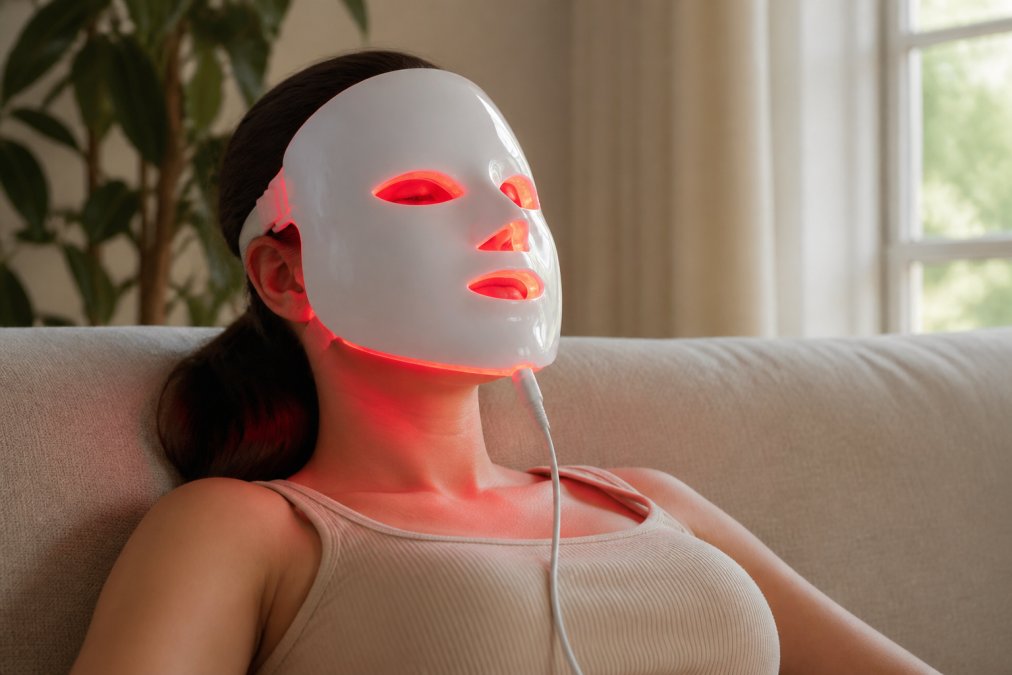
A mask covers roughly 40-60 square inches of facial skin with uniform exposure. A typical panel covers 100-200+ square inches, allowing treatment of multiple body regions. For athletes or office workers addressing muscle soreness or chronic tension, panels provide superior versatility. For facial anti-aging, masks deliver more targeted treatment.
Masks weigh under one pound and fit easily in a gym bag. Panels weigh 5-15 pounds and require mounting, suiting stationary home use. Masks win for travel; panels suit dedicated recovery stations.
TheCoolVibeShop's LED Face Mask exemplifies the mask approach, delivering concentrated red light therapy specifically designed for facial rejuvenation with the portability modern users expect. The device's compact design means you can use it while working, reading, or relaxing, fitting seamlessly into daily routines without requiring dedicated treatment time.

Power Output, Irradiance, and Treatment Effectiveness
Irradiance (mW/cm²) is the most important specification when comparing devices. Clinical research typically uses 50-200 mW/cm², clustering around 80-150 mW/cm² for skin rejuvenation and muscle recovery. Devices below 30 mW/cm² show minimal efficacy; those exceeding 200 mW/cm² risk skin irritation and eye strain without proportional benefit.
How to Verify Irradiance Claims
Manufacturers should provide irradiance specifications. To verify independently, divide power output (watts) by treatment area (square centimeters). For example, a 50-watt panel covering 200 square centimeters delivers approximately 250 mW/cm². If a manufacturer cannot provide these specifications, the device likely lacks clinical validation.
Masks typically operate at 80-120 mW/cm² to balance efficacy with facial comfort. Panels often deliver 100-200 mW/cm² for larger body areas where higher irradiance is tolerable and deeper tissue penetration is desired. Higher-power panels (150-300 watts) achieving 150-250 mW/cm² suit professional or athletic recovery settings.
Fluence and Treatment Dosing
Fluence, total light energy per unit area over a session, is equally critical. Calculated as irradiance multiplied by duration, therapeutic fluence ranges from 4-12 J/cm² for skin rejuvenation and 6-15 J/cm² for muscle recovery. Consistency matters more than occasional high-intensity sessions: daily 100 mW/cm² for 15 minutes achieves better results than 200 mW/cm² twice weekly.
Continuous-Wave vs. Pulsed Delivery
TheCoolVibeShop™ - LED Face Mask →
Continuous-wave devices emit steady light throughout the treatment session. Pulsed devices cycle on and off rapidly, typically at frequencies between 2-100 Hz. Both delivery methods work for red light therapy; research shows no significant efficacy difference between them when total fluence is matched. Continuous-wave is more common and better studied for red light therapy applications. Pulsing is primarily a design choice affecting heat generation and user comfort, pulsed devices generate less heat, making them preferable for facial masks where thermal buildup could cause discomfort. Some manufacturers claim pulsing enhances results, but peer-reviewed evidence does not support this claim. When comparing devices, focus on irradiance and fluence rather than being swayed by pulsing claims.
Red Light vs. Near-Infrared Power Delivery
Red light (600-700 nm) and near-infrared (700-1,100 nm) wavelengths penetrate tissue to different depths, affecting power delivery strategy. Red light reaches approximately 8-10 millimeters deep, making it ideal for facial skin rejuvenation where the target tissue (epidermis and upper dermis) is superficial. Near-infrared penetrates 30-40 millimeters, reaching muscle, joint tissue, and deeper connective tissue. Masks typically emphasize red wavelengths or a red/near-infrared blend optimized for facial use. Panels often include both wavelengths, allowing users to select or combine them based on treatment goals. A panel with separate red and near-infrared LEDs offers flexibility: red-only sessions for facial work, near-infrared for deep muscle recovery, or combined wavelengths for systemic inflammation reduction.
Red Light Therapy Benefits for Skin: Targeted Facial Results vs Systemic Health
Facial benefits from red light therapy stem from stimulating collagen production and reducing inflammation in the dermis. Regular use can diminish fine lines, improve skin texture, reduce hyperpigmentation, and enhance overall skin barrier function. These results typically emerge over 4-12 weeks of consistent treatment, with improvements accelerating as collagen remodeling progresses. The skin rejuvenation benefits appeal strongly to individuals aged 30+ seeking non-surgical anti-aging solutions.
Systemic health benefits extend beyond cosmetic improvements. Red and near-infrared light reduces systemic inflammation throughout your body, supporting muscle recovery, joint healing, and overall wellness. Athletes use red light therapy to accelerate recovery after intense workouts, reducing muscle soreness (delayed-onset muscle soreness or DOMS) and supporting tissue repair. Office workers experiencing chronic neck and shoulder tension from sedentary desk work report reduced pain and improved mobility after consistent red light therapy sessions.
The distinction matters for device selection, and understanding red light therapy masks vs panels helps you choose the right tool for your goals. If your primary goal is facial anti-aging, a mask delivers concentrated, consistent results with minimal time investment. If you're targeting systemic inflammation, muscle soreness, or full-body recovery, a panel provides better coverage and deeper tissue penetration through near-infrared wavelengths. Many users benefit from combining both: using a mask for facial maintenance while employing a panel for targeted muscle and joint recovery.
How Long to Use Red Light Therapy: Treatment Time and Consistency
Treatment duration depends on irradiance and your therapeutic goals. At moderate irradiance (80-100 mW/cm²), most practitioners recommend 15-30 minutes daily or 5-6 days weekly. Higher irradiance devices may require only 10-15 minutes to achieve similar fluence. Lower irradiance devices might need 30-45 minutes. The key is reaching sufficient fluence without overdoing it, more time doesn't automatically mean better results beyond optimal therapeutic doses.
Consistency trumps intensity. Using a device three times weekly at moderate settings outperforms sporadic high-intensity sessions.
FDA-Cleared Red Light Therapy Devices: Safety Standards and What to Look For
FDA clearance indicates a device has demonstrated safety and efficacy through rigorous testing. Look for devices carrying FDA 510(k) clearance, which means the manufacturer proved substantial equivalence to predicate devices already on the market. This clearance confirms the device operates safely within specified parameters and delivers the claimed wavelengths and power output.
Maintenance, Contraindications, and Long-Term ROI
Proper maintenance extends device lifespan and ensures consistent performance. Most LED masks and panels require minimal upkeep: occasional lens cleaning with a soft, dry cloth and storage in a cool, dry environment. Avoid exposing devices to moisture or extreme temperatures, which can degrade LED performance over time. Check manufacturer guidelines for specific maintenance protocols, as some devices have sealed optics requiring no cleaning.
Frequently Asked Questions
Is it better to get a red light therapy mask or panel?
The choice depends on your goals. Masks target facial skin with concentrated irradiance and are portable, making them ideal for anti-aging and skin rejuvenation. Panels offer full-body treatment and higher power output for systemic inflammation, muscle recovery, and larger areas. If you prioritize facial benefits and convenience, a mask works well. For whole-body recovery or deep tissue repair, a panel delivers more therapeutic dose over larger surface area. Consider your primary use case and treatment area size.
How long to use red light therapy for the best results?
Most clinical studies recommend 10 to 20 minutes per session, 3 to 5 times per week for consistent results. Treatment consistency matters more than duration. Starting with 10 minutes allows your skin to acclimate and helps you monitor for sensitivity. After 2 to 4 weeks of regular use, many people report visible improvements in skin texture and collagen production. Exceeding 20 minutes does not accelerate results and may increase irritation risk. Stick to a routine rather than sporadic longer sessions.
What are the main red light therapy benefits for skin?
Red light therapy stimulates mitochondrial function and collagen production in the dermis, reducing fine lines and improving skin texture. It decreases systemic inflammation, which helps with redness and hyperpigmentation. Regular use supports skin barrier repair and enhances elasticity. Near-infrared wavelengths penetrate deeper, targeting tissue repair beneath the epidermis. Many users report brighter, more youthful skin within 4 to 8 weeks of consistent treatment, though results vary by skin type and device power density.
Are FDA-cleared red light therapy devices more effective than non-cleared ones?
FDA clearance indicates the device has met safety and performance standards, but clearance does not guarantee superior results. What matters most is irradiance (power density), wavelength accuracy (typically 600-1000 nm for red and near-infrared), and treatment consistency. Many effective devices carry FDA clearance, while some non-cleared devices may still deliver therapeutic dose. Look for devices with published power output specs and clinical evidence, not just certification status. TheCoolVibeShop's LED Face Mask is designed with safety and efficacy in mind for daily facial use.