Red Light Therapy for Facial Wrinkles: 2026 Guide

Table of Contents
- How Red Light Therapy Works for Facial Wrinkles
- Red Light Therapy Benefits for Skin: What the Science Shows
- How Long to Use Red Light Therapy for Wrinkles: Treatment Duration and Frequency
- Best Practices for At-Home LED Light Therapy
- Safety, Side Effects, and Who Should Avoid Red Light Therapy
- Choosing the Right Red Light Therapy Device for Your Skin
- Measuring Progress and Long-Term Maintenance
- Frequently Asked Questions
Last Updated: September 2, 2026
How Red Light Therapy Works for Facial Wrinkles
Red light therapy for facial wrinkles works through photobiomodulation, where specific wavelengths of light (600-1000 nanometers) penetrate the skin and are absorbed by mitochondria in skin cells. This interaction increases adenosine triphosphate (ATP) production, cellular energy, which fuels repair and regeneration processes that reduce fine lines and wrinkles.

Light energy triggers mitochondria to work more efficiently, activating fibroblasts, the cells responsible for producing collagen and elastin. These proteins keep skin firm and youthful. As we age, collagen production declines, leading to wrinkles. Red light therapy stimulates fibroblasts to increase collagen synthesis, improving skin elasticity over time.
Red light reaches the dermis, the deeper skin layer where structural proteins live, unlike topical creams that only affect the epidermis. Shorter wavelengths (600-700 nanometers) work primarily on the epidermis for surface concerns, while longer wavelengths (700-1000 nanometers, especially near-infrared) penetrate deeper for wrinkle reduction and skin rejuvenation.
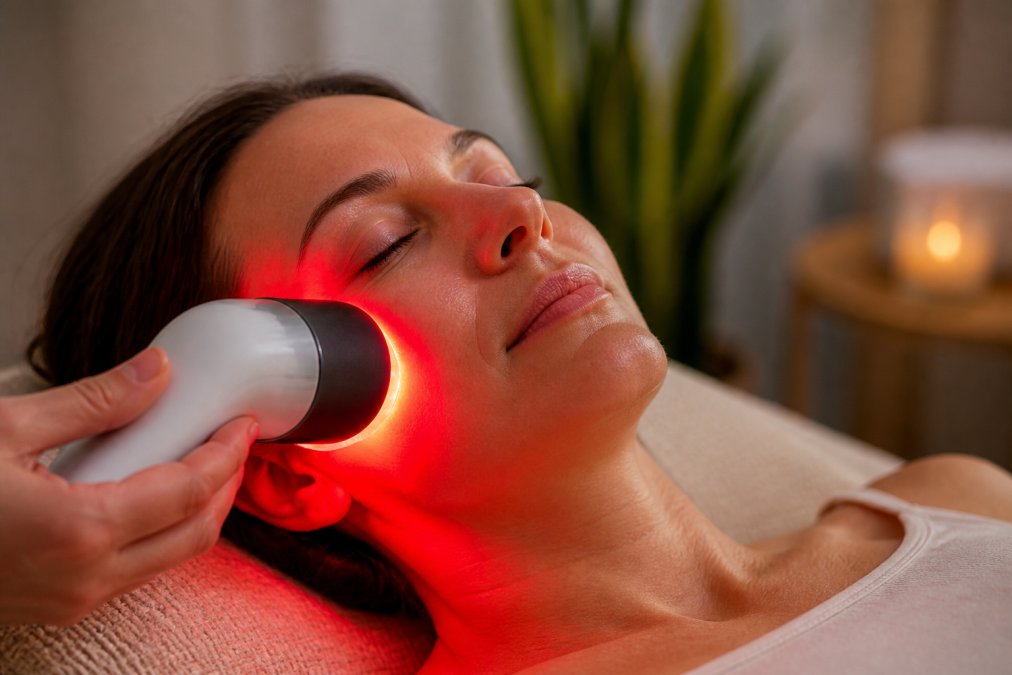
This non-invasive process relies on your skin's own cellular machinery. Results typically appear after several weeks of consistent use because you're addressing wrinkles at the cellular level. At TheCoolVibeShop, there has been consistent interest in red light therapy devices because they deliver natural-looking results without downtime or side effects.
Red Light Therapy Benefits for Skin: What the Science Shows
Red light therapy benefits extend beyond wrinkle reduction. Photobiomodulation produces multiple positive effects: improved collagen production enhances skin elasticity, reducing not just wrinkles but also loose or sagging skin. Many users report firmer, more resilient skin after consistent treatment.

Red light has documented anti-inflammatory properties, which helps inflammatory skin conditions and strengthens skin barrier function, your skin's ability to retain moisture and protect against environmental stressors. A stronger barrier means fewer fine lines, better hydration, and a more radiant complexion.
Red light therapy stimulates microcirculation, bringing more oxygen and nutrients to skin cells (peer-reviewed research). This improved circulation supports healing and regeneration while giving skin a healthier, more vibrant appearance. Some users notice brighter, more even-toned complexion within weeks.
Collagen synthesis improvement represents the most measurable benefit for wrinkle reduction. Consistent sessions trigger fibroblasts to increase collagen production, directly addressing the structural deficit that creates wrinkles. Over 8-12 weeks of regular use, this increased production becomes visible as smoother skin texture and shallower fine lines.
The anti-aging effects extend to skin tone and texture. Many users report more even skin tone, reduced age spots, and smoother texture as the cellular renewal process accelerates, helping skin shed damaged cells and replace them with healthier ones.
How Long to Use Red Light Therapy for Wrinkles: Treatment Duration and Frequency
Most practitioners recommend starting with 10-20 minute sessions, 3-5 times per week. More powerful devices require shorter sessions (5-10 minutes), while gentler at-home devices might need 20-30 minutes to be effective.
Visible results typically appear within 4-12 weeks of consistent use (peer-reviewed research). Many notice initial improvements in brightness and texture within 2-3 weeks, but meaningful wrinkle reduction usually takes 6-8 weeks. Collagen remodeling happens gradually because your body is rebuilding protein structures.
Once you've achieved desired results after 8-12 weeks, shift to 2-3 sessions per week for maintenance. This significantly less demanding schedule makes red light therapy sustainable as a long-term anti-aging strategy.
Device power output (measured in milliwatts per square centimeter) significantly affects treatment duration. Higher-powered devices at 100+ mW/cm² need only 5-10 minutes, while consumer devices at 30-50 mW/cm² need 15-20 minutes. Check the irradiance specification, it directly impacts how long you need to use the device.
Consistency matters more than duration. A person using a device for 15 minutes, 5 times per week will see better results than someone using it for 45 minutes once weekly. Your skin responds to regular stimulation, not occasional intense exposure.
Best Practices for At-Home LED Light Therapy
Hold your device 3-6 inches from your face, perpendicular to the skin surface, for optimal light absorption. Holding it at an angle reduces effectiveness because light doesn't penetrate as efficiently.
Clean your face thoroughly before treatment, removing makeup, sunscreen, and product buildup. A clean surface allows light to penetrate more effectively. Some practitioners recommend light exfoliation 1-2 times per week to remove dead skin cells and enhance penetration.
Many people use red light therapy in the evening as part of their skincare routine, though morning use works equally well if it fits your schedule better. The key is consistency. Avoid applying products immediately after treatment; let your skin settle for 10-15 minutes.
Eye protection is a practical consideration. Many devices include protective eyewear or built-in safety features. If yours doesn't and you're treating your full face, wearing sunglasses during treatment is reasonable, especially if you're sensitive to bright light.
Start with 3-4 sessions per week to gauge how your skin responds. If you experience redness or irritation, reduce to 2-3 times weekly. Most skin adapts quickly, and frequency can increase to 5 times per week after 2-3 weeks. The TheCoolVibeShop LED Face Mask is designed for 15-20 minute sessions and can be used daily for maintenance once your skin adapts.

Track progress with baseline photos in consistent lighting before starting treatment, then compare monthly. You'll notice improvements in texture, fine line appearance, and radiance that are subtle in the mirror but clear in side-by-side photos.
Safety, Side Effects, and Who Should Avoid Red Light Therapy
Red light therapy is remarkably safe for most people. The light wavelengths used (600-1000 nanometers) don't damage DNA, don't burn skin, and don't accumulate in your body. Unlike UV light, red and near-infrared light don't cause cellular damage leading to skin cancer. The FDA has cleared red light therapy devices for various uses, recognizing their safety profile when used as directed (the FDA).
Common side effects are minimal and typically temporary. Some experience mild redness or warmth immediately after treatment, which usually subsides within 30 minutes, indicating increased blood flow. Occasional users report mild dryness or sensitivity, which usually resolves by reducing frequency or ensuring proper hydration. Headaches are rare but have been reported; reducing frequency or duration usually resolves this.
People taking medications that increase photosensitivity should consult their healthcare provider before starting. If you have a history of skin cancer or suspicious lesions, get medical clearance before treating those areas. Avoid direct treatment of the neck area if you have thyroid conditions.
Pregnancy is generally considered safe, but consult an obstetrician before starting treatment as a precaution. Avoid treating active skin infections, open wounds, acne, or cold sores until they've healed.
Red light doesn't damage eyes, and brief exposure from a facial device won't harm vision. However, staring directly into a bright light source isn't comfortable. People with macular degeneration or other retinal conditions should consult an eye care professional before using devices near the eyes.
Medication interactions are essentially non-existent with red light therapy. Unlike oral supplements or topical treatments, red light doesn't enter your bloodstream or interact with medications systemically, making it an excellent complement to your existing skincare routine.
Choosing the Right Red Light Therapy Device for Your Skin
Wavelength range is the most important factor. Devices delivering 630-700 nanometers (red light) combined with 800-1000 nanometers (near-infrared) cover the full spectrum needed for effective wrinkle reduction. Dual or multi-wavelength devices are more versatile than single-wavelength options.
Power output (measured in milliwatts per square centimeter) determines how quickly your skin receives the photon dose needed for results. Devices rated 30-50 mW/cm² require 15-20 minute sessions, while 70-100+ mW/cm² devices work faster with 5-10 minute sessions. For at-home use, 50-100 mW/cm² offers an excellent balance of speed and safety.
Device form factor matters for consistency. Handheld wands target specific areas like fine lines around eyes or mouth. Face masks treat your entire face uniformly and work hands-free. Panel devices offer high power but require positioning. Choose based on your lifestyle and treatment goals.
Treatment area coverage is another practical consideration. For facial wrinkles, a handheld device or face mask designed for facial use is ideal. For comprehensive treatment including neck and décolletage, a larger panel might be worth the investment. The TheCoolVibeShop LED Face Mask covers your entire face uniformly at $99.99, while the Facial Massager at $119.50 combines red light therapy with massage functionality. The Under-Eye Red Light Therapy Skin Rejuvenation device at $99.50 specializes in the delicate under-eye area.
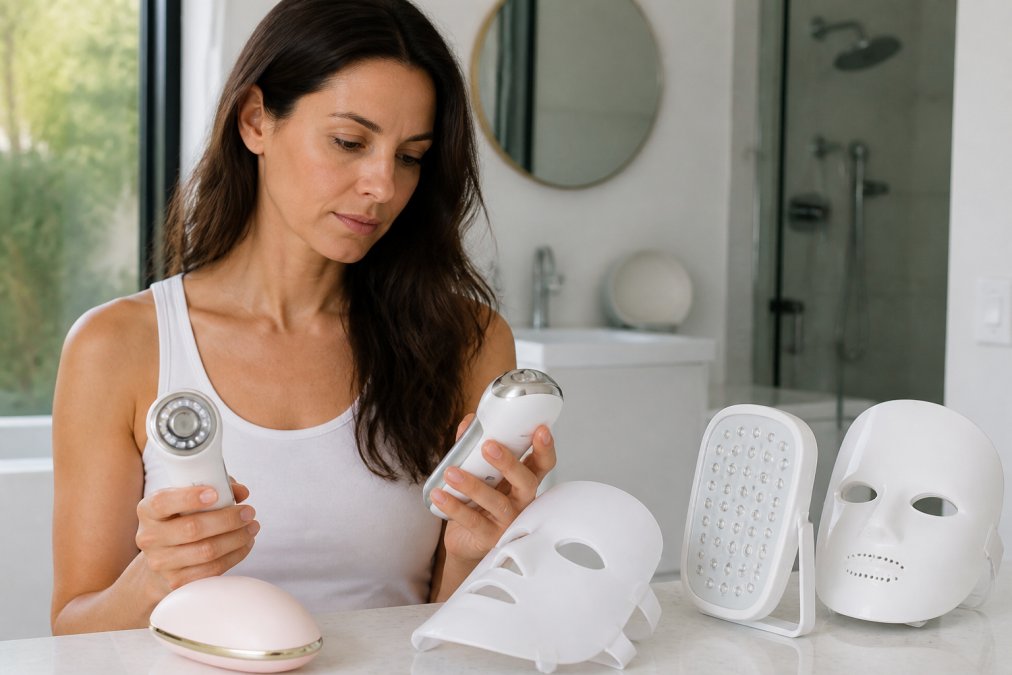
Price-to-performance ratio deserves careful consideration. Consumer devices typically range from $50-$300. Higher price doesn't always mean better results; a $100 device used consistently outperforms a $500 device used sporadically.
Look for devices with FDA clearance or CE marking, indicating they've met safety standards. Durable construction ensures your investment lasts years. Simple on/off controls and clear timer settings make devices more likely to become part of your routine. Built-in timers prevent overuse. Cordless, rechargeable options are more convenient than plug-in devices.
TheCoolVibeShop's 60-day money-back guarantee removes the risk from trying their devices. If red light therapy doesn't work for you, you get your money back. This confidence in product quality is a valuable benefit in the wellness device market.
Measuring Progress and Long-Term Maintenance
Take baseline photos in consistent natural lighting before starting treatment. Photograph your face from the front, both angles, and close-ups of prominent wrinkles. Repeat monthly using identical lighting and positioning. Month-to-month changes might be subtle, but comparing month one to month three or four reveals meaningful improvements.
Run your fingertips across your skin's texture regularly. You'll notice skin becomes smoother and feels more supple as collagen production increases. This tactile feedback often precedes visible improvements and confirms cellular changes are happening.
Test skin firmness monthly by gently pinching cheek skin and releasing. Skin with improved elasticity bounces back more quickly. This simple test tracks changes objectively.
Once you've achieved desired results after 8-12 weeks, shift to 2-3 sessions per week for maintenance. Most people find this sustains their improvements indefinitely. Some reduce to 1-2 sessions weekly with no regression, suggesting individual maintenance needs vary.
Red light therapy results aren't permanent. If you stop using the device, your skin gradually returns to its pre-treatment state. However, collagen built during active treatment doesn't disappear overnight. Many users maintain visible improvements for several months after stopping, but continuing maintenance sessions preserves wrinkle reduction long-term.
Combining red light therapy with complementary practices amplifies results. Consistent sunscreen use prevents new sun damage. Adequate hydration supports skin barrier function and collagen production. Regular exfoliation removes dead skin cells and enhances light penetration. These practices are synergistic, producing better overall anti-aging results.
Gradually reduce frequency after the initial 12-week phase and observe whether your skin maintains improvements. You'll quickly discover your personal maintenance threshold, the minimum frequency needed to sustain results. This personalized approach is far more efficient than following generic recommendations.
Red light therapy for facial wrinkles represents one of the most evidence-supported, non-invasive anti-aging approaches available. The science is solid, the safety profile is excellent, and results are measurable with consistent use. TheCoolVibeShop's LED Face Mask ($99.99) and Under-Eye Red Light Therapy Skin Rejuvenation device ($99.50) make it accessible to start without significant financial risk. With the 60-day money-back guarantee, you can test whether red light therapy delivers the wrinkle reduction you're seeking. Commit to 3-5 sessions weekly for at least 8-12 weeks, track progress objectively, and adjust your maintenance protocol based on individual results. Your skin's cellular machinery will do the work; you just need to provide the light stimulus it needs to thrive.
Frequently Asked Questions
Q: Does red light therapy really work for wrinkles on your face?
A: Yes, red light therapy has demonstrated efficacy in reducing fine lines and wrinkles through photobiomodulation. The wavelengths penetrate the dermis and stimulate fibroblasts to increase collagen production, which improves skin elasticity and texture. Most users see visible improvements in skin tone and fine line reduction after 8-12 weeks of consistent use, though results vary based on age, skin condition, and treatment frequency.
Q: How long should I use red light therapy for wrinkles each day?
A: Most dermatologist-approved protocols recommend 10-20 minutes per session, 3-5 times per week. Starting with shorter sessions (10 minutes) allows your skin to adapt. Consistency matters more than duration, daily 10-minute sessions often outperform sporadic 30-minute treatments. The TheCoolVibeShop LED Face Mask is designed for these standard treatment durations and includes guided timing for optimal results.
Q: What are the potential side effects of red light therapy?
A: Red light therapy has a strong safety profile with minimal side effects for most users. Some people experience temporary mild redness, warmth, or slight irritation immediately after treatment, which typically subsides within hours. Those with photosensitivity, taking certain medications, or with active skin conditions like rosacea should consult a dermatologist before use. Avoid direct eye exposure and discontinue if you experience persistent irritation.
Q: Are at-home red light therapy devices as effective as professional treatments?
A: At-home devices can be highly effective when used consistently and correctly. Professional treatments often use higher irradiance levels and larger treatment areas, but quality at-home devices like TheCoolVibeShop's options deliver clinical-grade wavelengths (typically 600-1000 nanometers) at appropriate photon density. The main advantage of professional treatments is faster results; at-home therapy requires more patience but costs significantly less and fits daily routines better.
Q: How do I know if red light therapy is actually working for my wrinkles?
A: Track progress by taking consistent photos under the same lighting conditions every 2-4 weeks. Look for subtle improvements in skin texture, fine line depth, and overall skin tone. Some changes appear gradually, fine lines may soften before disappearing completely. Keep a journal of treatment frequency and note when you first notice improvements in skin elasticity or reduced hyperpigmentation, which often appear before wrinkle reduction becomes obvious.
Q: Can I use red light therapy if I have sensitive skin or am on medications?
A: Most people with sensitive skin tolerate red light therapy well since it's non-invasive and doesn't use chemicals. However, certain medications (particularly photosensitizing drugs like doxycycline or retinoids) may require caution. Always consult your dermatologist or healthcare provider before starting, especially if you're on medications or have conditions like lupus, thyroid disorders, or active skin infections. Start with shorter sessions to assess tolerance.
Q: What wavelengths are best for reducing facial wrinkles?
A: Red light (600-700 nanometers) stimulates collagen production in the epidermis and upper dermis, making it ideal for fine lines and surface wrinkles. Near-infrared light (700-1000 nanometers) penetrates deeper into the dermis, addressing deeper wrinkles and supporting cellular energy production through mitochondrial ATP synthesis. Combination devices using both wavelengths offer the most comprehensive anti-aging benefits. TheCoolVibeShop devices use clinically effective wavelengths optimized for facial wrinkle reduction.
This article was written using GrandRanker