Full Body Red Light Therapy: 4 Best Devices for 2026

Table of Contents
- Quick Comparison: Full Body Red Light Devices at a Glance
- How We Evaluated These Full Body Red Light Devices
- 1. TheCoolVibeShop Full Body Red Light Therapy Mat: Best for Whole-Body Coverage
- 2. TheCoolVibeShop Wavelength Belt: Best Portable Option
- 3. Topcupro 4-in-1 Red Light Therapy Wrap: Best for Joint Pain Relief
- 4. YZYOE Infrared Light Therapy Wand: Best Budget Pick for Targeted Areas
- Red Light Therapy Session Duration: How Long Should You Use Each Device?
- Red Light Therapy Safety Guidelines: What to Know Before You Start
- Frequently Asked Questions
Last Updated: September 14, 2026
Quick Comparison: Full Body Red Light Devices at a Glance
Full body red light therapy delivers red and near-infrared wavelengths to skin and underlying tissue, and the device you choose determines whether that light reaches deep enough to matter. This guide from TheCoolVibeShop compares four devices across price, coverage, and use case.
| Device | Price | Coverage | Best For |
|---|---|---|---|
| TheCoolVibeShop Full Body Red Light Therapy Mat | $399.99 | Whole body | Full-body sessions at home |
| TheCoolVibeShop Wavelength Belt | $79.99 | Targeted wrap | Portable daily use |
| Topcupro 4-in-1 Red Light Therapy Wrap | $154.99 | Joints (knee, elbow, shoulder, ankle) | Joint pain relief |
| YZYOE Infrared Light Therapy Wand | $72.99 | Small targeted areas | Budget entry point |
How We Evaluated These Full Body Red Light Devices
We scored each device on coverage area, wavelength range, ease of use, and price relative to what you get. Coverage matters most for whole-body benefits, since a small wand cannot treat a full back or both legs in one session. Wavelength range matters because red and near-infrared light penetrate tissue differently, and devices offering both give you more flexibility. Ease of use covers setup time, controls, and whether the device works while you relax or requires you to hold it.

1. TheCoolVibeShop Full Body Red Light Therapy Mat: Best for Whole-Body Coverage
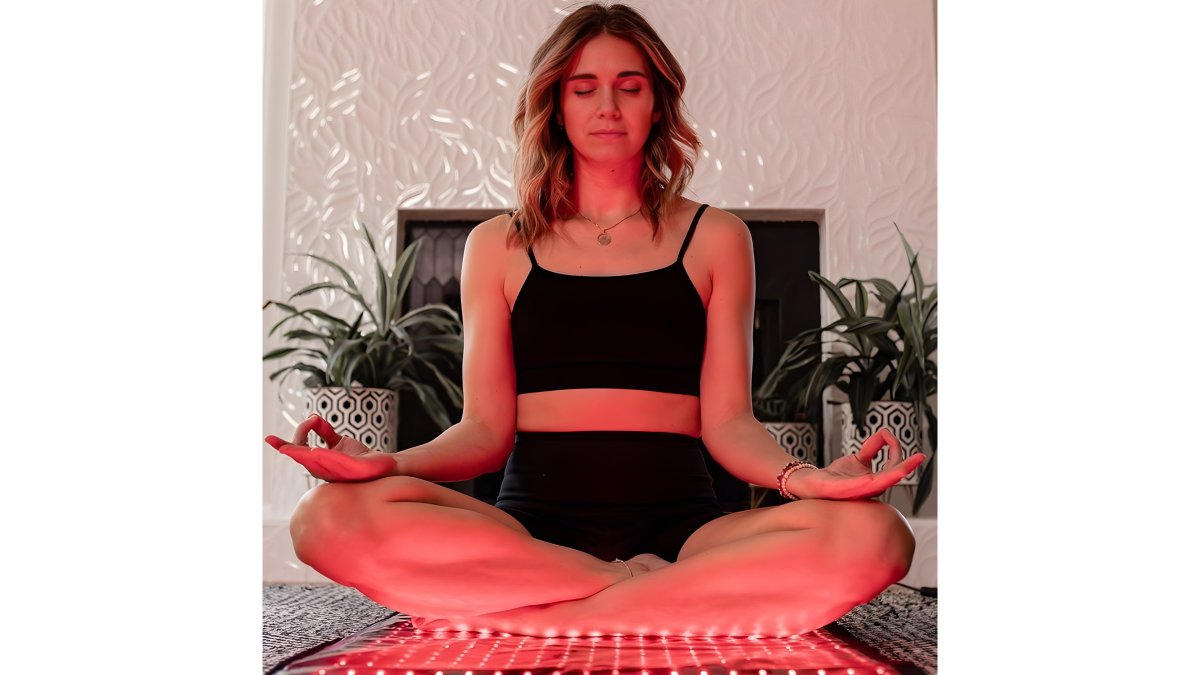
The Full Body Red Light Therapy Mat is our top pick because it treats the entire body in one session without straps, wands, or repositioning. You lie on it, set your timer, and let the panel array work across your back, legs, and shoulders at once. For genuine full body red light exposure rather than spot treatment, it removes the biggest obstacle: coverage.

Key Specs and Pricing
The mat is priced at $399.99 as a one-time purchase, with no subscription or replacement cartridges. Like the rest of TheCoolVibeShop's lineup, it is non-invasive and drug-free, and the brand backs it with a 60-day money-back guarantee.
Pros and Cons
Pros:
- Covers the whole body in one session, so you are not moving a wand from knee to shoulder to back
- Non-invasive and drug-free, designed for safe, everyday use
- 60-day money-back guarantee removes most of the risk of trying it
- One-time cost with no ongoing fees
Cons:
- At $399.99 it is the largest single outlay in this lineup, so it suits committed users more than casual experimenters
- It is a lie-down device, so it is not something you use while working at a desk
2. TheCoolVibeShop Wavelength Belt: Best Portable Option
The Wavelength Belt is the pick for people who want red light therapy to fit into a bag, a lunch break, or a hotel room. At $79.99 it wraps around a targeted area without tying you to a fixed spot.

Key Specs and Pricing
Priced at $79.99 as a one-time purchase, the belt sits at the accessible end of the range while sharing the mat's non-invasive, drug-free design and 60-day money-back guarantee. It is the natural companion to the mat: use the mat for full-body sessions at home, and the belt for targeted work when you are away.
Pros and Cons
Pros:
- Genuinely portable, so it travels with you
- Low entry price relative to the mat
- Simple to use on a specific area without setup
- Backed by the same 60-day money-back guarantee
Cons:
- Covers one area at a time, not the whole body
- Not a replacement for the mat if full-body coverage is your goal
3. Topcupro 4-in-1 Red Light Therapy Wrap: Best for Joint Pain Relief
The Topcupro 4-in-1 Wrap is built for joints, and it is the most practical option here for knee, elbow, shoulder, or ankle discomfort. It uses 96 two-in-one LED chips and an elastic band that wraps fully around a joint, so the light surrounds the area instead of hitting one side.
Key Specs and Pricing
At $154.99, the Topcupro sits between the belt and the mat. It runs on USB-C from a standard charger or battery bank, shuts off automatically after 20 minutes, and carries a one-year full warranty.
Pros and Cons
Pros:
- Wrap design delivers light around the full joint, not just one surface
- USB-C power works at home, at the office, or in a gym bag
- 20-minute auto shutoff means you cannot overrun a session by accident
- One-year full warranty
Cons:
- Designed for joints, so it is not a full body red light solution
- The 20-minute cycle is fixed, which limits longer sessions
4. YZYOE Infrared Light Therapy Wand: Best Budget Pick for Targeted Areas
The YZYOE Wand is the lowest-cost way to start: a handheld device for small, specific areas. It offers three wavelengths and works on the face as well as joints and muscles.
Key Specs and Pricing
Priced at $72.99, the wand is the most affordable device here, a one-time purchase with no consumables. The tradeoff is coverage: it treats a small area at a time, so a full-body routine takes far longer than with the mat.
Pros and Cons
Pros:
- Lowest price in the lineup
- Three wavelengths for flexibility across face, joints, and muscles
- Handheld and easy to store
- Good way to test red light therapy before committing to a larger device
Cons:
- Small treatment area, so full-body sessions are impractical
- Requires you to hold and move it for the entire session
Red Light Therapy Session Duration: How Long Should You Use Each Device?
Red light therapy session duration depends on three variables: the device's irradiance (power density, measured in mW/cm²), your distance from the light source, and the treatment area. Two devices can both run "20 minutes" and deliver wildly different doses, so copying a session length off a product page rarely works.
The dose that actually matters is energy density, measured in joules per square centimeter (J/cm²). The relationship is simple: J/cm² = irradiance (mW/cm²) × time (seconds) ÷ 1,000. A panel putting out 50 mW/cm² at 6 inches delivers 30 J/cm² in 10 minutes; at 12 inches it might deliver a quarter of that, because intensity falls off with distance.
A Practical Dosing Framework
Most clinical protocols for full-body red and near-infrared light land in a 5 to 20 J/cm² range per session for skin and surface tissue, with higher doses for deeper targets like muscle and joint. Because at-home panels vary widely in output, find your device's stated irradiance and do the math.
- Full-body mat or panel: target roughly 5-15 J/cm² per session. If your mat lists 30-50 mW/cm² at contact, that is about 3-8 minutes per area; if it lists 10 mW/cm², you may need 15-25 minutes. Start at the low end.
- Targeted wrap (like the Topcupro): the built-in 20-minute cycle is a reasonable default because wraps sit directly on skin and often run higher irradiance at close range. Do not stack two 20-minute cycles back to back on the same joint.
- Handheld wand: treat one small area for 2-5 minutes, then move. Total session across several spots should stay under about 15 minutes.
- Distance: for panels, a common working distance is 6-12 inches. Moving closer increases dose fast, halving the distance can roughly quadruple intensity.
- Frequency: daily or every other day is the common pattern. Total weekly dose matters more than any single long session.
Why More Is Not Better
Red light therapy follows a biphasic dose response: too little does nothing, the right window stimulates cellular activity, and too much can blunt the benefit or cause irritation. A 40-minute session at high irradiance is not twice as good as a 20-minute session, it can be worse.
Signs You Are Dosing Correctly
- You feel warm but not hot, and skin is pink for a few minutes afterward, not red for hours
- You are not sore or sensitive the next day
- You can repeat the session consistently without dread
If you are treating a specific condition, a physical therapist or dermatologist familiar with photobiomodulation can help translate your device's specs into a dose. For general wellness, the framework above is enough to start safely and adjust.
Red Light Therapy Safety Guidelines: What to Know Before You Start
Red light therapy has a strong safety profile, but "non-invasive" is not the same as "no precautions."
Absolute and Relative Contraindications
Do not use red light therapy over:
- Active cancer or lesions in the treatment area, light can stimulate cell activity, and the effect on malignant tissue is not well established
- The eyes directly, never stare into the panel or wand; use the included goggles or close your eyes and turn away
- The thyroid gland, the neck is often excluded from full-body panels because of theoretical concerns about thyroid stimulation
- Pregnant abdomen, avoid direct treatment over the belly; other areas are generally considered fine, but check with your OB
- Recent steroid injections, Botox, or fillers, wait at least 1-2 weeks, as light may affect how these settle
- Tattoos in the first 2 weeks of healing, fresh ink and light do not mix well
Use with caution if you have:
- A history of skin cancer or melanoma
- Lupus or other photosensitive autoimmune conditions
- Active cold sores, some users report triggering outbreaks around the mouth
- Epilepsy, flashing or pulsing modes on some devices can be a trigger
Photosensitizing Medications and Topicals
Certain drugs make your skin more reactive to light, and combining them with red light therapy can cause burns, rashes, or hyperpigmentation. Common photosensitizing classes include:
- Antibiotics: tetracyclines (doxycycline, minocycline), fluoroquinolones (ciprofloxacin), sulfonamides
- Acne and skin treatments: isotretinoin (Accutane), tretinoin, and other retinoids
- Diuretics: hydrochlorothiazide and other thiazides
- NSAIDs: ibuprofen, naproxen (mild effect, but worth noting)
- Antidepressants and antipsychotics: certain tricyclics, phenothiazines
- Herbals: St. John's wort, and citrus-based essential oils applied to skin (bergapten in bergamot is a known photosensitizer)
If you take any of these, skip the area or get clearance from the prescriber first. A short test on a small patch of inner forearm is a reasonable way to check your reactivity.
Eye Protection Is Not Optional
Red and near-infrared panels are bright enough to cause eye strain, headaches, and afterimages, and the discomfort is cumulative. Use the goggles that come with your device, or close your eyes and turn your head away. Never use a wand or panel directly on closed eyelids without manufacturer guidance.
Skin and Session Safety
- Start at the low end of your device's session range and build up over 1-2 weeks
- Keep the panel at the manufacturer's recommended distance, moving closer increases both dose and heat
- Stop immediately if you feel burning, stinging, or unusual heat
- Do not use on broken skin, rashes, or open wounds
- Stay hydrated; some users report mild dehydration-like fatigue after long sessions
Regulation and Clearance
In the U.S., red light therapy devices are regulated by the U.S. Food and Drug Administration guidance on light-emitting devices. Some devices are cleared as Class II medical devices for specific indications (like pain relief or acne), while others are marketed as general wellness products with no medical claims. If a device claims to treat a condition, it should carry a clearance number, ask the seller for it. For plain-language context on complementary therapies, the National Center for Complementary and Integrative Health is a useful starting point, and the U.S. Department of Health and Human Services physical activity guidelines are worth reviewing if you are pairing recovery tools with an active routine.
Frequently Asked Questions
Does full body red light therapy really work?
Research on photobiomodulation suggests red and near-infrared light can support mitochondrial function, cellular energy, and tissue repair. Results vary by device quality, wavelength, and consistency. Clinical-grade devices with specific wavelengths (typically 630-850 nm) show the most promising outcomes. For muscle soreness, joint stiffness, and skin concerns, many users report gradual improvement over four to eight weeks of regular use. A 60-day money-back guarantee lets you test results risk-free.
How many times a week should you do full body red light therapy?
Most protocols recommend three to five sessions per week, with each session lasting 10 to 20 minutes depending on the device. The full body red light therapy mat from TheCoolVibeShop is designed for daily use if desired, but giving your body rest days between intense sessions can support recovery. Consistency matters more than frequency. Follow the manufacturer's session duration guidance and adjust based on how your body responds.
What's the downside of red light therapy?
Red light therapy is non-invasive and drug-free, but it isn't risk-free for everyone. People taking photosensitizing medications, those with active skin infections, or individuals with certain eye conditions should consult a doctor first. Overuse can cause mild skin irritation or headaches. Following red light therapy safety guidelines, including wearing protective eye wear and sticking to recommended session duration, minimizes these risks. Stop use if you notice unusual reactions.
How much does a full body red light session cost?
Professional in-office sessions typically range from $50 to $150 per visit, which adds up quickly. At-home devices offer better long-term value. TheCoolVibeShop's Full Body Red Light Therapy Mat costs $399.99 as a one-time purchase, the Wavelength Belt is $79.99, the Topcupro 4-in-1 Wrap is $154.99, and the YZYOE Wand is $72.99. With a 60-day money-back guarantee, you can try any device and return it if it doesn't meet your needs.
Can you use red light therapy every day?
Yes, many at-home devices are designed for daily use. The key is respecting the recommended red light therapy session duration for your specific device, usually 10 to 20 minutes per area. Daily use is generally safe for healthy adults following red light therapy safety guidelines. If you have sensitive skin or are on photosensitizing medications, start with shorter sessions and consult your healthcare provider before committing to a daily routine.