How to Use Red Light Therapy for Injury Healing

Table of Contents
- Understanding Red Light Therapy for Injury Healing
- Red Light Therapy Treatment Duration and Frequency
- Best Red Light Therapy Settings for Inflammation
- Step-by-Step Protocol for Different Injury Types
- Red Light Therapy Safety Precautions and Contraindications
- Integrating Red Light Therapy with Physical Therapy Exercises
- Troubleshooting Non-Responsive Injuries
- Frequently Asked Questions
Last Updated: September 22, 2026
Understanding Red Light Therapy for Injury Healing
How to use red light therapy for injury healing starts with understanding what actually happens inside your cells when you expose them to specific wavelengths of light. Red light therapy, also called photobiomodulation, triggers a biological process that accelerates tissue repair and reduces inflammation naturally.
At TheCoolVibeShop, we empower you to live stronger and brighter with premium, non-invasive wellness essentials for faster recovery. The science is straightforward: red and near-infrared light penetrate deep into tissue and energize your cells' mitochondria. This process boosts ATP production, the cellular fuel that powers healing.
How Photobiomodulation Works at the Cellular Level
Photobiomodulation is the process where light energy stimulates mitochondrial function, increasing ATP production and reducing oxidative stress in damaged tissue.
When light hits your cells, it activates an enzyme called cytochrome c oxidase in the mitochondria. This enzyme accelerates the creation of adenosine triphosphate (ATP), your cells' energy currency. More ATP means faster healing, reduced inflammation, and quicker recovery from injury.
The mechanism is elegant. Damaged tissue creates oxidative stress, harmful free radicals that slow healing. Red and near-infrared light reduces this oxidative stress while simultaneously boosting cellular energy. Your body can then allocate more resources to tissue repair instead of fighting inflammation.
Why Wavelengths Matter: 630-850 Nanometers
Red light therapy works because of wavelength specificity. The therapeutic window spans 630 to 850 nanometers, this is where light penetrates tissue deeply enough to reach mitochondria without scattering uselessly in skin.
Red light (630-700 nm) penetrates about 8-10 millimeters into tissue. It's excellent for surface-level injuries like minor muscle strains and skin healing. Near-infrared light (700-850 nm) penetrates 20-30 millimeters deeper, making it ideal for joint pain, deep muscle damage, and connective tissue repair.
The best devices use both wavelengths together. The Cordless Red Light Therapy for Neck & Shoulders utilizes powerful 660nm red light and 850nm near-infrared light for effective therapy.
Light outside this window either doesn't penetrate far enough or scatters too much to be useful. That's why wavelength precision matters more than raw power.
Red Light Therapy Treatment Duration and Frequency
The ideal treatment duration for how to use red light therapy for injury healing is 10-20 minutes per session, applied 4-7 days per week depending on injury severity.

Shorter sessions work better than longer ones. A 15-minute session at proper irradiance (light intensity) stimulates mitochondrial activity without causing tissue heat buildup. Sessions longer than 30 minutes don't produce proportionally better results, your cells plateau in their ATP response.
Frequency matters more than duration. Consistent daily or near-daily use accelerates healing faster than sporadic longer sessions. Here's why: damaged tissue needs sustained ATP production to rebuild. One 30-minute session per week won't maintain that energy boost. Five 15-minute sessions spread across the week will.
For acute injuries (fresh strains, recent sprains):
- Start with daily 15-minute sessions for the first 2 weeks
- Reduce to 5 sessions per week once acute inflammation subsides
- Continue for 4-6 weeks total
For chronic injuries (persistent pain, slow-healing damage):
- Maintain 4-5 sessions per week indefinitely
- Sessions can drop to 12-15 minutes after the first month
- Many users find maintenance at 3 sessions weekly prevents re-injury
Best Red Light Therapy Settings for Inflammation
Reducing inflammation with red light therapy requires understanding irradiance, the power density of light hitting your tissue, measured in milliwatts per square centimeter (mW/cm²).

Effective irradiance ranges from 10-50 mW/cm² for most home devices. Below 10 mW/cm², the stimulus is too weak to trigger meaningful mitochondrial response. Above 100 mW/cm², you risk thermal damage without proportional benefit.
The sweet spot for inflammation reduction sits around 20-30 mW/cm². This intensity activates cellular repair without overheating tissue. Most quality home devices operate in this range.
Distance from skin matters. Closer placement increases irradiance. Most devices work best at 2-4 inches from skin. Check your device's specifications, they should state optimal distance.
For inflamed joints and connective tissue:
- Use 20-30 mW/cm² irradiance
- Position device 3-4 inches from skin
- Treat for 15-20 minutes daily
- Expect inflammation reduction within 7-10 days
The Wavelength Belt is engineered to wrap comfortably around your lower back and core. Its hands-free design empowers you to embrace wellness effortlessly, turning even your busiest days into circumstances for self-care.

Step-by-Step Protocol for Different Injury Types
How to use red light therapy for injury healing changes based on injury location and severity. Different tissues respond to different treatment approaches.
Muscle Soreness and Acute Strain
Acute muscle soreness peaks 24-48 hours after injury. Red light therapy works best when started immediately after injury occurs.
Your protocol:
-
First 48 hours (acute inflammation phase): Treat 2-3 times daily for 15 minutes each session. Use 20-30 mW/cm² irradiance at 3-4 inches distance.
-
Days 3-7 (active repair phase): Drop to once daily for 15 minutes. The acute swelling has subsided, now you're accelerating tissue rebuilding.
-
Weeks 2-4 (remodeling phase): Maintain 4 sessions per week for 12-15 minutes. Muscle tissue is rebuilding collagen. Consistent light exposure supports this process.
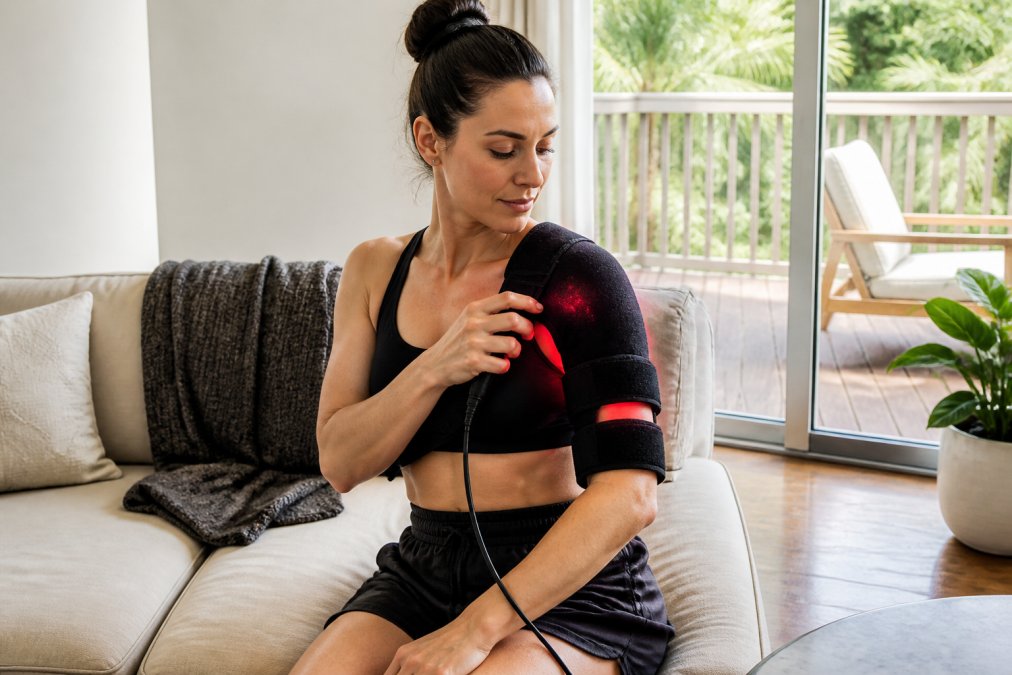
The Topcupro 4-in-1 Red Light Therapy Wrap Device is designed for various body areas, knee, elbow, shoulder, and ankle, allowing you to address your specific pain points without the need for multiple devices.
Joint Pain and Connective Tissue Damage
Joint injuries involve cartilage, ligaments, and synovial tissue, structures that heal slowly because they have limited blood flow. Red light therapy bypasses this limitation by energizing cells directly.
Your protocol:
-
Weeks 1-2: Treat daily for 20 minutes. Joint pain often involves significant inflammation. Consistent light exposure reduces inflammatory cytokines.
-
Weeks 3-8: Maintain 5 sessions per week for 15-20 minutes. Connective tissue remodeling takes time. Your body is rebuilding collagen structure.
-
Weeks 9+: Drop to 3 sessions weekly for maintenance. Many users find this prevents re-injury and maintains range of motion.
Chronic Injuries and Recovery Plateaus
Chronic injuries are different. Tissue has already scarred. Inflammation has become baseline. Your goal is breaking through that plateau by restoring cellular energy production.
Your protocol:
-
Weeks 1-4 (reset phase): Treat 5-6 days per week for 15-20 minutes. You're trying to shift the tissue environment from chronic inflammation to active repair.
-
Weeks 5-12 (rebuilding phase): Maintain 4 sessions per week. Chronic tissue remodels slowly. Patience here pays off.
-
Week 13+ (maintenance phase): Continue 2-3 sessions weekly indefinitely. Chronic injuries tend to flare without ongoing support.
Red Light Therapy Safety Precautions and Contraindications
Red light therapy is noninvasive and generally safe, but specific situations require caution or avoidance.
Safe to use with:
- Most medications (red light doesn't interact with drugs)
- Skin conditions like eczema or psoriasis (often helps them)
- Pregnancy (no evidence of harm, but consult your doctor first)
- Pacemakers and metal implants (light doesn't interfere)
Avoid or use cautiously with:
- Active cancer or recent cancer treatment (consult oncologist first, some cancer cells respond to light stimulation)
- Photosensitizing medications (certain antibiotics, NSAIDs, and anti-inflammatories increase light sensitivity)
- Thyroid conditions (avoid direct thyroid exposure)
- Undiagnosed eye pain or retinal disease (near-infrared light penetrates the eye, protect eyes if you have existing eye conditions)
- Fever or active infection (red light may temporarily increase inflammation during acute infection)
Practical safety rules:
Integrating Red Light Therapy with Physical Therapy Exercises
Red light therapy accelerates healing, but it doesn't restore function. You need movement to rebuild strength and range of motion. The combination of light therapy plus targeted exercise produces the fastest recovery.
Integration approach:
- Red light therapy: 15 minutes at your standard irradiance and distance
- Rest period: 5-10 minutes (let cellular energy settle)
- Gentle movement: 10-15 minutes of targeted exercises for that injury
Troubleshooting Non-Responsive Injuries
Some injuries don't improve with standard red light therapy protocols. Before abandoning the approach, check these common issues.
Problem: No improvement after 3 weeks
Problem: Improvement plateaus after 4-6 weeks
Problem: Skin irritation or unusual reactions
Problem: Pain increases during treatment
Frequently Asked Questions
How often should you use red light therapy for injury recovery?
Most injury recovery protocols recommend 3-5 sessions per week, with each session lasting 10-20 minutes depending on the device and injury severity. For acute injuries (first 2 weeks), daily use may accelerate tissue repair and inflammation reduction. Chronic injuries typically respond well to consistent 3-4 times weekly sessions. Always allow 24-48 hours between sessions on the same area to prevent overstimulation. The Cordless Red Light Therapy for Neck & Shoulders is ideal for frequent daily use due to its rechargeable design and portability.
How long does it take for red light therapy to work on injuries?
The timeline for seeing results can vary depending on injury type, device irradiance (power output), wavelength selection, and adherence to treatment protocols. The Topcupro 4-in-1 Red Light Therapy Wrap is designed for various body areas, knee, elbow, shoulder, and ankle, allowing you to address your specific pain points.
What wavelengths are best for injury healing?
Red light at 660 nanometers penetrates surface tissue and is excellent for skin wounds and superficial inflammation. Near-infrared light at 850 nanometers penetrates deeper (up to 10 millimeters) and reaches muscle, joint, and connective tissue, making it ideal for muscle soreness, joint pain, and deep tissue injuries. Combining both wavelengths (660nm + 850nm) maximizes cellular energy production and tissue repair. The Wavelength Belt uses both 660nm red light and 850nm near-infrared light specifically to address deeper recovery needs in the lower back and core.
Are there any risks or side effects from red light therapy for injuries?
Red light therapy is noninvasive and generally safe for most people when used correctly. Potential risks include temporary eye strain if looking directly at the light, mild skin irritation in sensitive individuals, and heat sensitivity for those prone to migraines. Avoid use on areas with active cancer, thyroid conditions, or if taking photosensitizing medications without consulting a healthcare provider. Always follow device-specific safety guidelines regarding treatment duration and distance from skin. Start with shorter sessions (5-10 minutes) to assess tolerance, then gradually increase to recommended durations.