Red Light Therapy for Joint Pain Relief: What Works

Table of Contents
- What Is Red Light Therapy for Joint Pain Relief?
- How Red Light Therapy Eases Joint Pain: The Science in Brief
- What Clinical Studies Say About Joint Pain Relief
- Choosing the Right Device for Your Joints
- How to Use Red Light Therapy Devices at Home
- Red Light Therapy Treatment Duration: How Long and How Often
- Red Light Therapy Safety and Risks: What to Know First
- Pairing Red Light Therapy with Physical Therapy
- Frequently Asked Questions
Last Updated: September 6, 2026
Joint pain is a daily reality for millions of Americans. Red light therapy for joint pain relief has emerged as a leading non-invasive option, yet consumers are confused by conflicting device specs and vague usage advice. This guide from TheCoolVibeShop explains how this technology works and how to use it effectively at home, focusing on the practical "user manual" details that clinical research often overlooks.

What Is Red Light Therapy for Joint Pain Relief?
Red light therapy is a non-invasive treatment that delivers specific wavelengths of light to the skin and underlying tissues to stimulate cellular repair and reduce inflammation. Unlike ultraviolet light, these wavelengths are safe and do not damage the skin. For joint pain, the therapy targets areas like the knees, shoulders, and elbows to address discomfort at its source.

A common misconception is that all devices work the same way. The reality is that wavelength, power output, and treatment duration directly influence results. Understanding these variables is the first step toward a protocol that actually delivers relief.
How Red Light Therapy Eases Joint Pain: The Science in Brief
Photobiomodulation is the scientific term for the process behind this therapy. When specific wavelengths of red and near-infrared light penetrate the skin, they are absorbed by mitochondria in your cells, boosting adenosine triphosphate (ATP) production, the primary energy currency for cellular repair and function.
This increase in cellular metabolism supports tissue recovery, helps regulate inflammatory cytokines, and reduces oxidative stress and pain sensitivity around the affected joint.
The therapeutic window, typically between 600nm and 1000nm, is critical. Red light near 660nm targets surface tissues, while near-infrared around 850nm penetrates deeper to reach the joint capsule itself. A device without true near-infrared output may never reach the tissue causing your pain.

What Clinical Studies Say About Joint Pain Relief
Clinical research on photobiomodulation for joint pain is promising, but results are only meaningful when you understand the exact parameters used. This section translates the peer-reviewed literature into the specific numbers you need to replicate those results at home.
The Dosage That Makes the Difference
The single most important metric in clinical studies is the energy dose delivered to the tissue, measured in joules per square centimeter (J/cm²). The therapeutic window for joint pain typically falls between 3 and 8 J/cm² per session (PubMed). Below 2 J/cm², studies show no measurable anti-inflammatory effect. Above 10 J/cm², the benefit plateaus and may even reverse due to a biphasic dose-response curve.
To calculate the dose, multiply the device's irradiance (in mW/cm²) by the session time in seconds, then divide by 1000. For example, a device with an irradiance of 50 mW/cm² used for 10 minutes delivers 30 J/cm², far above the therapeutic window. This is why a low-irradiance device requiring 30-minute sessions can still be ineffective, while a higher-output device used for 10 minutes hits the target dose precisely.
What the Trials Actually Measured
Trials reporting positive outcomes for osteoarthritis used near-infrared wavelengths (800-900nm) applied directly over the joint, repeated 3 to 5 times per week for 4 to 8 weeks. Outcomes were measured using the WOMAC index, which tracks pain, stiffness, and function. The most significant improvements used doses in the 4-6 J/cm² range per session.
Trials that failed to show benefit almost always shared one of two flaws: they used a device with an irradiance too low to deliver a therapeutic dose in the allotted session time, or they applied the light at a distance greater than 2-3 centimeters from the skin, causing significant energy loss due to beam divergence. Holding a wand 6 inches away from your knee is not the same as the clinical protocol that produced the positive results.
The Cumulative Effect Is Real
Clinical evidence points to a cumulative mechanism. A single session temporarily reduces inflammatory markers, but the structural changes, collagen synthesis in cartilage and synovial tissue, reduced oxidative stress in the joint capsule, require repeated exposure over weeks. Most published protocols involve a minimum of 12 sessions over 4 weeks before meaningful changes in pain scores are recorded. This is why the National Center for Biotechnology Information database on photobiomodulation studies catalogs hundreds of peer-reviewed papers, many of which include detailed treatment tables you can cross-reference with your own device's specifications.
The [National Institutes of Health resource on complementary pain management(/blogs/news/drug-free-pain-management-solutions) | nih.gov] also notes that non-pharmacologic interventions like this are most effective when integrated into a structured care plan rather than used as a standalone fix.
Choosing the Right Device for Your Joints
Selecting a device comes down to a few key specifications rather than brand names, matching the device's output to the depth of your target joint.
For superficial joints like the wrists and knuckles, a 660nm device is often sufficient. For weight-bearing joints like the knees, hips, and shoulders, you need near-infrared light at 850nm to penetrate several centimeters into the tissue. Check the device's irradiance, which measures power density, to ensure it can deliver a therapeutic dose in a reasonable session time.
Form factor is equally important. A flexible wrap secures the light source directly over the joint, ensuring consistent contact and allowing movement during treatment. Handheld wands are versatile but require holding them in place for the entire session, which can be tiring for longer treatments.
Here is a quick breakdown of common device types to help you decide:
| Device Type | Best For | Wavelength | Session Time |
|---|---|---|---|
| Flexible Wrap | Knee, elbow, shoulder | 660nm + 850nm | 15-20 min |
| Handheld Wand | Targeted spots, face | 660nm | 10-15 min |
| Full-Body Mat | Multiple joints, back | 660nm + 850nm | 20-30 min |
For a versatile solution, the Topcupro 4-in-1 Red Light Therapy Wrap Device is designed for knee, elbow, shoulder, and ankle use. Its flexible pad and one-touch controls make it a practical choice for daily joint care. If your primary concern is neck and shoulder tension from desk work, the Cordless Red Light Therapy for Neck Shoulder Pain Relief combines 660nm and 850nm wavelengths in a rechargeable, targeted format.
How to Use Red Light Therapy Devices at Home
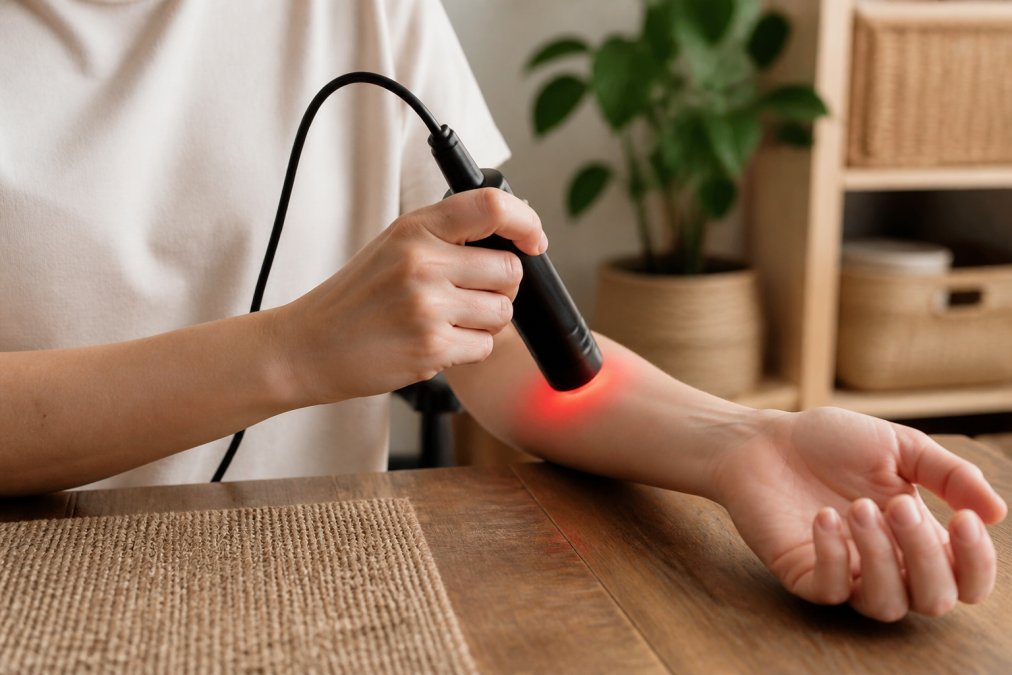
The difference between a session that works and one that wastes your time comes down to three variables: distance, angle, and joint-specific timing.
The 3-2-1 Positioning Rule
Most clinical protocols assume the light source is in direct contact with the skin or within 1-2 centimeters of it. Light intensity drops exponentially with distance, at 6 inches away, the irradiance reaching your tissue is often less than 10% of the device's rated output. Follow the 3-2-1 rule:
- 3 cm maximum distance from the light panel to the skin for any joint treatment.
- 2 cm is better for deeper joints like the hip or shoulder.
- 1 cm or direct contact is ideal for superficial joints like the knuckles or wrists.
Joint-Specific Session Protocols
Different joints have different tissue depths and surface areas, which means they need different session times. The following protocol is based on the dose calculation (3-8 J/cm²) and the irradiance of a typical high-output home device (50-100 mW/cm²):
| Joint | Wavelength Priority | Session Time | Frequency | Notes |
|---|---|---|---|---|
| Knee | 850nm (deep) | 15-20 min | 5x/week for 4 weeks, then 3x/week | Use a wrap to maintain contact over the patella |
| Shoulder | 850nm (deep) | 15-20 min | 5x/week for 4 weeks, then 3x/week | Angle the panel to cover both the front and back of the joint |
| Elbow | 660nm + 850nm | 10-15 min | 5x/week | The joint is relatively superficial; a wand works well |
| Wrist/Knuckles | 660nm | 8-10 min | 5x/week | Short sessions; the tissue is thin and close to the surface |
| Hip | 850nm (deep) | 20-25 min | 5x/week for 6 weeks | The deepest joint; requires maximum irradiance and longer sessions |
| Ankle | 660nm + 850nm | 10-15 min | 5x/week | Use a wrap to ensure even coverage around the malleoli |
The Angle Matters for Multi-Angle Joints
The knee and shoulder are not flat surfaces. Light travels in a straight line, so a single stationary position only treats the tissue directly beneath the panel. For a knee, treat the front, then reposition to treat the medial and lateral sides. For a shoulder, treat the anterior deltoid area, then the posterior aspect. A common mistake is leaving the device on the same spot and assuming the entire joint received the dose.
Before or After Physical Therapy?
Use the device immediately before your physical therapy exercises. The light increases local blood flow and reduces baseline pain sensitivity, allowing you to perform prescribed range-of-motion exercises with less guarding. After therapy, a shorter 10-minute session can help manage post-exertion flare-ups.
A Note on Skin Contact and Hygiene
Clean the skin over the joint before each session. Oils, lotions, or sweat can scatter the light before it reaches the tissue. Do not apply topical pain creams or NSAID gels immediately before treatment, as they can create a barrier. If you use a wrap device, wipe the light panel with a dry cloth between uses to maintain output efficiency.
Red Light Therapy Treatment Duration: How Long and How Often
Most clinical protocols recommend using a device for 10 to 20 minutes per joint, several times per week, to accumulate a consistent dose over time rather than having one long session.
For chronic joint pain, start with five sessions per week for the first two to four weeks, then reduce to two or three maintenance sessions per week. Treatment duration depends on the device's power output and the size of the area being treated.
Do not expect immediate relief. While some users report temporary reduced stiffness after the first session, structural changes take time. Anti-inflammatory effects and collagen synthesis require weeks of consistent application. If you have not seen a change after six weeks, reassess your device's specifications or your application technique.
Red Light Therapy Safety and Risks: What to Know First
Red light therapy safety and risks are well-documented, and the treatment is considered very safe for most people. The primary risk is not from the light itself but from improper use, such as falling asleep with the device on or using it over open wounds.
If you are taking photosensitizing medications, have a history of skin cancer in the treatment area, or are pregnant, consult your healthcare provider before starting treatment. Pregnant individuals should avoid treating the abdominal area as a precaution.
The therapy is non-invasive and does not use ionizing radiation, so it does not carry the cumulative risks associated with X-rays. The most common side effect is mild, temporary redness in the treated area, which resolves quickly. Always follow the manufacturer's instructions regarding session length to avoid overstimulation.
Pairing Red Light Therapy with Physical Therapy
Red light therapy is not a replacement for movement, but it is an excellent complement to physical therapy. Using the light before exercises can reduce initial pain and stiffness, making it easier to perform prescribed movements with better form.
The increased local blood circulation and reduced inflammation can help prepare the joint for activity. Many physical therapists suggest using the device for 10 to 15 minutes immediately before a session to "warm up" the tissue, helping you achieve greater range of motion.
After physical therapy, the light can again support tissue recovery and manage flare-ups in pain sensitivity. By integrating this therapy into your routine, you are supporting the work you do in physical therapy rather than replacing it. TheCoolVibeShop offers a Full Body Red Light Therapy Mat for treating larger areas like the back or hips, while targeted wraps are better suited for isolated joints. Combining these tools with professional guidance creates a comprehensive approach to chronic pain management.
Joint pain relief is rarely a single-solution fix; it requires a consistent, multi-angle approach. Red light therapy offers a safe, drug-free way to support your joints, but only when paired with the right device and a disciplined schedule. At TheCoolVibeShop, our modern red light therapy solutions, backed by a reassuring 60-day money-back guarantee, are designed to make this daily practice simple and effective. Explore our collection of wraps and wands to find the right fit for your routine and take the first step toward moving with less discomfort. Get started with TheCoolVibeShop and experience the difference consistent, at-home light therapy can make.
Frequently Asked Questions
Does red light therapy really work on joint pain?
Yes, clinical research supports red light therapy for joint pain relief. Studies on photobiomodulation show it can reduce inflammation and improve joint mobility, particularly in cases of osteoarthritis. The therapy uses specific wavelengths of red and near-infrared light to stimulate cellular repair. Results typically appear after several weeks of consistent treatment. For best outcomes, use a device with wavelengths in the 660nm and 850nm range directly on the affected joint for the recommended duration.
How often should you use red light therapy for pain?
Most clinical protocols recommend using red light therapy 3 to 5 times per week for joint pain. A typical session lasts 10 to 20 minutes per joint. You may notice initial relief within a few sessions, but cellular changes that reduce inflammation build over 4 to 8 weeks. Consistency matters more than session length. Once pain improves, many people reduce frequency to 2 or 3 sessions weekly for maintenance.
Is red light therapy FDA-cleared for joint pain?
Red light therapy devices are FDA-cleared for the temporary relief of muscle and joint pain, as well as for increasing local blood circulation. This clearance applies to consumer devices marketed for these purposes. It is different from FDA approval for treating a specific medical condition like arthritis. Always follow the manufacturer's instructions and consult your doctor before starting any new treatment.
Can you overdo red light therapy for joints?
Yes, more is not always better with red light therapy. Overuse can lead to skin irritation or redness, though serious side effects are rare. The therapeutic window for light energy is narrow. Exceeding the recommended session length or daily frequency does not speed up results and may reduce effectiveness. Stick to the device's suggested protocol, typically 10 to 20 minutes per joint, and allow at least 6 hours between sessions for the same area.