Red Light Therapy and Medication: Compatibility Guide

Table of Contents
- Is Red Light Therapy Medication Compatible? Start Here
- Medications That Cause Light Sensitivity: The Key Risk
- Red Light Therapy Contraindications List: What to Avoid
- How to Check Medication Labels for Light Sensitivity
- Signs of an Adverse Reaction and What to Do
- Your Safety Protocol Before Starting Red Light Therapy
- Conclusion: A Safe Path Forward
- Frequently Asked Questions
Last Updated: September 8, 2026
Is Red Light Therapy Medication Compatible? Start Here
Red light therapy medication compatibility depends entirely on the specific drugs you take. Most medications are safe to combine with red light therapy, but certain photosensitizing agents can increase your risk of skin reactions, burns, or dermatitis when exposed to light wavelengths. The key is knowing which category your medication falls into before you begin treatment.

Red light therapy is a non-invasive treatment that delivers specific wavelengths of light to your skin cells to support recovery and relaxation, but the interaction between light and certain pharmacological compounds is a genuine safety consideration many product guides overlook. Red light therapy is a non-invasive treatment that delivers specific wavelengths of light to your skin cells to support recovery and relaxation, but the interaction between light and certain pharmacological compounds is a genuine safety consideration many product guides overlook.
Before you use any red light therapy device, review your current prescriptions, over-the-counter drugs, and even topical creams. This guide breaks down which medications raise concerns, how to check your labels, and the exact safety protocol to follow.
Medications That Cause Light Sensitivity: The Key Risk
The primary concern with red light therapy and medication is photosensitivity, a condition where drugs make your skin unusually reactive to light. Photosensitizing medications absorb non-ionizing radiation and can trigger a phototoxic or photoallergic response when exposed to specific wavelengths. This can turn a relaxing therapy session into a painful experience with erythema, burning, or blistering.
Understanding why a drug causes sensitivity helps you assess your actual risk. Here is how the most common photosensitizing drug classes interact with light at the cellular level:
- Tetracyclines (e.g., doxycycline, minocycline): These antibiotics absorb UVA and, to a lesser extent, visible light. The absorbed energy generates reactive oxygen species (ROS) in the skin, which damages cell membranes and triggers an inflammatory response. This is a phototoxic reaction, it is dose-dependent and can occur in anyone taking a sufficient amount of the drug. The action spectrum for doxycycline extends into the 400-500nm range, which is close to the blue-light edge of some LED devices, though standard 660nm red light is generally outside its peak activation range.
- Retinoids (e.g., isotretinoin, tretinoin): These vitamin A derivatives alter epidermal differentiation and thinning of the stratum corneum. This thinning reduces the skin's natural light barrier, allowing more energy to penetrate to the dermis. The risk here is not a direct photochemical reaction but rather a structural change that lowers your skin's tolerance to any light source, including red and near-infrared wavelengths.
- NSAIDs (e.g., ibuprofen, naproxen, ketoprofen): Ketoprofen is the most potent photosensitizer in this class. It absorbs UVA and generates free radicals that cause a pseudo-porphyria reaction, leading to skin fragility and blistering. Ibuprofen and naproxen have weaker photosensitizing potential, but they can still enhance the effects of other photosensitizing drugs you may be taking concurrently.
- Thiazide diuretics (e.g., hydrochlorothiazide): These drugs are known to cause a photoallergic reaction, which is an immune-mediated response. Unlike phototoxicity, photoallergy requires prior sensitization and can manifest as a spreading eczematous rash. The reaction is typically triggered by UVA, but case reports exist of reactions occurring with visible light exposure.
- Fluoroquinolones (e.g., ciprofloxacin, levofloxacin): These antibiotics are phototoxic, with lomefloxacin being the most potent. The mechanism involves the drug's quinolone ring absorbing light and producing singlet oxygen, which damages DNA and cell membranes. The action spectrum extends into the visible range, making them a genuine concern for red light therapy.
Why Wavelength Matters: 660nm vs. 850nm
Red light therapy devices typically use 660nm (red) and 850nm (near-infrared) wavelengths. The photosensitizing action spectra for most drugs peak in the UVA (315-400nm) or UVB (280-315nm) range, which is why sunlight warnings dominate drug labels. However, some drugs, particularly tetracyclines and fluoroquinolones, have a tail of absorption that extends into the visible spectrum (400-700nm).
At 660nm, the energy per photon is lower than UV but not zero. For a highly photosensitizing drug like doxycycline, the risk at 660nm is lower than at UV wavelengths but not absent, especially at high irradiance or long session durations. At 850nm, the risk drops further because this wavelength is far outside the absorption spectrum of most photosensitizing drugs.
Oral vs. Topical Photosensitizing Agents
Oral medications undergo systemic absorption, meaning the drug circulates through your bloodstream and can affect skin across your entire body. If you take a photosensitizing drug orally, your whole treatment area is potentially vulnerable.
Topical agents create a more localized but potentially higher risk in the specific area where applied. A cream containing retinoids or certain antibiotics on your face could create a concentrated zone of light sensitivity precisely where you intend to use facial red light therapy. Consider both what you swallow and what you apply when evaluating your safety profile.
A common pattern is that topical photosensitizers create a high-risk zone that persists until the product is fully absorbed or washed off. The half-life of a topical drug in the skin is typically 12-24 hours, meaning you should wait at least a full day after your last application before using a red light device on that area. Oral medications, by contrast, have a systemic half-life that ranges from hours (ibuprofen: 2 hours) to days (doxycycline: 18-24 hours), so the window of vulnerability is longer and less predictable.
The Dose-Response Relationship
Photosensitivity follows a dose-response curve: higher drug concentrations and higher light doses produce more severe reactions. A low-dose NSAID taken occasionally may present negligible risk, while a high-dose tetracycline course for acne presents a significant one. Your dosage, treatment duration, and device irradiance combine to determine your actual risk.
Most practitioners find that the safest approach is to assume any photosensitizing drug creates some level of risk and to adjust your light therapy parameters accordingly, shorter sessions, lower intensity, and a patch test before full treatment.
Red Light Therapy Contraindications List: What to Avoid
A red light therapy contraindications list is not one-size-fits-all. Absolute contraindications typically include photosensitizing medications known to cause severe phototoxicity, such as high-dose retinoids or specific chemotherapy agents, where the risk of a serious adverse reaction outweighs the benefits.
Relative contraindications require a more nuanced conversation. If you take a medication with mild photosensitizing properties, you may still use red light therapy with adjustments like shorter sessions, reduced intensity, or avoiding recently treated topical areas. Many customers on low-dose NSAIDs use their devices without issue but start with conservative protocols.
The most reliable approach is to compare your medication list against the FDA drug labeling database for photosensitivity warnings. The FDA requires manufacturers to disclose phototoxicity risks on drug labels, making this an authoritative first stop for your review.
How to Check Medication Labels for Light Sensitivity
Checking medication labels for light sensitivity is straightforward once you know what to look for. The warning may appear as "photosensitivity," "phototoxicity," "may cause sensitivity to light," or "avoid prolonged exposure to sunlight or UV light." While these warnings typically reference sunlight, the underlying mechanism applies to any light source delivering sufficient energy to the skin.
Here is a practical checklist for reviewing your medications:
- Locate the active ingredient on the drug facts label for over-the-counter products or the prescribing information for prescription drugs
- Search for light-related warnings in the precautions, warnings, or adverse reactions sections
- Check the drug class against known photosensitizing categories like tetracyclines, retinoids, sulfonamides, and thiazides
- Review topical products separately since skin-applied agents create localized risk
- Document your findings and share them with your healthcare provider before starting therapy
The National Library of Medicine's drug information portal offers a searchable database where you can verify whether your specific medication has documented photosensitivity effects. This resource aggregates prescribing information and clinical data from peer-reviewed sources.
Signs of an Adverse Reaction and What to Do
Recognizing adverse reaction signs early can prevent serious skin damage. The most common phototoxicity symptoms include redness, warmth, and a sunburn-like sensation in the treated area. More severe reactions may involve swelling, blistering, or intense itching. Photoallergic reactions, less common, typically appear as a rash or hives and may develop 24 to 72 hours after exposure.
If you experience any of these symptoms during or after a session, stop treatment immediately and assess the affected area. Mild redness that fades within an hour is often a normal dermal response to increased circulation. Persistent redness, pain, or any blistering indicates a more serious problem requiring medical attention.
Immediate Response Protocol (First 24 Hours)
If you suspect a drug-induced photosensitivity reaction, follow this timeline-based recovery protocol:
Within 5 minutes of noticing symptoms:
- Turn off the device and move away from any additional light source, including sunlight and bright indoor lighting.
- Apply a cool (not ice-cold) compress for 10-15 minutes to reduce skin temperature and soothe burning.
- Do not apply any topical products, no moisturizers, aloe vera gel, or hydrocortisone cream, until you have assessed severity, as some can trap heat or introduce irritants.
Within 30 minutes:
- Take an oral antihistamine (e.g., diphenhydramine/Benadryl or cetirizine/Zyrtec) if available and previously tolerated, to manage histamine-mediated itching or hives.
- For pain or burning, an oral NSAID like ibuprofen can help reduce inflammation, but only if you are not already taking a photosensitizing NSAID.
- Document the reaction: photo of the area, time of onset, device settings (wavelength, intensity, duration), and the suspected medication.
Within 2-4 hours:
- If the reaction is limited to redness and warmth, continue with cool compresses and rest. The skin barrier is compromised, so avoid friction, tight clothing, or additional light exposure.
- If blistering or severe swelling develops, do not pop blisters. Cover with a loose, sterile gauze bandage and seek medical evaluation, as blistering indicates a second-degree burn equivalent.
Within 24-48 hours:
- Monitor for signs of infection: increasing pain, pus, or spreading redness beyond the original site.
- If mild and resolving, begin gentle skin barrier repair with a fragrance-free, ceramide-based moisturizer (e.g., CeraVe or Cetaphil). Avoid retinoids, alpha-hydroxy acids, or active ingredients until fully healed.
- Contact your healthcare provider with your documentation, photos, timing, device settings, and medication list, so they can assess whether the reaction is phototoxic or photoallergic and advise on future treatment.
When to Seek Emergency Care
Most photosensitivity reactions are uncomfortable but not life-threatening. However, seek emergency medical care if you experience any of the following:
- Facial or throat swelling, which could indicate anaphylaxis
- Difficulty breathing or wheezing
- Widespread blistering covering more than 10% of your body surface
- Fever or chills, which may indicate a systemic reaction
- Severe pain unrelieved by oral analgesics
Recovery Timeline and Resuming Treatment
A mild phototoxic reaction typically resolves within 3-5 days. The skin barrier takes longer to fully repair, usually 7-14 days, during which you should avoid additional light therapy, direct sunlight, and harsh skincare products.
Once the reaction has fully resolved, do not simply resume your previous protocol. Instead:
- Confirm the culprit medication. Review your medication list and cross-reference the timing of your reaction with your last dose.
- Consult your healthcare provider. Ask whether an alternative medication with lower photosensitizing potential is available, or whether you can adjust dose timing relative to your light therapy sessions.
- Re-run the patch test protocol. Apply the device to a small area of your inner forearm at the lowest intensity for 2 minutes. Wait 48 hours and observe for any reaction.
- Reduce your treatment parameters. If you resume, cut session duration by 50% and reduce intensity by at least 30% compared to your pre-reaction protocol. Gradually increase only if you tolerate several sessions without issue.
Most people who experience a mild reaction can safely resume red light therapy after their skin heals, provided they adjust medication timing or treatment parameters. The key is not to rush recovery, your skin needs time to rebuild its barrier before tolerating additional light exposure.
Your Safety Protocol Before Starting Red Light Therapy
Establishing a safety protocol before your first session is the single most important step you can take. This process protects your skin, ensures you receive the full benefits of treatment, and gives you confidence that your wellness routine is safe.
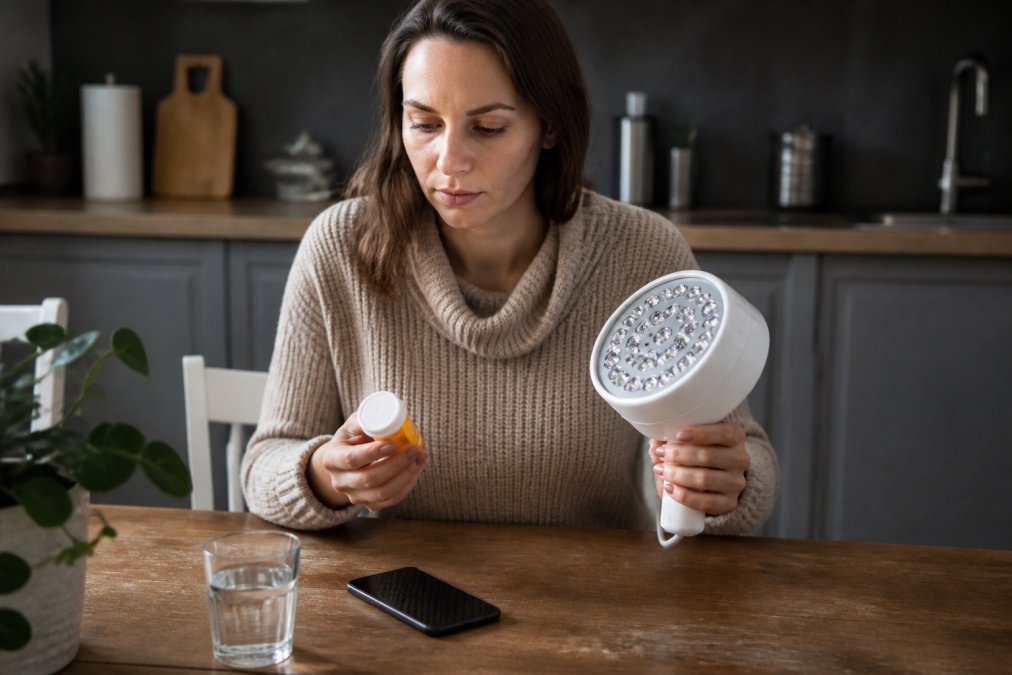
Follow this step-by-step protocol before using any red light therapy device:
Step 1: Compile your complete medication list. Include prescription drugs, over-the-counter medications, supplements, and topical products. Do not omit anything, even products you use occasionally.
Step 2: Research each medication for photosensitivity. Use the FDA labeling database and the National Library of Medicine portal to check for light sensitivity warnings. Pay special attention to the active ingredients rather than brand names.
Step 3: Consult your healthcare provider. Share your findings and discuss your intention to use red light therapy. Ask specifically whether your medications create any contraindication for photobiomodulation treatment. This clinical consultation is essential if you take multiple medications or have a history of skin reactions.
Step 4: Perform a patch test. Apply the red light therapy device to a small area of skin, such as your inner forearm, for a short session at reduced intensity. Wait 24 hours and observe the area for any adverse reaction before treating larger areas.
Step 5: Start conservatively. Begin with shorter sessions at lower intensity, then gradually increase duration as your skin demonstrates tolerance. The American Academy of Dermatology's guidance on light therapy emphasizes gradual exposure to assess individual skin responses.
Step 6: Document your sessions. Keep a log of treatment dates, durations, intensities, and any skin responses. This record helps you and your provider identify patterns or problems early.
Step 7: Reassess with any medication changes. Starting a new prescription or changing your dosage requires repeating this protocol. Drug-induced sensitivity can develop at any point during treatment.
This protocol is especially important for customers managing chronic conditions alongside their wellness routines. At TheCoolVibeShop, we encourage every customer to complete this review before using our red light therapy devices, which deliver 660nm red and 850nm near-infrared light for muscle recovery and joint relief. The 60-day money-back guarantee gives you time to confirm the treatment works without risk.
Conclusion: A Safe Path Forward
Red light therapy medication compatibility is manageable with the right precautions. The core principle is simple: know what you are taking, check for photosensitivity warnings, and consult your healthcare provider before starting treatment. Most people can safely enjoy the benefits of red light therapy with proper preparation.
TheCoolVibeShop offers modern, drug-free wellness solutions designed for safe, everyday use. Our red light therapy devices help with muscle soreness and joint relief through non-invasive technology. Every purchase is backed by our 60-day money-back guarantee, so you can try your device with complete confidence.
Get started with TheCoolVibeShop and experience a smarter path to relaxation and recovery, knowing you have taken every precaution for safe, effective treatment.
Frequently Asked Questions
Which medications interact with red light therapy?
The main concern is photosensitizing medications, which make your skin more reactive to light. Common examples include certain antibiotics like tetracyclines, some acne medications such as isotretinoin, and specific NSAIDs. These drugs can increase the risk of erythema, burns, or a skin reaction during red light therapy. Always check your medication's label for a photosensitivity warning. If you see one, consult your prescribing doctor before using a red light therapy device to discuss your specific risk.
Can I use red light therapy while taking antibiotics?
It depends on the specific antibiotic. Some, particularly tetracyclines and fluoroquinolones, are known photosensitizing agents that can cause drug-induced sensitivity to light. Using red light therapy while on these could lead to skin redness or discomfort. Other antibiotics do not carry this risk. Review your prescription information for any light sensitivity warning. If you are unsure, ask your pharmacist or doctor. They can tell you if your specific medication falls into the photosensitizing category.
Should I consult my doctor before starting red light therapy if I take daily medication?
Yes. A clinical consultation is the safest first step, especially if you take daily medication. Your doctor or pharmacist can review your full list of prescriptions and over-the-counter drugs for potential photosensitizing agents. This is a precautionary measure to prevent an adverse reaction like phototoxicity or dermatitis. Bring your medication bottles to the appointment so they can provide specific advice on whether red light therapy is safe for you and if any patch testing is recommended.