Red Light Therapy for Skin Rejuvenation Benefits

Table of Contents
- Red Light Therapy for Skin Rejuvenation Benefits: What the Science Shows
- How Often to Use Red Light Therapy for Face
- Red Light Therapy Session Duration: Getting the Timing Right
- At-Home Red Light Therapy Devices: What to Look For
- Skin Conditions Red Light Therapy Can Address
- Safety Profile, Side Effects, and Contraindications
- Building a Synergistic Skincare Routine Around Red Light Therapy
- Cost-Benefit Analysis: Is Red Light Therapy Worth It?
- Frequently Asked Questions
Last Updated: October 2, 2026
Red Light Therapy for Skin Rejuvenation Benefits: What the Science Shows
Red light therapy for skin rejuvenation benefits has moved from dermatology clinics into living rooms, and the reason is straightforward: it works on the same cellular machinery regardless of where the device sits. This guide from TheCoolVibeShop breaks down what the research actually supports, how long sessions should run, and which device specs matter when you buy.

The mechanism is called photobiomodulation. Photobiomodulation is the process by which specific wavelengths of light are absorbed by mitochondria, triggering cellular repair and energy production without heat or tissue damage. Red light sits between 630 and 700 nanometers, while near-infrared light reaches deeper into the dermal layer. The NIH research on photobiomodulation mechanisms describes how this absorption drives adenosine triphosphate production, the energy currency your cells use for repair.
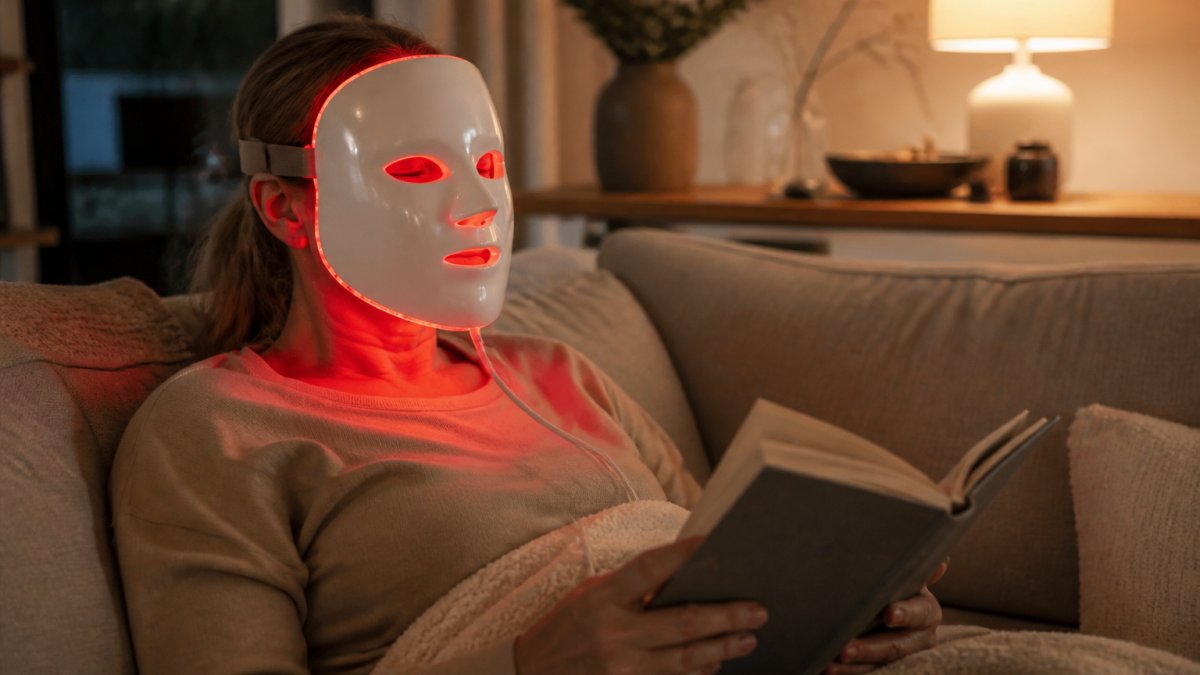
Photobiomodulation and Cellular Repair
Once photons reach the mitochondria, the cascade is measurable. Fibroblast activity increases, oxidative stress drops, and inflammation settles. Clinical trials across dermatology consistently show that these cellular changes translate into visible skin improvements over weeks, not days.
Collagen Synthesis and Fibroblast Activity
Collagen synthesis is the headline benefit. Fibroblasts are the cells that manufacture collagen and elastin, and red light stimulates them to work harder. The result is improved skin elasticity, softened fine lines, and a firmer texture across the face and neck. Photoaging, the cumulative damage from sun exposure, responds particularly well to consistent treatment.
How Often to Use Red Light Therapy for Face
The short answer: three to five sessions per week, spaced at least 24 hours apart. Consistency beats intensity here. Most dermatology protocols call for a four-to-twelve week window before assessing results, because collagen remodeling runs on a slow biological clock.
A common mistake is doubling up sessions after missing days. The mitochondria do not respond to volume the way muscles do.
The Three Phases of a Long-Term Protocol
Most articles stop at "use it a few times a week." What they leave out is that the right schedule changes as your skin adapts. A workable long-term framework has three phases:
Phase 1, Loading (weeks 1-4). Start at three sessions per week. The goal is adaptation, not maximum dose. If your skin tolerates it without lingering redness, you can move to four or five sessions per week by week three.
Phase 2, Building (weeks 5-12). This is where collagen density and elasticity gains accumulate. Hold at four to five sessions per week, keeping each session at the dose your device delivers in its recommended time.
Phase 3, Maintenance (week 13 onward). Once you have the results you want, you do not need to keep the loading schedule. Most practitioners find that dropping to two or three sessions per week maintains collagen gains, because the fibroblasts stay active without the same cumulative stimulus.
What Plateauing Actually Looks Like
Results follow a curve, not a straight line. The first visible changes, usually a brighter, more even tone, often appear within two to four weeks. Firmness and fine-line improvements tend to show between weeks eight and twelve.
If you stop entirely, the underlying biology reverses. Collagen turnover continues, and without the light stimulus, gains fade over a period of months rather than days.
Tracking Your Own Protocol
A simple log makes the difference between guessing and knowing. Note the date, session length, device setting, and any skin response for the first twelve weeks. Patterns emerge quickly: most people find their sweet spot is the lowest frequency that still holds their results, which is easier on the skin barrier and easier to sustain.
Red Light Therapy Session Duration: Getting the Timing Right
Session length depends on the device's power output, not a universal number. A general rule: 10 to 20 minutes per treatment area for most at-home devices.

What matters is total energy delivered to the skin, measured in joules per square centimeter. Overexposure produces erythema, a mild reddening that fades within hours. If your skin stays red past that window, your sessions are running too long.
| Device Type | Typical Session | Frequency | Best For |
|---|---|---|---|
| LED face mask | 10-15 min | 4-5x weekly | Full-face fine lines, texture |
| Handheld wand | 5-10 min per zone | 3-4x weekly | Targeted areas, jawline |
| Under-eye device | 3-5 min | Daily | Puffiness, dark circles |
At-Home Red Light Therapy Devices: What to Look For
Specifications decide whether a device does anything at all. Three numbers matter most: wavelength, irradiance, and total dose. A device that lists "red light" without these figures is a red flag, because a panel that looks bright can still deliver a sub-therapeutic dose.

Wavelength and Irradiance Specifications
Therapeutic red light sits between 630 and 660 nanometers for surface-level concerns like fine lines and hyperpigmentation. Near-infrared, between 800 and 850 nanometers, penetrates deeper for collagen and tissue regeneration. Many clinical devices pair 633 nm and 830 nm because the two wavelengths reach different depths of the dermis.
TheCoolVibeShop™ - LED Face Mask →
Irradiance, measured in milliwatts per square centimeter (mW/cm²), determines how quickly a therapeutic dose accumulates. Devices under 20 mW/cm² often need 20 minutes or more per session. Devices in the 30 to 100 mW/cm² range can deliver the same dose in a fraction of the time. The FDA guidance on light-based cosmetic devices classifies many at-home red light devices as Class II medical devices, which means manufacturers must meet specific safety and labeling standards. Check for that clearance before buying.
Fluence, Distance, and the Dose That Actually Matters
The number most buyers never see is fluence, the total energy delivered per unit area, measured in joules per square centimeter (J/cm²). Fluence is the product of irradiance and time: a 50 mW/cm² panel run for 10 minutes delivers roughly 30 J/cm². Most published protocols for skin rejuvenation land somewhere between 2 and 10 J/cm² per session at the skin surface, though the effective dose depends on how much light actually reaches the dermis.
Two variables quietly change that dose:
- Distance. Irradiance falls off with the square of the distance from the light source. A panel rated at 50 mW/cm² at 1 inch may deliver a quarter of that at 2 inches. Follow the manufacturer's recommended working distance rather than pressing the device against your face.
- Coverage. A handheld wand concentrates light on a small area, so a "full-face" session may take 15 to 20 minutes of repositioning. A full-face mask or panel spreads the same output across a larger area, which is why mask sessions are typically shorter but cover more skin per minute.
Reading a Spec Sheet Without Getting Fooled
A few practical checks separate a real device from a decorative one:
- Wavelength stated in nanometers, not just "red." Look for 630-660 nm and, if near-infrared is included, 800-850 nm.
- Irradiance stated in mW/cm², measured at a stated distance. If the distance is not given, the number is close to meaningless.
- Session time that produces a plausible fluence. If a device claims results in 3 minutes at low power, the math rarely supports a therapeutic dose.
- Class II clearance or equivalent safety labeling for devices marketed with cosmetic claims.
For a full-face option, the TheCoolVibeShop LED Face Mask delivers targeted light therapy at a price that makes consistent use realistic. For spot treatment around the eyes, the Under-Eye Red Light Therapy Massager combines light therapy with gentle massage to address puffiness and dark circles. And if you want a wand that doubles as a facial sculpting tool, the Red Light Facial Massager offers seven color modes for different skin goals.
Skin Conditions Red Light Therapy Can Address
Beyond general rejuvenation, red light therapy has documented use for several specific concerns. Acne scars respond to the anti-inflammatory effect, which reduces vascularity and smooths texture over time. Hyperpigmentation benefits from reduced oxidative stress in the epidermal layer. Fine lines and wrinkles improve as collagen density rebuilds. Some users also report reduced puffiness and a more even skin tone.
Safety Profile, Side Effects, and Contraindications
Red light therapy has a strong safety profile for most people. It is non-invasive, drug-free, and does not use UV radiation, so there is no risk of sunburn or DNA damage. The most common side effect is temporary redness at the treatment site.
Contraindications matter. Skip red light therapy if you are taking photosensitizing medications, including certain antibiotics and retinoids. People with a history of skin cancer, active cold sores in the treatment area, or lupus should check with a dermatologist first. If you have sensitive skin or are on daily medication, a patch test on your inner arm for three days is a sensible first step.
Building a Synergistic Skincare Routine Around Red Light Therapy
The order of operations changes your results. Apply red light therapy to clean, dry skin before serums and moisturizers. Light penetrates more effectively without product barriers, and the increased circulation afterward helps actives absorb better.
Pair red light with vitamin C in the morning and a gentle retinoid at night, but alternate the retinoid and light sessions if your skin is reactive. Niacinamide and hyaluronic acid layer well with light therapy and support the skin barrier during collagen remodeling. Always finish with sunscreen in the morning, because photoaging undoes the gains you are building.
Cost-Benefit Analysis: Is Red Light Therapy Worth It?
Professional in-office sessions typically run $50 to $200 each, and most protocols call for multiple visits. At-home devices cost more upfront but break even quickly if you stay consistent.
The real variable is adherence. Many people buy a device, use it for a month, and let it sit in a drawer.
Consistency is the hard part of any skin rejuvenation routine, and it is where most people quietly give up.
Frequently Asked Questions
Does red light therapy actually improve your skin?
Clinical trials show red light therapy can improve skin texture, reduce fine lines, and support collagen synthesis. The light penetrates the dermal layer, where it stimulates fibroblast activity and increases adenosine triphosphate production in mitochondria. This drives cellular repair and tissue regeneration over time. Results vary by device wavelength, irradiance, and consistency of use. Most users notice visible changes in skin elasticity and tone after 8 to 12 weeks of regular sessions.
How long does red light therapy take to improve skin?
Most people see early changes in skin texture and brightness within 4 to 6 weeks of consistent use. More noticeable improvements in fine lines, wrinkles, and skin elasticity typically appear after 8 to 12 weeks. Collagen synthesis is a gradual process, so results build over time. Following a regular treatment protocol, such as 3 to 5 sessions per week at the correct session duration, gives the best chance of visible improvement.
What are the potential side effects of red light therapy?
Red light therapy has a strong safety profile for most skin types. Some users experience mild erythema, or temporary redness, after a session. This usually fades within a few hours. Avoid use over suspicious moles or lesions, and check with a doctor if you take photosensitizing medications. Contraindications include pregnancy, active skin infections, and use over areas treated with certain topical retinoids. Always follow the device's instructions for session duration and frequency.
Can red light therapy be used alongside other skincare treatments?
Yes. Red light therapy pairs well with serums, moisturizers, and gentle massage tools. Apply skincare products before or after a session depending on the device instructions. Avoid layering strong exfoliants or retinoids immediately before treatment, as this can increase sensitivity. Many at-home red light therapy devices, such as facial wands and under-eye massagers, are designed to work with your existing routine to support the skin barrier and enhance absorption of topical products.