Natural Ways to Reduce Cellulite at Home: 2026 Guide

Table of Contents
- What Cellulite Actually Is (and Why Dimpling Happens)
- Diet Changes That Support Smoother Skin
- The Benefits of Dry Brushing for Cellulite
- How to Use Red Light Therapy for Skin Texture
- Best Exercises to Reduce Cellulite on Thighs
- At-Home Massage Tools That Help Reduce Cellulite
- Lifestyle Habits, Body Neutrality, and Long-Term Maintenance
- Frequently Asked Questions
Last Updated: September 10, 2026
What Cellulite Actually Is (and Why Dimpling Happens)
Cellulite is subcutaneous fat that pushes through the connective tissue beneath your skin, creating the dimpled texture most often seen on thighs, hips, and buttocks (my.clevelandclinic.org). It is not a disease, and it is not a sign that something is wrong with you. It is simply how fat, fibrous bands, and skin interact in certain bodies.
The mechanics matter if you want to reduce cellulite. Beneath the surface, collagen fibers form a web that separates fat chambers. When those fibers pull tight while fat pushes upward, the skin puckers. Genetics shape how thick your skin is and how your bands are arranged. Hormonal fluctuations, including those during pregnancy and menopause, change skin elasticity and fat distribution. Water retention and sodium intake can make the appearance worse on any given day.
This guide from TheCoolVibeShop covers what actually moves the needle at home, from diet and dry brushing to red light therapy and targeted exercise. According to the Cleveland Clinic overview of cellulite, most women will develop some form of it after puberty, which makes the goal realistic management rather than elimination. Below, we break down each approach and how to combine them.

Diet Changes That Support Smoother Skin
No food erases cellulite, but diet influences the two things you can actually control: inflammation and water retention. An anti-inflammatory eating pattern supports skin firmness and blood circulation, while cutting refined carbohydrates and excess sodium reduces the puffiness that deepens dimpling. What most guides skip is the why, the specific compounds in food that interact with collagen, circulation, and fat storage.
Nutrients that support the collagen web
The fibrous bands that create dimpling are made of collagen. You cannot rebuild them with food alone, but you can give your body the raw materials it needs to maintain them:
- Vitamin C: Required for collagen synthesis. Found in bell peppers, citrus, strawberries, and broccoli. Without adequate vitamin C, your body cannot cross-link collagen properly.
- Copper and zinc: Trace minerals that support collagen cross-linking and skin repair. Found in nuts, seeds, shellfish, and legumes.
- Amino acids (glycine, proline): The building blocks of collagen. Found in bone broth, eggs, poultry, and fish.
Foods that fight water retention
Sodium is the main driver of the puffiness that makes dimpling look worse. But potassium matters just as much, because it helps your body balance sodium and flush excess fluid:
- Potassium-rich foods: Bananas, avocado, spinach, sweet potatoes, and white beans.
- Natural diuretics: Cucumber, celery, watermelon, and asparagus, all high in water and potassium.
- Herbal support: Dandelion tea and green tea are commonly used to support fluid balance.
The blood sugar connection
Spikes in blood sugar trigger insulin release, which promotes fat storage and can weaken collagen over time through a process called glycation (peer-reviewed research). Choosing complex carbohydrates (oats, quinoa, beans) over refined ones (white bread, sugary drinks) keeps blood sugar steadier and supports skin elasticity.
What a skin-supporting day looks like
- Breakfast: Greek yogurt with berries and walnuts (protein, antioxidants, omega-3s).
- Lunch: Grilled salmon over spinach with avocado and olive oil (collagen-building amino acids, potassium, healthy fats).
- Dinner: Lentil soup with a side of roasted red peppers and broccoli (fiber, vitamin C, plant protein).
- Snacks: Citrus, cucumber slices, or a handful of almonds.
What to limit
- Added sugar and refined carbs: Drive insulin spikes and glycation.
- Excess sodium: Contributes to water retention and puffiness.
- Alcohol: Dehydrates skin and adds empty calories.
- Processed oils: Promote inflammation when consumed in excess.
A common mistake is treating this as a two-week cleanse. Skin remodeling takes months, not days. The dietary changes that help reduce cellulite are the same ones that support overall health, which makes them worth keeping long term. Consistent, moderate changes over three to six months can produce more visible results than any short-term restriction.
The Benefits of Dry Brushing for Cellulite
The benefits of dry brushing for cellulite come down to circulation and lymphatic drainage. Stroking a firm-bristled brush toward your heart stimulates blood flow to the skin surface and encourages the lymphatic system to move fluid that contributes to water retention. It will not dissolve fat, but it can temporarily smooth the appearance of dimpling and improve skin texture.
How to dry brush at home:
- Start on dry skin before showering, using light pressure.
- Brush upward from ankles to knees, then knees to hips, always toward the heart.
- Use long strokes on limbs and circular motions on the abdomen.
- Spend three to five minutes total, then shower and moisturize.
Consistent use may lead to visible smoothing within a few weeks. Skip it on broken or irritated skin.
How to Use Red Light Therapy for Skin Texture
Learning how to use red light therapy for skin texture is simpler than most people expect, but consistency decides whether it works. Red light therapy uses specific wavelengths of light that penetrate the skin and are thought to support collagen production and cellular health. Regular sessions may lead to firmer-looking skin after several weeks.
A practical routine:
- Clean and dry the treatment area.
- Position the device 2-6 inches from the skin.
- Treat each area for the device's recommended session length, typically 10-20 minutes.
- Use four to five times per week for the first month, then maintain.
What most guides miss is patience. Collagen remodeling is slow, and people who quit after two weeks never give their skin a chance to respond. TheCoolVibeShop's red light and cupping devices are built for this kind of regular, gentle at-home use, and the 60-day money-back guarantee means you can test a full routine before committing.
Best Exercises to Reduce Cellulite on Thighs
The best exercises to reduce cellulite on thighs build muscle underneath the skin. When the muscles in your legs and glutes get stronger, they push the skin outward and create a smoother surface over the fat layer. Muscle toning will not remove cellulite, but it changes how the area looks and feels.
Focus on compound lower-body movements:
- Squats: Three sets of 12-15 reps, two to three times weekly.
- Lunges: Forward and reverse, alternating legs, for balance and glute activation.
- High-intensity interval training: Short bursts of cycling, sprinting, or jumping to boost circulation and metabolism.
- Glute bridges: Slow, controlled reps to target the back of the thighs.
Pair training with a short cooldown walk to support lymphatic drainage. Consistency beats intensity here; three focused sessions a week outperform one brutal workout.
At-Home Massage Tools That Help Reduce Cellulite
Massage tools work on the same principle as professional treatments: mechanical pressure and suction stimulate blood circulation, break up fluid retention, and temporarily smooth the skin's surface. This is where at-home routines can genuinely compete with spa visits, because frequency matters more than force.
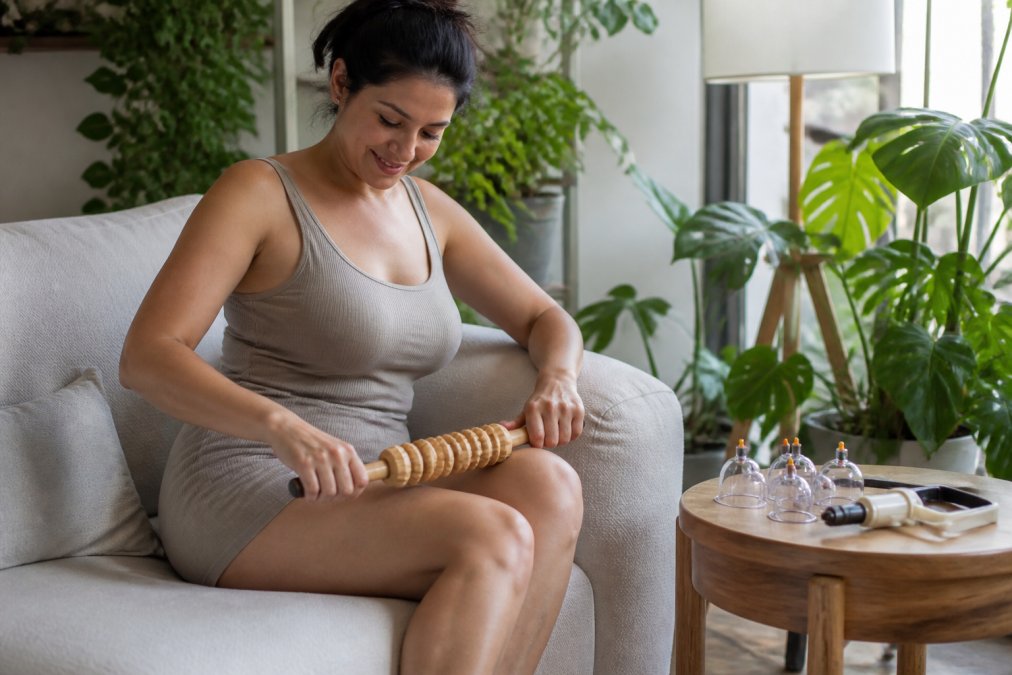
Two tools cover most of what you need. A handheld wooden massage stick, like TheCoolVibeShop's Wood Therapy Massage Stick, lets you apply controlled pressure along thighs, hips, and abdomen while supporting lymphatic drainage. For deeper work, an electric cupping device, such as TheCoolVibeShop's Cupping Kit with Red Light, combines suction, heat, and red light in one device with 12 adjustable suction levels.

Lifestyle Habits, Body Neutrality, and Long-Term Maintenance
The habits that undermine your progress are the ones nobody wants to name: smoking, heavy alcohol use, poor sleep, and long stretches of sitting. Smoking damages collagen fibers and reduces blood flow to the skin. Alcohol dehydrates and adds empty calories. Both accelerate the loss of skin elasticity that makes dimpling more visible. But the habits that help are not just about avoidance, they are about building a sustainable routine that fits your real life.
The habits that matter most
- Sleep: Poor sleep raises cortisol, which breaks down collagen and promotes fat storage. Aim for seven to nine hours.
- Stress management: Chronic stress has the same cortisol effect. Even ten minutes of daily walking, breathing, or stretching helps.
- Movement breaks: Sitting for hours slows circulation and lymphatic flow. Stand and move for two minutes every hour.
- Smoking cessation: This is the single most impactful lifestyle change for skin elasticity.
- Alcohol moderation: If you drink, keep it occasional and hydrate between drinks.
Post-pregnancy cellulite deserves its own note
Hormonal shifts, rapid weight change, and stretched skin often make cellulite more noticeable in the months after birth. This is normal, and it responds to the same tools above once your body has recovered. What most guides miss is the timeline: skin and connective tissue continue remodeling for up to a year postpartum, so gentle consistency, not aggressive treatment, is the right approach. Focus on hydration, protein intake, and gentle movement first. Add dry brushing and massage once you are cleared for activity.
The psychological side, and why it matters
Here is where most articles stay silent. Cellulite is close to universal, and chasing a flawless surface is a losing game. Research consistently shows that body image distress is linked to worse mental health outcomes, not better skin. Body neutrality, focusing on what your body does rather than how it looks, makes it far easier to stick with a routine long enough to see results. The goal is sustainable maintenance, not perfection.
A practical reframe: instead of asking "does this remove cellulite?" ask "does this help me feel better in my body?" Dry brushing, massage, and movement all support circulation and relaxation. Those benefits are real regardless of how much dimpling fades.
A 30-day integration plan
Most results offer a list of tips. Here is a structured way to build the habits without overwhelm:
| Week | Focus | Daily Actions |
|---|---|---|
| 1 | Hydration and diet | 8 glasses of water, one potassium-rich food, cut sugary drinks |
| 2 | Add movement | 20-minute walk or leg exercises, 2-3 times this week |
| 3 | Add skin care | Dry brushing 3-5 times, moisturize after |
| 4 | Add tools | Massage or red light therapy 4-5 times, keep everything else going |
Long-term maintenance
Once the habits are in place, the goal is consistency, not intensity. A realistic maintenance week looks like:
- Dry brushing: 3-5 times
- Red light therapy: 4-5 times
- Leg exercises: 2-3 times
- Massage tools: most days
- Hydration and diet: daily
| Habit | Why It Helps | Realistic Frequency |
|---|---|---|
| Dry brushing | Boosts circulation, reduces water retention | 3-5 times weekly |
| Red light therapy | Supports collagen and skin texture | 4-5 times weekly |
| Leg exercises | Builds muscle tone under skin | 2-3 times weekly |
| Massage tools | Stimulates lymphatic drainage | Most days |
| Hydration and diet | Reduces puffiness, supports skin | Daily |
Frequently Asked Questions
Can cellulite on legs be reversed with natural methods?
Cellulite cannot be permanently reversed, but natural ways to reduce cellulite at home can visibly smooth its appearance. Dry brushing, red light therapy, and thigh-focused strength work improve blood circulation and skin firmness over time. Most people notice subtle changes after 6 to 8 weeks of consistent effort. Genetics and hormonal fluctuations still play a role, so results vary. Pairing several methods works better than relying on one.
Do home remedies actually reduce the appearance of cellulite?
Some do, within limits. Dry brushing, cupping massage, and caffeine-based creams can temporarily tighten skin and boost lymphatic drainage. Red light therapy supports collagen fibers and cellular health with regular use. None of these erase subcutaneous fat or change connective tissue structure. Think of them as appearance improvers, not cures. Consistency matters more than any single product.
How does lifestyle impact the appearance of cellulite?
Smoking weakens collagen fibers and reduces blood circulation, which makes dimpling more noticeable. High sodium intake promotes water retention, and refined carbohydrates can increase adipose tissue. Poor hydration and sitting for long hours slow lymphatic drainage. On the positive side, an anti-inflammatory diet, regular movement, and adequate sleep support skin elasticity. Small daily habits add up more than occasional intense efforts.
What are the most effective non-invasive methods for skin smoothing?
At home, the strongest combination is red light therapy, cupping or wood therapy massage, and targeted lower-body strength training. Red light supports collagen production and skin texture, while massage tools boost circulation and lymphatic drainage. Exercises like squats and lunges build muscle tone beneath the skin. Together they address multiple layers of the dimpling. Professional dermatological treatments exist.
Reducing cellulite at home takes patience, a few good habits, and tools you will actually keep using. TheCoolVibeShop builds non-invasive, drug-free wellness devices for exactly this kind of daily routine, from red light therapy to gentle massage tools designed for safe, everyday use at home. Every purchase is backed by a 60-day money-back guarantee and trusted by over 1,500 satisfied customers. Get started with TheCoolVibeShop and build a routine that helps you feel better and look brighter.