How to Stick to a Wellness Routine: A Practical Guide

Table of Contents
- Why Most People Fail to Stick to Wellness Routines
- How to Build Healthy Habits That Last
- The Psychology of Staying Consistent
- Non-Invasive Wellness Tools to Support Your Routine
- How to Stay Consistent With Exercise and Movement
- Tracking Progress and Accountability Systems
- Maintaining Your Routine Through Life Transitions
- Conclusion
Last Updated: August 24, 2026
Why Most People Fail to Stick to Wellness Routines
Most wellness routines fail not from laziness but from misalignment with actual life. People design routines around an idealized self with unlimited time and energy, then abandon them when reality intrudes within two weeks.
The core mistake is treating wellness as separate from daily life rather than woven into it. Routines that survive acknowledge friction upfront, they're designed around your actual energy patterns, not aspirational ones. According to research on habit formation from the American Psychological Association, behavioral change requires matching interventions to specific context. When you fail to stick, your brain records it as "This routine doesn't work for me," creating a self-fulfilling prophecy. The solution isn't willpower. It's designing a routine that's hard to skip because it actually fits.
How to Build Healthy Habits That Last
Building a lasting wellness routine requires starting with precision: one anchor habit that makes everything else easier, then stacking additional practices on top while reducing friction at every step.
Start with a single keystone habit
A keystone habit triggers a cascade of other behaviors. For wellness, this might be a morning ritual or post-work transition. If you choose five minutes of morning stretching, you've already anchored your body's attention. Adding water takes seconds. Checking sleep quality takes another minute. One practice becomes three with minimal friction.
Start absurdly small. A five-minute routine you perform daily builds neural pathways that a sporadic thirty-minute routine never will (peer-reviewed research). Consistency compounds. Many find that starting with almost-too-easy duration creates momentum that naturally expands over time.
Use habit stacking to reduce friction
Habit stacking attaches new behaviors to existing ones, eliminating the need to create new time slots. The formula: After I [existing habit], I will [new habit]. After I pour my morning coffee, I will spend two minutes on neck tension relief. After I close my laptop, I will do a five-minute wind-down routine.

The existing habit serves as a trigger, removing the decision-making step where most routines fail. Research shows that removing friction from desired behaviors increases adherence significantly (peer-reviewed research). By stacking habits, you leverage "automaticity", once a behavior is automatic, it requires minimal cognitive resources. New practices become nearly automatic too, making this approach far more effective than willpower-based methods.
The Psychology of Staying Consistent
Consistency isn't about motivation, it's about designing your environment to work with your neurobiology, not against it.
Understanding your circadian rhythm and energy patterns
Energy isn't constant throughout the day. Most people have a peak performance window, usually mid-morning or early afternoon. A wellness routine scheduled during your energy dip will fail; one aligned with your peak will stick.
Track your energy for one week. Note when you naturally feel alert, when you crash, and when you recover. Schedule demanding practices during high-energy windows and gentler practices like stretching or massage during dips. If your peak is 10 a.m., that's when you do primary movement. If you crash at 3 p.m., that's when you do restorative work. Understanding your circadian rhythm explains why "evening workouts" fail for non-night-oriented people, you're fighting your body's natural wind-down cycle. Alignment dramatically increases adherence.
Neurodivergent-friendly approaches to routine maintenance
Traditional wellness advice assumes neurotypical brains: linear thinking, sustained attention, and motivation from abstract future benefits. This fails for many people, particularly those with ADHD or autism.
A neurodivergent-friendly approach removes reliance on abstract motivation, instead building in immediate rewards, external structure, and sensory feedback. Rather than "I should stretch for long-term health," the routine provides immediate pleasure: tension release, the satisfaction of checking off a tracker, or sensory enjoyment.
Many neurodivergent individuals benefit from hyperfocus. A wellness routine that leans into this, using devices that provide intense sensory feedback, is more likely to stick. External accountability systems also work better than internal motivation, a shared tracker or device that logs sessions creates structure your brain can rely on.
Non-Invasive Wellness Tools to Support Your Routine
The right tools remove friction and provide immediate sensory feedback, both supporting consistency. A routine with a device you enjoy using sticks better than one relying purely on willpower.
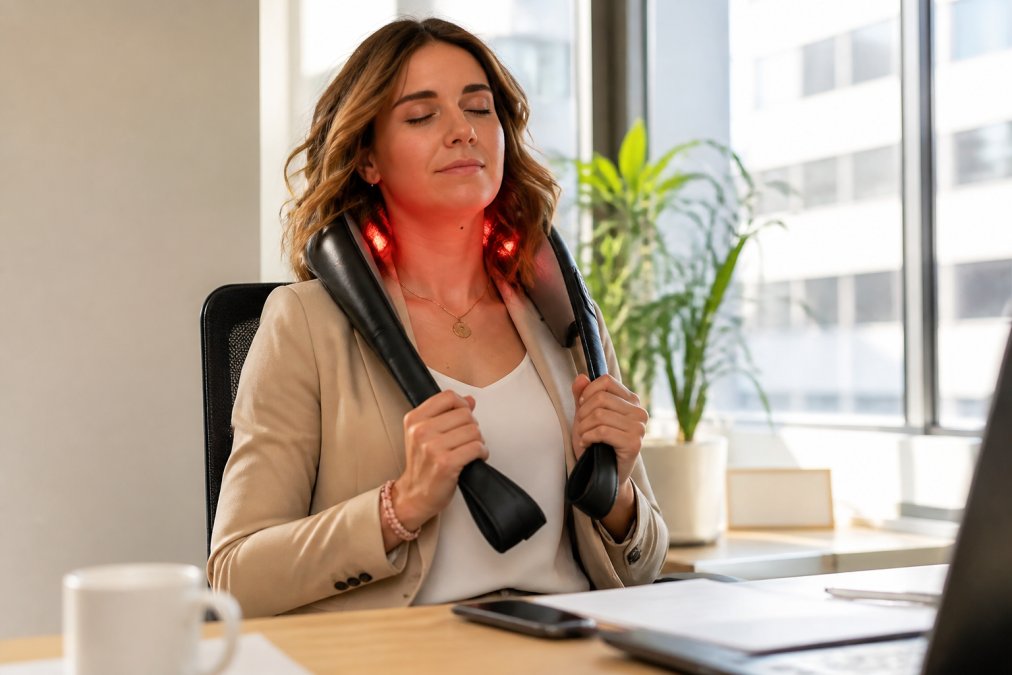
TheCoolVibeShop offers non-invasive solutions designed for daily wellness routines. The TheCoolVibeShop Neck Massager with Heat and TENS Therapy ($97.50) addresses chronic neck tension with 50 adjustable intensity levels, making customization easy.
The Electric Cupping Kit with Red Light Therapy ($139.99) combines cupping, scraping, massage, heating, and red light therapy in one device. This versatility lets you adjust based on how your body feels, increasing likelihood of actual use.

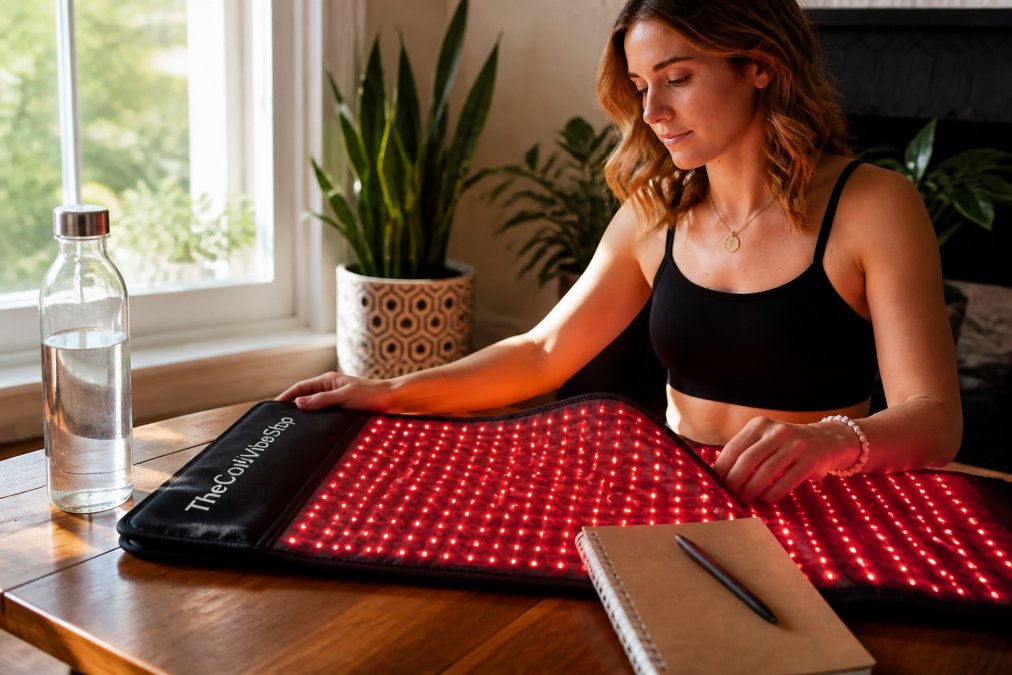
The TheCoolVibeShop Full Body Red Light Therapy Mat ($399.99) supports recovery during rest periods. Using it during wind-down creates a powerful anchor habit: deliberate recovery signals to your body that rest is part of wellness practice.

These tools provide immediate sensory feedback, warmth, vibration, visible effects, which reinforces behavior. Your brain registers immediate reward, making the routine feel chosen rather than obligatory.
How to Stay Consistent With Exercise and Movement
Exercise consistency fails when practice misaligns with actual life. A routine that works integrates movement into existing schedules rather than competing with them.
Scheduling movement around your natural energy dips
Identify your energy patterns first. When do you naturally feel most capable of movement? Schedule your primary practice during that window. During energy dips, schedule gentler practices like stretching, massage, or breathing work.
This prevents the "all-or-nothing" trap. You're not choosing between full workout or nothing, but between full workout and restorative practice. Both count as consistency. Both support wellness. The practice changes based on energy, but the routine never breaks.
Recovery and self-care as part of the equation
Most people treat recovery as passive, something that happens when not actively exercising. This is backwards. Recovery is active and requires intentionality equal to movement.
When recovery practices have the same status as exercise in your routine, consistency improves. A massage session or red light therapy counts as wellness practice, not a break from it. This perspective shift changes behavior, you prioritize recovery practices the same way you prioritize workouts, schedule them, show up, and track them. Your body actually recovers, maintaining capacity for movement over time.
Tracking Progress and Accountability Systems
A wellness routine without tracking slowly fades. Tracking creates external structure your brain relies on and visible records of consistency that reinforce behavior.
The best tracking systems are ones you actually use, a simple calendar marking completion or a detailed log tracking practices and how you felt. Accountability systems work similarly. Sharing your routine with others creates external motivation internal motivation alone can't provide.
Many find combining tracking with specific devices creates powerful feedback loops. Using a massage device or red light therapy mat becomes part of your tracking system. Seeing the device reminds you of the routine, you use it, and using it reinforces the behavior.
Maintaining Your Routine Through Life Transitions
Life rarely stays stable. A wellness routine that can't adapt to transitions will eventually break. Distinguish between core practice and specific form. Your core might be "daily movement and recovery." The form could be a 30-minute workout one week and a 10-minute massage session the next.
When moving through major transitions, your routine doesn't disappear, it compresses or shifts. If built on habit stacking and keystone habits, these scale up or down without breaking. Tools like TheCoolVibeShop devices, usable in five or thirty minutes with adjustable intensity, adapt to changing circumstances while maintaining consistency.
Maintaining a wellness routine requires more than motivation. It requires a routine designed around your actual life, real energy patterns, and personal neurobiology. When aligned to these factors, consistency stops being a struggle and becomes inevitable.
TheCoolVibeShop's non-invasive wellness solutions, from targeted neck massagers to comprehensive red light therapy systems, support routines that actually stick. With a 60-day money-back guarantee, you can test whether these tools work for your needs. Start with one practice, stack it with an existing habit, and let consistency compound from there.
Frequently Asked Questions
Q: Why do most people fail to stick to their wellness goals?
A: People abandon wellness routines because they start too aggressively, lack accountability systems, or fail to align routines with their natural energy patterns and lifestyle. The most common mistake is treating wellness as an all-or-nothing commitment rather than building it gradually. Life transitions, inconsistent sleep schedules, and lack of visible progress also derail consistency. Starting small, tracking progress, and using accountability tools dramatically improves adherence.
Q: What's the best way to build healthy habits that stick?
A: Start with one keystone habit, a single behavior that anchors your routine, like morning hydration or a 10-minute movement session. Use habit stacking by attaching new wellness behaviors to existing routines (e.g., massage therapy after workouts). Keep the initial commitment small enough to complete on your worst day. Track your consistency visually, and adjust the routine based on what actually fits your schedule. Most habits stabilize after consistent practice.
Q: How can non-invasive wellness tools help me stay consistent?
A: Non-invasive tools like red light therapy mats and massage devices reduce barriers to consistency by making wellness convenient and low-friction. A tool you can use at home eliminates travel time, and visible recovery benefits (reduced muscle soreness, better sleep) reinforce your commitment. Tools also provide tangible feedback, you feel the results, which strengthens habit formation. The 60-day money-back guarantee on TheCoolVibeShop products removes financial risk while you build the habit.
Q: What should I do if my wellness routine falls apart during a major life change?
A: During transitions, simplify rather than abandon your routine. Identify your one non-negotiable habit and protect it fiercely. Use flexibility as a strength: a 5-minute movement session counts as a win during busy periods. Reframe setbacks as temporary pauses, not failures. Once stability returns, gradually layer back in other habits. Neurodivergent individuals and those managing high stress benefit from written reminders and accountability partners who understand that consistency looks different during challenging seasons.
This article was written using GrandRanker