Best Massage Device for Deep Tissue Relief

Table of Contents
- Why Desk Workers Need Deep Tissue Massage Solutions
- How Deep Tissue Massage Targets Muscle Fascia and Tension
- Best Massage Device for Deep Tissue: Top 5 Options Compared
- Manual vs. Electric Massage Tools: Which Works Better
- How Long to Use a Massager for Muscle Recovery
- Benefits of Deep Tissue Massage for Posture Improvement
- Safe Usage: Contraindications and Daily Use Guidelines
- Desk-Specific Massage Routines for Neck, Shoulders, and Back
Last Updated: August 17, 2026
Why Desk Workers Need Deep Tissue Massage Solutions
Desk workers spend seven to eight hours daily hunched over keyboards, creating chronic tension in the neck, shoulders, and upper back. This posture compresses the fascia, connective tissue surrounding muscles, leading to stiffness, reduced range of motion, and persistent pain that over-the-counter relievers fail to address. Deep tissue massage devices target these areas directly, offering a non-invasive alternative to expensive physical therapy or medication.
Deep tissue massage stimulates blood circulation, releases trigger points, and breaks down adhesions restricting movement. The result is reduced tension headaches, improved posture, and restored mobility.

How Deep Tissue Massage Targets Muscle Fascia and Tension
Deep tissue massage applies sustained pressure to fascia and underlying muscle layers, breaking up adhesions and scar tissue from repetitive stress. This restores elasticity to the fascia, allowing muscles to function properly. When pressure is applied through a massage device, fresh blood flow reaches restricted areas, delivering oxygen and nutrients while removing metabolic waste.
Percussion massagers work through rapid, repetitive impacts penetrating deep tissue. Electric models with brushless motors deliver consistent vibration therapy without overheating, making them safe for daily use. Red light therapy complements this by stimulating cellular regeneration at deeper levels, addressing inflammation that manual massage alone cannot reach. The combination of mechanical pressure and therapeutic light wavelengths (660nm and 850nm) creates synergistic effects that accelerate recovery.
Consistency matters more than intensity. A lighter massage device used daily outperforms an aggressive tool used sporadically.
Best Massage Device for Deep Tissue: Top 5 Options Compared
Finding the right massage device depends on your pain points, budget, and preference for electric versus manual tools.
1. Neck Massager with Heat and TENS Therapy
The Neck Massager with Heat and TENS Therapy from TheCoolVibeShop is a top choice for office workers targeting cervical spine tension and neck pain. This device combines low-frequency pulse technology with constant heating (100.4°F-107.6°F) to deliver deep tissue stimulation exactly where desk workers suffer most. The U-shaped design conforms to the cervical spine, and the 3D wireless pad ensures even pressure distribution.
Nine massage modes with 50 intensity levels allow precise customization for your pain threshold. TENS therapy uses electrical pulses to stimulate nerves and block pain signals, while heat promotes blood circulation and muscle relaxation simultaneously. You can use it during work breaks without removing clothing or leaving your office.
Best for: Office workers with chronic neck pain, tension headaches, and cervical spine stiffness.
Pricing: $97.50
Key features:
- 9 massage modes with 50 intensity levels
- Constant heat function (100.4°F-107.6°F)
- Ergonomic U-shaped design
- Cordless operation
- FSA/HSA eligible
2. Cordless Red Light Therapy for Neck and Shoulder Pain
The Cordless Red Light Therapy device ($299.99) delivers dual-wavelength therapy: 660nm red light for surface tissue and 850nm near-infrared for deep penetration reaching joints and bones. Five light modes provide flexibility for different pain levels and recovery stages. The cordless design with 3000mAh battery capacity means you're not tethered to outlets. The smart touch-screen interface and timer settings (10 or 20 minutes) eliminate guesswork about session length.
Best for: Desk workers seeking comprehensive pain relief plus cellular recovery.
Standout feature: Dual wavelength therapy.
3. Electric Cupping Kit with Red Light Therapy
The Electric Cupping Kit ($139.99) combines five therapeutic modalities: cupping, scraping, massage, heating, and red light therapy. This 5-in-1 approach addresses multiple pain mechanisms simultaneously, ideal for desk workers with complex tension spanning the neck, shoulders, and upper back. The kit includes three smart cups with 12 adjustable suction levels.
Cupping therapy draws stagnant blood and lymphatic fluid out of restricted areas, while integrated heating relaxes muscles before treatment. Red light therapy follows, stimulating cellular repair.
Best for: Desk workers with widespread upper body tension and those new to massage therapy.
Pricing: $139.99
4. Wood Therapy Handheld Massage Stick
The Wood Therapy Handheld Massage Stick ($98.99) represents the manual option for desk workers preferring non-electric solutions or needing portability. This 21-inch wooden tool uses natural wood construction that won't damage skin and provides two distinct massage experiences through its contoured design. Unlike percussion massagers requiring batteries, this tool works anywhere.
Manual massage tools demand more effort but offer superior control. You adjust pressure based on pain feedback in real time.
Best for: Budget-conscious desk workers, those sensitive to vibration, and travelers.
Standout feature: No batteries, no charging, no noise.
5. Topcupro 4-in-1 Red Light Therapy Wrap
The Topcupro 4-in-1 Red Light Therapy Wrap ($154.99) wraps around your neck, shoulder, elbow, or ankle, delivering hands-free red light therapy while you work. The 96-piece 2-in-1 LED chips provide comprehensive coverage, and the elastic band design ensures even light distribution. USB-C charging means you can power it from your computer.
This device excels for desk workers wanting passive recovery during work hours. The wrap stays in place, delivering continuous red light therapy (660nm and 850nm wavelengths) while you work. The 20-minute scheduled shutdown prevents overuse.
Best for: Desk workers seeking passive, hands-free recovery during work hours.
Pricing: $154.99
| Device | Price | Best For | Key Advantage |
|---|---|---|---|
| Neck Massager with TENS | $97.50 | Neck/cervical pain | TENS + heat combination |
| Cordless Red Light | $299.99 | Deep recovery | Dual wavelength, cordless |
| Electric Cupping Kit | $139.99 | Widespread tension | 5-in-1 therapy approach |
| Wood Therapy Stick | $98.99 | Budget/travel | No batteries, manual control |
| Topcupro Red Light Wrap | $154.99 | Hands-free recovery | Passive therapy during work |
Manual vs. Electric Massage Tools: Which Works Better
The choice between manual and electric massage devices hinges on pain severity, available time, and preference for active versus passive recovery. Manual tools demand physical effort but offer superior control and require no maintenance. Electric devices deliver consistent, automated pressure but depend on batteries.
For moderate tension, manual tools often prove sufficient. Electric massage tools excel for severe, chronic tension or when time is limited. A percussion massager can penetrate deep tissue in 10-15 minutes, whereas manual tools might require 20-30 minutes to achieve similar results. Electric tools with heat and TENS therapy combine multiple recovery modalities in one session.

The ideal approach combines both: use an electric device for primary recovery during high-stress periods, then maintain results with manual tools on lower-intensity days or during travel.
How Long to Use a Massager for Muscle Recovery
Most devices deliver optimal results in 10-20 minute sessions, with 15 minutes representing the sweet spot for most desk workers. Shorter sessions (5-10 minutes) address acute pain but don't penetrate deep enough for lasting relief. Longer sessions (30+ minutes) risk overstimulating tissue, causing inflammation rather than relief.
Frequency matters as much as duration. Daily use is safe for most devices, but consistency trumps intensity. Using a massage device 10 minutes daily produces better results than 60 minutes once weekly. Most desk workers benefit from morning sessions (addressing overnight stiffness) and evening sessions (preventing tension accumulation during the workday).
Recovery time between sessions depends on device intensity and tissue sensitivity. The Wood Therapy Stick requires 24-48 hours between aggressive sessions on the same muscle group, while gentle red light therapy can be used daily. Listen to your body: if muscles feel sore or bruised, increase rest days.

Benefits of Deep Tissue Massage for Posture Improvement
Poor posture and muscle tension create a vicious cycle: rounded shoulders and forward head posture tighten the upper trapezius and chest muscles, restricting range of motion. Deep tissue massage breaks this cycle by releasing tight muscles that lock you into poor posture, allowing your skeletal structure to return to neutral alignment.
When you address fascia and trigger points in your upper back, shoulders, and neck, your body naturally corrects posture. Red light therapy amplifies this benefit by reducing inflammation in the cervical spine and shoulder joints, removing the pain signal driving poor positioning.
Safe Usage: Contraindications and Daily Use Guidelines
While massage devices are generally safe for daily use, certain conditions require caution. Do not use electric massage devices directly over the spine, particularly the cervical spine, where sensitive nerve tissue lies close to the surface. Focus instead on muscles surrounding the spine: the upper trapezius, rhomboids, and erector spinae.
Avoid massage devices if you have active inflammation, acute injury, or skin conditions in the treatment area. If you're on blood-thinning medications, consult your healthcare provider before using cupping therapy devices, as cupping can cause bruising more easily.
Red light therapy is exceptionally safe but requires common sense. Don't stare directly into the light source, particularly 850nm near-infrared wavelengths that aren't visible to the eye; you could damage your retinas.
For daily use, start conservatively. Most desk workers can safely use percussion massagers 5-7 days weekly, red light therapy daily, and manual tools 4-6 days weekly. Monitor how your body responds: if muscles feel sore, bruised, or inflammation increases, reduce frequency. Hydration matters; massage mobilizes metabolic waste, and dehydration prevents your body from clearing it efficiently.
If you have nerve pain, numbness, or tingling in your arms or hands, massage devices may aggravate these symptoms, suggesting nerve compression requiring professional evaluation. The 60-day money-back guarantee from TheCoolVibeShop reflects confidence in safety and effectiveness.
Desk-Specific Massage Routines for Neck, Shoulders, and Back
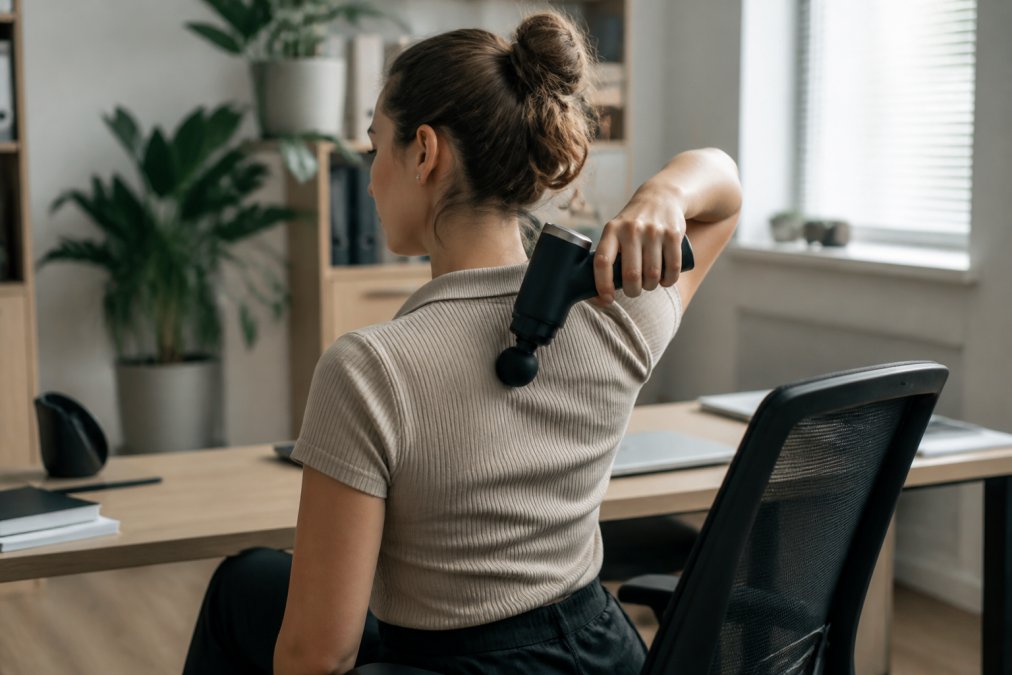
Effective massage therapy for desk workers targets three primary tension zones: the cervical spine and neck, the upper trapezius and shoulders, and the mid-back. A complete routine takes 20-30 minutes and addresses all three areas.
Neck and Cervical Spine (5-7 minutes): Use the Neck Massager with TENS Therapy or Cordless Red Light Therapy device. Start at the base of your skull where the cervical spine begins, applying gentle pressure for 30-45 seconds. Move downward along both sides of the cervical spine, treating tissue 1-2 inches lateral to the spine itself, never directly on the spine.
Upper Trapezius and Shoulders (7-10 minutes): The upper trapezius accumulates more tension than any other desk-worker muscle. Use the Electric Cupping Kit at medium suction (levels 4-6) or the Wood Therapy Stick with firm pressure. Starting at the base of your neck where the trapezius originates, work outward toward your shoulder joint using slow, deliberate strokes. Spend extra time on trigger points, those tender knots sending pain radiating down your arm or into your head. Hold pressure on trigger points for 45-60 seconds until the knot softens.

Mid-Back and Rhomboids (5-8 minutes): The rhomboid muscles between your shoulder blades tighten from slouching. Use the Wood Therapy Stick or Topcupro Red Light Therapy Wrap on this area. Apply steady pressure along the inner edge of your shoulder blade, moving vertically up and down.
Complete Routine Sequence:
- Neck Massager with TENS (10 minutes) or red light therapy on the cervical spine
- Manual work on upper trapezius using Wood Therapy Stick (8 minutes)
- Topcupro Red Light Wrap on shoulders or mid-back (15 minutes)
Perform this routine 3-4 times weekly for acute tension, or 2-3 times weekly for maintenance once pain resolves.
Morning Quickie (10 minutes): Use the Neck Massager with TENS for 10 minutes focusing on the cervical spine and upper trapezius. This addresses overnight stiffness and prevents tension from accumulating during the workday.
Integration with Ergonomics: Massage therapy works best alongside ergonomic improvements. Adjust your desk height so your monitor sits at eye level, reducing forward head posture. Position your keyboard and mouse at elbow height to prevent shoulder elevation.
The right massage device for deep tissue relief transforms how desk workers manage chronic tension. Whether you prioritize affordability, advanced technology, or hands-free passive recovery, TheCoolVibeShop's lineup delivers options for every need and budget. The Neck Massager with TENS Therapy combines proven TENS technology with heat therapy at an accessible price point. For premium recovery, the Cordless Red Light Therapy device offers dual-wavelength penetration addressing inflammation at the cellular level. Manual tools like the Wood Therapy Stick provide portability and control without battery concerns.
Start with a device matching your primary pain point: neck tension calls for the TENS massager, while widespread upper body tension benefits from the Electric Cupping Kit's multifunctional approach. Use consistently for 2-3 weeks before evaluating results. TheCoolVibeShop's 60-day money-back guarantee removes the financial risk. Shop Now and reclaim the pain-free posture and mobility that desk work steals from you.
Frequently Asked Questions
Do deep tissue massagers actually work for office workers with chronic neck and shoulder tension?
Yes, deep tissue massagers work by targeting muscle fascia and trigger points that accumulate from prolonged desk work. They increase blood circulation, reduce muscle tension, and promote connective tissue recovery. Results depend on consistent use and proper technique. Many desk workers report noticeable relief within 2-3 weeks of regular sessions. The key is choosing a device with sufficient intensity for your pain level and using it on the correct muscle groups.
What is the best massage device for deep tissue relief at a desk?
The best massage device for deep tissue relief depends on your specific pain points. For neck and cervical spine issues, the Neck Massager with Heat and TENS Therapy ($97.50) offers targeted relief with 50 intensity levels. For broader upper back and shoulder tension, the Cordless Red Light Therapy device ($299.99) combines infrared penetration with therapeutic wavelengths. Manual options like the Wood Therapy Handheld Massage Stick ($98.99) work well for self-directed deep tissue manipulation when you need portability.
How long should I use a massager for muscle recovery each day?
Start with 10-15 minute sessions, 3-4 times per week for muscle recovery. As your muscles adapt, you can increase to 15-20 minute sessions daily if needed. Avoid using any single area for more than 20 minutes to prevent tissue irritation. For desk workers, a morning and evening routine of 10 minutes each on neck and shoulders works well. Always allow at least one rest day per week to prevent overuse and allow fascia to fully recover.
Are deep tissue massagers safe for daily use if I have sensitive skin or take medications?
Most deep tissue massagers are safe for daily use, but check with your healthcare provider if you take blood thinners, have recent injuries, or have skin conditions. Avoid using massagers directly on inflamed areas, varicose veins, or broken skin. Start with lower intensity settings if you have sensitive skin. All TheCoolVibeShop devices include a 60-day money-back guarantee, so you can test them risk-free. If you experience unusual pain or bruising, discontinue use and consult a doctor.
What are the benefits of deep tissue massage for posture improvement?
Deep tissue massage releases tension in the upper trapezius, cervical spine, and lumbar support muscles that tighten from poor posture. By reducing muscle knots and improving blood circulation, massage therapy helps restore your natural range of motion and reduces the muscle fatigue that causes you to slouch. Regular deep tissue work combined with ergonomic adjustments retrains your postural muscles, reducing tension headaches and promoting long-term spinal alignment. Most users notice improved posture within 4-6 weeks of consistent use.
This article was written using GrandRanker