How to Fix Muscle Knots Fast: A 2026 Guide

Table of Contents
- What Are Muscle Knots and What Causes Them
- How to Fix Muscle Knots Fast: Step-by-Step Relief
- Best Stretches for Muscle Knots in the Neck and Shoulders
- Best Tools for Muscle Knots: What Actually Works
- How Long Do Muscle Knots Last Without Treatment
- How to Fix Muscle Knots Fast Through Prevention
- When to See a Doctor or Physical Therapist
- Conclusion
Last Updated: August 11, 2026
What Are Muscle Knots and What Causes Them
Muscle knots are tight, sensitive spots within muscle tissue that form when muscle fibers contract and fail to release. Clinically, these are called myofascial trigger points: small, hyperirritable areas within soft tissue that cause localized pain, referred pain, and restricted range of motion.
The underlying mechanism involves muscle fibers stuck in sustained contraction. Normal circulation becomes compromised, waste products accumulate, and the area becomes increasingly sensitive. What starts as mild stiffness can progress into chronic pain radiating into the neck, shoulder, or arm.
Common causes include:
- Prolonged static posture (sitting at a desk for hours without movement)
- Repetitive motions that overload specific muscle groups
- Acute muscle strain from sudden exertion
- Poor sleep positioning that keeps certain muscles under tension overnight
- Dehydration, which reduces tissue pliability and slows recovery
According to the American Academy of Osteopathic Medicine's overview of osteopathic manual medicine, myofascial trigger points are among the most common sources of musculoskeletal pain seen in clinical practice.
The Stress and Sedentary Lifestyle Connection
Psychological stress directly contributes to muscle knots. When the body is under mental or emotional stress, the nervous system elevates baseline muscle tone. Muscles stay slightly contracted even at rest. Over days and weeks of sedentary lifestyle combined with chronic stress, certain muscles, particularly the upper trapezius, levator scapulae, and rhomboids, never fully release.
Sitting for extended periods reduces circulation to postural muscles, deprives them of oxygen, and prevents the natural movement that flushes metabolic waste. The result is slow accumulation of tension that progresses to acute pain.
How to Fix Muscle Knots Fast: Step-by-Step Relief
The fastest way to fix muscle knots is combining localized heat application, direct trigger point release, and targeted movement in sequence. Done together, most people feel meaningful relief within 20 to 30 minutes.
Step 1: Apply Heat or Cold to Reduce Tension
Start with heat therapy for most muscle knots. Heat increases circulation to affected soft tissue, reduces muscle spasm, and makes fibers more pliable before manual pressure. A heating pad, warm towel, or infrared device applied for 10 to 15 minutes is usually sufficient.
Use cold compress in the first 24 to 48 hours after acute muscle strain, when inflammation is primary. Cold reduces acute inflammation and numbs the area. After that window, switch to heat. A common mistake is applying ice to chronic knots that have persisted for weeks, cold constricts circulation, the opposite of what chronic trigger points need.
Step 2: Trigger Point Release with Massage
Trigger point release means applying sustained, direct pressure to the knot until tissue softens. Hold pressure for 30 to 90 seconds and wait for the muscle to release.
Self-massage techniques that work:
- Thumb or finger pressure: Locate the most tender spot and press directly into it with moderate, sustained pressure. Hold until tension eases.
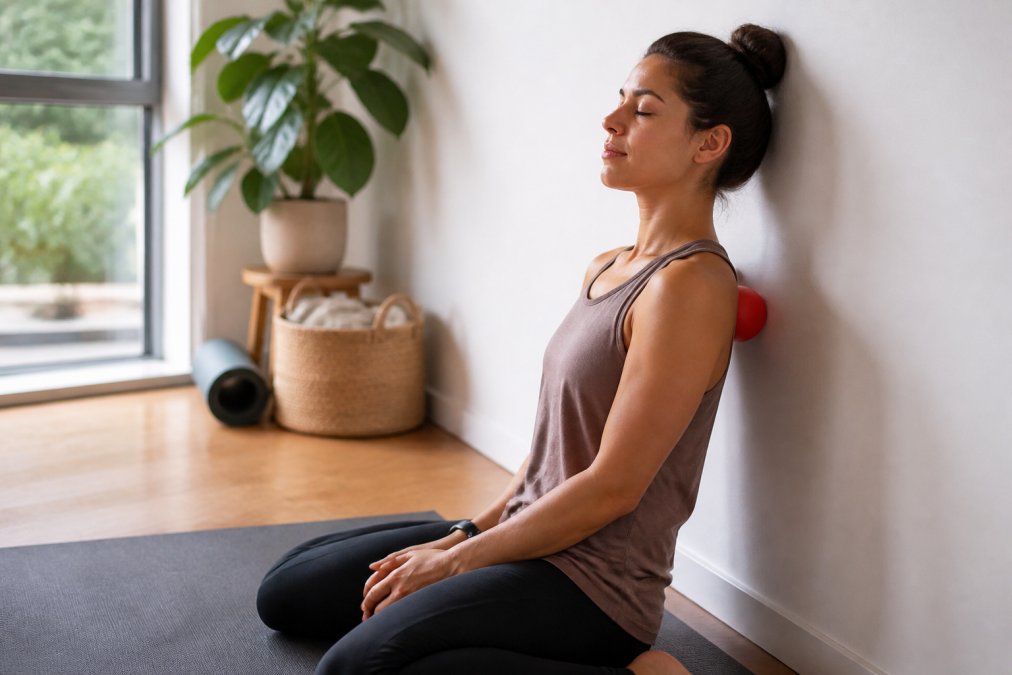
- Massage ball against a wall: Place a firm ball between your upper back and a wall, lean into the trigger point, and hold.
- Foam rolling: More effective for larger muscle groups like glutes, hamstrings, and thoracic spine. Pause on tender spots for 20 to 30 seconds.
- Electric cupping therapy: Suction-based devices create a lifting action that decompresses tissue and improves circulation.
Step 3: Follow Up with Targeted Movement
After massage, the muscle needs to move through its full range of motion to reinforce the release and restore normal circulation. Spend 5 to 10 minutes doing slow, controlled movements: shoulder rolls, neck tilts, thoracic rotations. The goal is signaling to the nervous system that the muscle is safe to remain relaxed.
Best Stretches for Muscle Knots in the Neck and Shoulders
Stretching works best after trigger point release, not before. Once the knot has been softened with heat and direct pressure, these stretches are highly effective:

Upper Trapezius Stretch Sit upright. Drop your right ear toward your right shoulder. Place your right hand gently on the left side of your head and allow gravity to deepen the stretch. Hold 30 seconds each side.
Levator Scapulae Stretch Turn your head 45 degrees to the right, then tilt your chin toward your right armpit. Hold 20 to 30 seconds. This targets one of the most common trigger point sites in desk workers.
Doorway Chest Opener Stand in a doorway, place forearms on the frame, and lean gently forward. This opens the pectorals and anterior shoulder, which are chronically shortened in people who sit at computers.
Thoracic Extension Over a Chair Sit in a chair, clasp your hands behind your head, and gently extend your upper back over the chair back. This restores thoracic mobility and reduces compensatory tension in the neck.
Hold each stretch for a minimum of 30 seconds.
Best Tools for Muscle Knots: What Actually Works
The best tools combine direct pressure, heat, and circulation support.
| Tool Type | Best For | Mechanism | Limitation |
|---|---|---|---|
| Foam roller | Large muscle groups, thoracic spine | Broad pressure, improves circulation | Too diffuse for specific trigger points |
| Massage ball | Precise trigger point release | Targeted sustained pressure | Requires effort and positioning |
| Electric cupping device | Soft tissue decompression, circulation | Suction lifts tissue, boosts blood flow | Learning curve on placement |
| TENS/EMS device | Nerve-level pain modulation | Electrical pulses interrupt pain signals | Does not release physical knot directly |
| Red light therapy | Deep tissue warming, cellular recovery | Infrared penetration at 660nm/850nm | Works best as complement to massage |
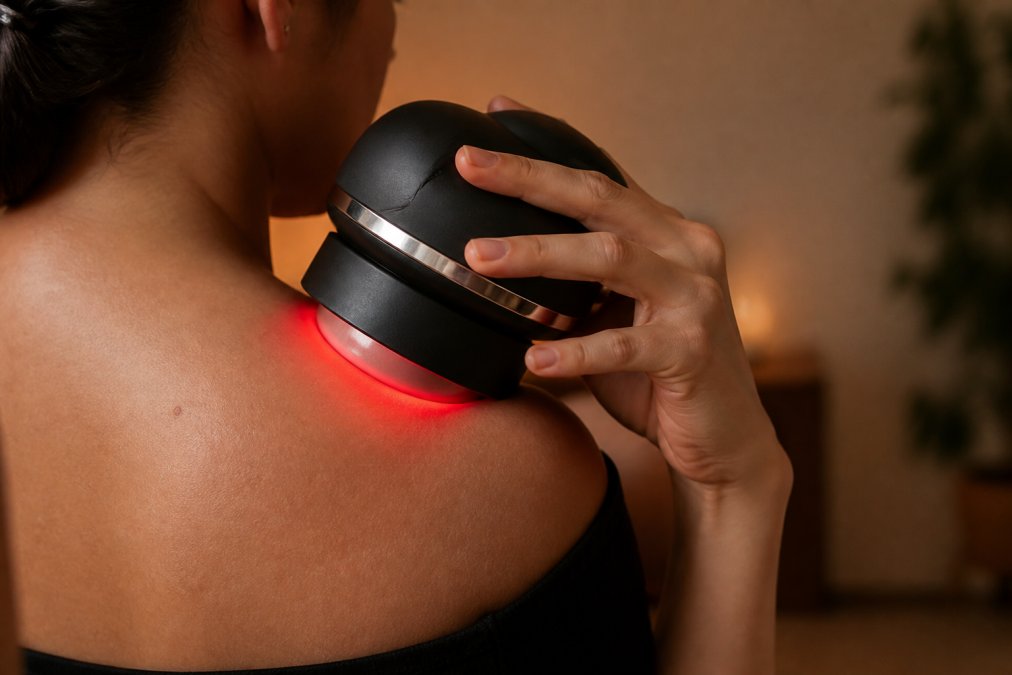
For chronic neck and shoulder tension from desk work, a combination approach works best. The TheCoolVibeShop Electric Cupping Kit with Red Light Therapy combines five modalities in one device: cupping, scraping, massage, heat, and red light therapy at $139.99. The Neck Massager with Heat and TENS Therapy at $97.50 is purpose-built for cervical tension, using low-frequency electrical pulses at 50 intensity levels.

How Long Do Muscle Knots Last Without Treatment
How long muscle knots last depends on the cause, muscle group affected, and activity level. A knot from acute strain in an active person may resolve within a few days to two weeks. A chronic trigger point in someone who sits at a desk all day, reloading the same tension pattern daily, can persist for months without intervention.
Most muscle knots do not resolve spontaneously if the underlying cause is not addressed. The muscle fibers remain contracted, circulation stays compromised, and soreness becomes a background constant.
According to the National Institute of Neurological Disorders and Stroke's overview of chronic pain, chronic pain conditions that go untreated tend to become increasingly difficult to manage over time. Early intervention consistently produces faster, more complete recovery.
A reasonable timeline with active treatment:
- Acute knot (under 1 week old): 2 to 5 days with consistent heat, massage, and movement
- Subacute knot (1 to 4 weeks): 1 to 2 weeks of daily treatment
- Chronic knot (over 1 month): Several weeks of consistent treatment; professional physical therapy may be needed
How to Fix Muscle Knots Fast Through Prevention
Treating a knot after it forms is reactive. Building habits that prevent muscle fibers from reaching sustained contraction is more efficient.
Ergonomic Workspace Assessment
Most desk-related muscle knots trace back to a workspace that forces sustained awkward positions. A proper assessment takes about 10 minutes and can prevent weeks of pain.
Check these five points:
- Monitor height: The top of your screen should be at or just below eye level. Looking down at a laptop for hours loads the levator scapulae and upper trapezius continuously.
- Chair height: Feet flat on the floor, knees at approximately 90 degrees. Hips should be at or slightly above knee height.
- Keyboard and mouse position: Elbows at roughly 90 degrees, wrists neutral. Reaching forward for a mouse creates chronic anterior shoulder tension.
- Back support: Lumbar support should contact the lower back. Slouching shifts load to the thoracic and cervical spine.
- Movement breaks: Set a timer for every 45 to 60 minutes. Stand, walk for two minutes, and do a brief shoulder roll sequence.
As documented in OSHA's ergonomics guidelines for computer workstations, sustained static postures are a primary risk factor for musculoskeletal disorders in office environments.
Nutrition, Hydration, and Muscle Recovery
Muscle tissue requires adequate magnesium to complete the relaxation phase of the contraction-relaxation cycle. When magnesium levels are low, muscles have difficulty fully releasing, creating a predisposition to trigger point formation. Vitamin D deficiency has also been associated with widespread musculoskeletal pain and impaired recovery.
Hydration is equally direct. Muscle tissue is roughly 75% water. Dehydrated muscle fibers lose elasticity, become more prone to strain, and recover more slowly. Many people experiencing chronic muscle stiffness are mildly dehydrated without realizing it.
Practical steps:
- Aim for consistent daily water intake based on body weight and activity level
- Include magnesium-rich foods: leafy greens, nuts, seeds, legumes
- Consider a magnesium glycinate supplement if dietary intake is consistently low (consult a healthcare provider first)
- Prioritize protein intake around training to support muscle fiber repair
When to See a Doctor or Physical Therapist
Self-treatment handles most muscle knots effectively. See a doctor or physical therapist if:
- Pain is severe, worsening, or has lasted more than six weeks despite consistent home treatment
- You experience numbness, tingling, or weakness in the arms or hands, which can indicate nerve involvement
- The pain follows a specific traumatic injury
- You have a history of osteoporosis, inflammatory arthritis, or other conditions affecting bone and joint integrity
- Home treatment provides only temporary relief with rapid recurrence
Physical therapy offers tools beyond self-treatment: manual trigger point release, ultrasound therapy to break up soft tissue adhesions, dry needling, and structured rehabilitation programs addressing movement patterns driving the problem. Acupuncture is another evidence-supported option for myofascial pain management.
According to the American Physical Therapy Association's patient resource on pain management, physical therapists are trained specifically to identify and treat myofascial trigger points as part of comprehensive pain management.
Chronic pain accepted as normal is still chronic pain. It does not have to be.
Muscle knots are one of the most common and most undertreated sources of daily discomfort. The tools and techniques in this guide handle most cases at home, but consistent effort matters more than any single method. TheCoolVibeShop's range of non-invasive wellness devices, including the Electric Cupping Kit with Red Light Therapy and the Neck Massager with Heat and TENS Therapy, are designed for daily, drug-free recovery work. All products come backed by a 60-day money-back guarantee. Shop Now and build a recovery routine that actually holds.
Frequently Asked Questions
What is the fastest way to release a muscle knot?
The fastest relief usually comes from combining heat therapy with direct pressure. Apply a heating pad to the area for 10-15 minutes to increase circulation and soften the soft tissue, then use your fingers, a massage ball, or an electric massage device to apply sustained pressure directly to the knot. Hold for 30-90 seconds. Following up with a gentle stretch helps prevent the tension from returning. Staying hydrated before and after also supports faster muscle recovery.
Do muscle knots eventually go away on their own?
Mild muscle knots from a single workout or short-term stress can resolve on their own within a few days with rest. However, chronic knots tied to poor posture, a sedentary lifestyle, or ongoing psychological stress rarely self-resolve without intervention. Left untreated, myofascial trigger points can limit your range of motion and contribute to referred pain in other areas. Consistent stretching, massage therapy, and ergonomic adjustments are usually needed for lasting relief.
Are heat or ice packs better for muscle knots?
Heat is generally more effective for muscle knots. Cold compresses work best on acute injuries with inflammation in the first 24-48 hours. Muscle knots are caused by sustained muscle fiber contraction, not swelling, so heat therapy improves circulation and relaxes the tissue more directly. Use a heating pad or warm compress for 15-20 minutes before massage or stretching. Ice can help if the area feels acutely inflamed after deep tissue work, but heat should be your first step.
How do you know if a muscle knot is serious?
Most muscle knots are a nuisance, not a medical emergency. See a doctor or physical therapist if the pain is severe, lasts more than two to three weeks without improvement, radiates down your arm or leg, or is accompanied by numbness, tingling, or weakness. These symptoms can signal nerve compression or a more serious soft tissue condition. A physical therapist can also recommend osteopathic manual medicine or ultrasound therapy for knots that do not respond to at-home pain management.
This article was written using GrandRanker