Natural Ways to Improve Sleep Quality Without Medication

Table of Contents
- Why Natural Sleep Improvement Matters
- Sleep Hygiene Best Practices: Build Your Foundation
- Align Your Circadian Rhythm for Better Sleep
- Relaxation Techniques for Insomnia and Sleep Disturbances
- Dietary Habits and Natural Sleep Support
- Benefits of Red Light Therapy for Sleep and Recovery
- Physical Activity, Exercise, and Sleep Debt Recovery
- Conclusion: Your Path to Better Sleep
- Frequently Asked Questions
Last Updated: September 19, 2026
Why Natural Sleep Improvement Matters
Sleep isn't a luxury. It's foundational to everything else in your life. When you sleep well, your body repairs itself, your mind consolidates memories, and your immune system strengthens. When you don't, everything suffers.
Sleep Hygiene Best Practices: Build Your Foundation
Sleep hygiene refers to the habits and environmental conditions that support consistent, quality sleep. Get this right, and other strategies become far more effective.
Establish a Consistent Sleep Schedule
Your body runs on a 24-hour internal clock. When you go to bed and wake up at the same time every day, even weekends, you train your circadian rhythm to work with you. Start by choosing a bedtime that gives you 7-9 hours before you need to wake, and stick to it for at least two weeks.
Optimize Your Sleep Environment
Your bedroom should signal to your brain: "This is where sleep happens." Create a sleep-friendly space: keep it cool (65-68°F), dark (blackout curtains or eye mask), quiet (white noise if needed), and comfortable (good mattress and pillows). Remove TVs, phones, and computers. Pay attention to what your body responds to, some prefer air circulation, others need complete silence, and adjust accordingly.
Align Your Circadian Rhythm for Better Sleep
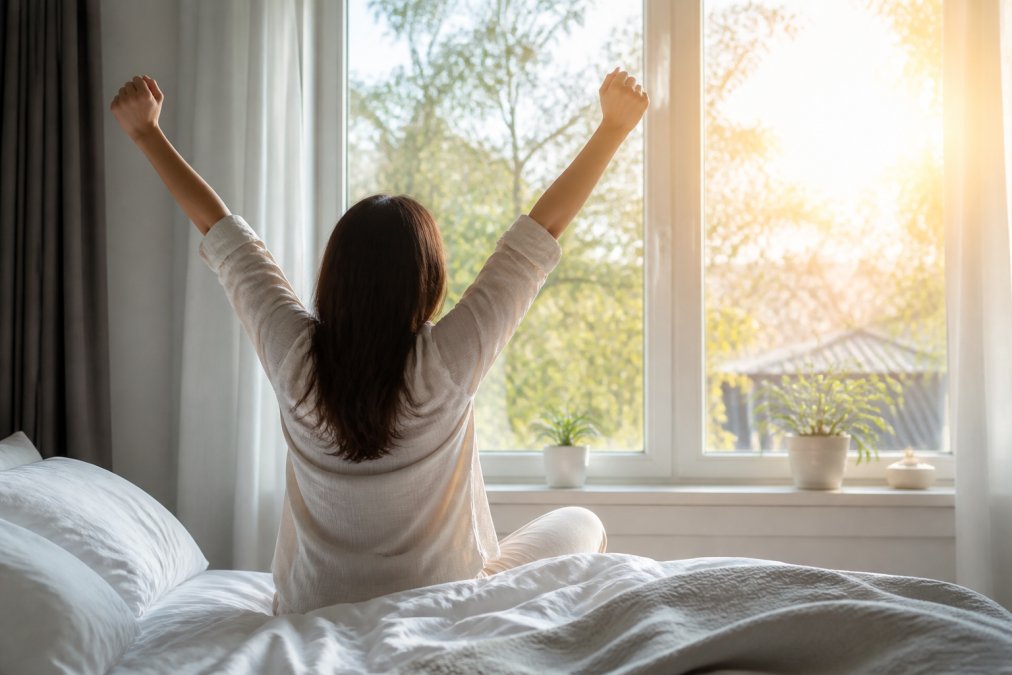
Your circadian rhythm is your body's internal timing system, controlled by light exposure signals that reset your biological clock. Light exposure is the primary regulator: morning light suppresses melatonin and signals wakefulness, while evening darkness allows melatonin to rise and signals sleep. Aligning with your circadian rhythm is one of the most powerful ways to improve sleep quality.
The Morning Light Protocol
Morning light exposure is the most powerful circadian reset available. Here's the evidence-backed protocol:
- Timing: Within 30 minutes of waking, expose yourself to bright light (at least 2,500 lux). Sunlight on a clear morning is 10,000+ lux; overcast days provide 1,000-5,000 lux. Standard indoor light (300-500 lux) is insufficient.
- Duration: Even 10-15 minutes is effective; consistency matters more than duration.
- Effect: Morning light advances your circadian rhythm, making you feel alert earlier and sleepy earlier at night, more powerful than evening light for fixing delayed sleep schedules.
The Evening Light Reduction Protocol
Evening light exposure delays your circadian rhythm, pushing sleep later. To support sleep onset:
- Start dimming 2-3 hours before bed to allow melatonin to rise naturally. Dim your environment to below 500 lux.
- Eliminate blue light. Screens emit blue light (460-480 nm), the most potent circadian disruptor. Stop using screens 60-90 minutes before bed.
- Use warm lighting instead. Switch to warm-toned bulbs (2,700 K or lower) in the evening.
- Blue light glasses as backup. If you must use screens, blue light-blocking glasses reduce melatonin suppression by 50-80%, though avoiding screens is preferable.
Red Light vs. Blue Light: The Wavelength Difference
Red light (620-750 nm wavelength) does not suppress melatonin and can be used in the evening without disrupting sleep. Using red light 30-60 minutes before bed signals relaxation to your nervous system and may support muscle recovery and relaxation, which indirectly improves sleep quality.
Why Consistency Matters More Than Perfection
Your circadian rhythm responds to patterns, not single exposures. Consistent morning light exposure over 3-7 days produces measurable shifts in sleep timing. Circadian rhythm alignment requires deliberately signaling to your body through light exposure intensity, wavelength, and timing, your body only knows what light signals tell it.
Relaxation Techniques for Insomnia and Sleep Disturbances
When your mind races at night, no amount of a cool room will help. You need techniques that calm your nervous system and prepare your brain for sleep.
Brain Dump and Mindfulness Methods
Before bed, spend 5-10 minutes writing down everything on your mind, worries, tasks, ideas. This "brain dump" frees mental resources for sleep. Then try this mindfulness approach: lie in bed, breathe in for 4, hold for 4, exhale for 4. If your mind wanders, gently return to your breath. Continue for 5-10 minutes.
Progressive Muscle Relaxation
Progressive muscle relaxation (PMR) reduces physical tension and mental anxiety. Start with your toes: tense for 5 seconds, release. Move up through calves, thighs, glutes, abdomen, chest, shoulders, arms, and face, spending 30-60 seconds on each group. Total time: 10-15 minutes. Most people fall asleep during or immediately after.
Dietary Habits and Natural Sleep Support
What you eat and when directly impacts sleep quality. Avoid caffeine (stops by early afternoon), large meals (2-3 hours before bed), alcohol, and sugar before bed. Instead, include magnesium-rich foods (almonds, spinach, pumpkin seeds), tryptophan sources (turkey, chicken, cheese, nuts), complex carbohydrates (whole grains, oatmeal), and herbal teas (chamomile, valerian root). A light snack 1-2 hours before bed, whole-grain toast with almond butter or oatmeal, can help.
Benefits of Red Light Therapy for Sleep and Recovery
The TheCoolVibeShop Full Body Red Light Therapy Mat ($399.99) provides consistent red light wavelengths across a large surface area, making it easy to incorporate into your evening routine with no side effects.
TheCoolVibeShop™ - Full Body Red Light →
Physical Activity, Exercise, and Sleep Debt Recovery
Exercise is one of the most powerful sleep enhancers available, deepening sleep and improving sleep efficiency. But understanding sleep debt and recovery is critical for long-term sleep quality.
Exercise Framework for Better Sleep
Here's the evidence-backed framework:
- Aim for 150 minutes of moderate-intensity aerobic activity per week (or 75 minutes vigorous), the threshold where sleep improvements become measurable.
- Time exercise correctly: Exercise in morning or afternoon. Intense workouts within 3 hours of bedtime elevate body temperature and interfere with sleep onset.
- Consistency matters more than intensity: Three moderate workouts per week produces better sleep than one intense workout followed by inactivity.
- Avoid overtraining: Excessive exercise without recovery can increase cortisol and disrupt sleep.
Understanding Sleep Debt: What It Is and Why You Can't "Catch Up"
Sleep debt is the cumulative deficit from consistently sleeping less than your body needs. You cannot "catch up" by sleeping longer on weekends, your body doesn't store sleep like a bank account. Losing 1 hour per night for 5 nights creates a 5-hour debt that impairs cognitive function, reaction time, and immune response.
The Sleep Debt Recovery Protocol
If you've been sleep-deprived, follow this framework to recover without creating new sleep problems:
Week 1: Establish baseline sleep
- Go to bed 30 minutes earlier than usual, or wake 30 minutes later if possible.
- Maintain this schedule consistently, even on weekends.
- Avoid long naps (more than 20 minutes), which can interfere with nighttime sleep and delay recovery.
- Track how you feel: energy, focus, mood. Most people notice improvement by day 3-5.
Week 2-3: Deepen recovery
- If you're still feeling fatigued, add another 30 minutes of sleep (total 1 hour earlier bedtime or later wake time than your pre-debt baseline).
- Continue consistent timing. Your circadian rhythm needs predictability to stabilize.
- Increase exercise slightly if energy permits, but don't overdo it, recovery is the priority.
- Monitor caffeine intake. During recovery, caffeine sensitivity increases; limit it to morning hours only.
Week 4: Assess and stabilize
- By week 4, most people feel significantly better. Note your sleep duration and quality.
- This is your new baseline. Protect it. Any return to insufficient sleep will rebuild debt quickly.
- If you still feel fatigued, extend recovery another 1-2 weeks before resuming your normal schedule.
Why Sleep Debt Matters for Long-Term Health
Chronic sleep debt isn't just about feeling tired. It impairs immune function, increases inflammation, disrupts glucose metabolism, and elevates cortisol. These effects compound over time. A person who sleeps 6 hours per night for months experiences cognitive decline similar to someone who has been awake for 24 hours straight.
Conclusion: Your Path to Better Sleep
Better sleep doesn't require medication or expensive interventions. It requires understanding how your body works and building a system that supports it.
| Strategy | Best Time | Expected Timeline |
|---|---|---|
| Consistent sleep schedule | Every day | 2-3 weeks to feel effect |
| Optimize bedroom environment | Before bed | Immediate |
| Morning light exposure | Within 30 min of waking | 1-2 weeks |
| Evening light reduction | 2-3 hours before bed | 1 week |
| Brain dump technique | 10 min before bed | Immediate |
| Progressive muscle relaxation | In bed | 5-15 minutes per session |
| Dietary adjustments | 2-3 hours before bed | 1-2 weeks |
| Regular exercise | Morning or afternoon | 2-4 weeks |
| Red light therapy | 30-60 min before bed | 1-2 weeks |
Frequently Asked Questions
How long does it take for natural sleep improvements to show results?
Most people notice measurable improvements in sleep quality within 1-2 weeks of consistently applying sleep hygiene best practices, though deeper sleep architecture changes may take 4-8 weeks. The timeline depends on how severe your sleep disturbances are and how strictly you follow the routine. Sleep debt recovery can take longer if you've been sleep-deprived for months, potentially requiring several weeks of consistent, adequate sleep to fully restore your sleep efficiency and deep sleep stages.
Can red light therapy actually improve sleep quality, or is it just marketing?
Red light therapy supports sleep by promoting relaxation. The TheCoolVibeShop Full Body Red Light Therapy Mat ($399.99) uses wavelengths designed for safe, everyday use. While results vary by individual, many users report improved sleep latency and better overall rest quality when combined with other sleep hygiene practices.
What's the fastest way to fall asleep naturally without medication?
The most effective immediate technique is the 4-7-8 breathing method combined with progressive muscle relaxation: breathe in for 4 counts, hold for 7, exhale for 8. Follow this with a brain dump exercise where you write down any racing thoughts for 5 minutes. These relaxation techniques for insomnia work quickly because they activate your parasympathetic nervous system. Pair these with a cool, dark bedroom and you can reduce sleep latency significantly within days of consistent practice.
Is it safe to use natural sleep methods every day, or should I cycle them?
All the natural methods covered here, consistent sleep schedules, relaxation techniques, dietary adjustments, and red light therapy, are safe for daily use. In fact, consistency is the key to success with sleep hygiene best practices. Your body thrives on routine. However, if you're on medications or have sensitive skin, consult your healthcare provider before adding supplements or using new devices. The TheCoolVibeShop Full Body Red Light Therapy Mat is designed for safe, everyday use with no known side effects for most users.