How to Relieve Chronic Desk Neck Pain: 7 Steps

Table of Contents
- What Causes Chronic Desk Neck Pain
- Step 1: Fix Your Ergonomic Desk Setup for Neck Pain
- Step 2: Perform Neck Stretches and Shoulder Rolls
- Step 3: How Long to Hold Neck Stretches for Maximum Benefit
- Step 4: How to Fix Muscle Knots Fast
- Step 5: Take Frequent Movement Breaks Throughout Your Day
- Step 6: Strengthen Your Neck and Upper Back Muscles
- Step 7: When to See a Doctor for Chronic Neck Pain
Last Updated: August 21, 2026
What Causes Chronic Desk Neck Pain
Chronic desk neck pain develops from poor posture, muscle fatigue, and repetitive tension accumulated over months or years of sedentary work. When you spend eight hours daily hunched forward at a screen, your cervical spine bears weight it wasn't designed to carry. The muscles supporting your neck, particularly the upper trapezius and levator scapulae, become chronically fatigued and tight.
Forward head posture adds roughly ten pounds of stress to your cervical spine for every inch your chin moves forward (peer-reviewed research). Over time, this sustained tension triggers muscle knots, nerve compression, and inflammation that radiates into your shoulders and upper back. Mental stress compounds the problem by tightening neck and shoulder muscles as a physiological response.
The good news: most cases respond well to targeted interventions addressing ergonomic setup, movement patterns, and muscle tension.
Step 1: Fix Your Ergonomic Desk Setup for Neck Pain
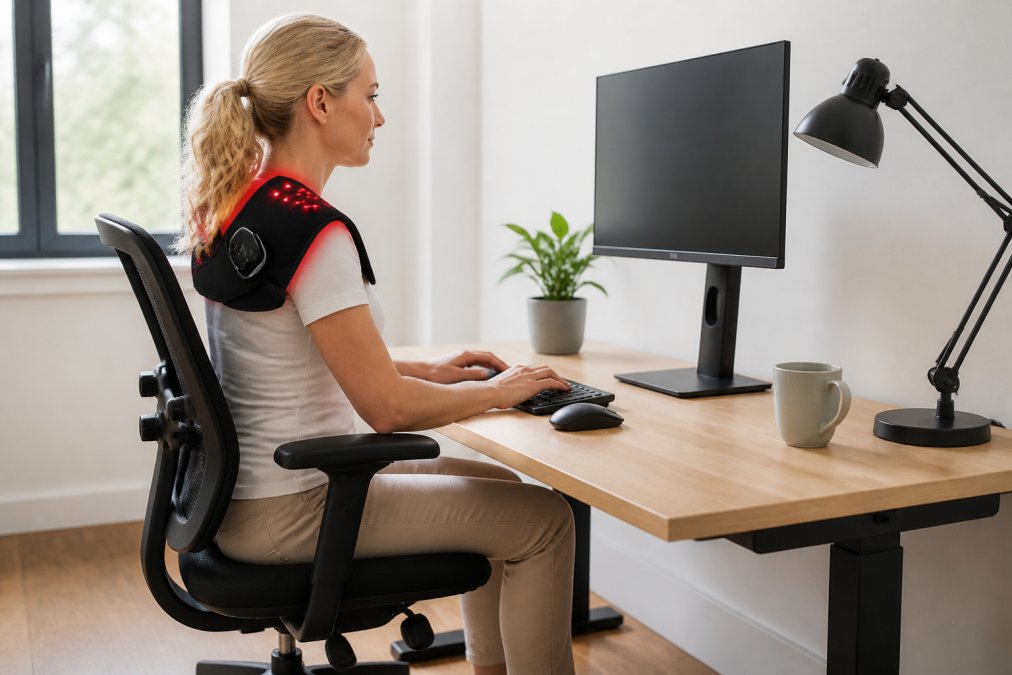
Your ergonomic workstation is the foundation of neck pain relief. A poorly configured desk forces your neck into unnatural positions for hours, perpetuating the muscle tension that caused your pain.

Monitor Height and Eye Level Alignment
Your monitor should sit at eye level when sitting upright with shoulders relaxed. The top of the screen should align with your eye line at a 15-20 degree downward angle, keeping your cervical spine neutral rather than forced into forward bending.
Position your screen 20-26 inches from your eyes. Too close strains your eyes and forces your head forward; too far away and you'll lean in to read. Use a monitor stand, adjustable arm, or stack of books to raise your screen if needed. This single adjustment often provides immediate relief.
Your elbows should bend at roughly 90 degrees when your hands rest on the keyboard. If your desk is too deep, you'll reach forward and round your shoulders, compressing your neck.
Chair Support and Lumbar Alignment
Your chair's lumbar support directly affects your neck. When your lower back lacks support, you slouch and round your upper back, forcing your head forward and amplifying stress on your cervical spine.
A proper office chair should have adjustable lumbar support fitting your lower spine's natural curve. Your feet should rest flat on the floor with thighs parallel to the ground. Armrests should support your forearms at elbow height without forcing your shoulders up or allowing them to collapse inward.
Upgrading to a chair with adjustable height, lumbar support, and armrests prevents the postural compensations that perpetuate chronic desk neck pain. Many people find that fixing their chair setup alone reduces discomfort significantly within the first week.
Step 2: Perform Neck Stretches and Shoulder Rolls
Stretching releases muscle tension accumulated throughout your workday, improves range of motion, and signals your nervous system that it's safe to relax. Short, frequent stretches work better than occasional long sessions.
Chin Tucks for Cervical Spine Alignment
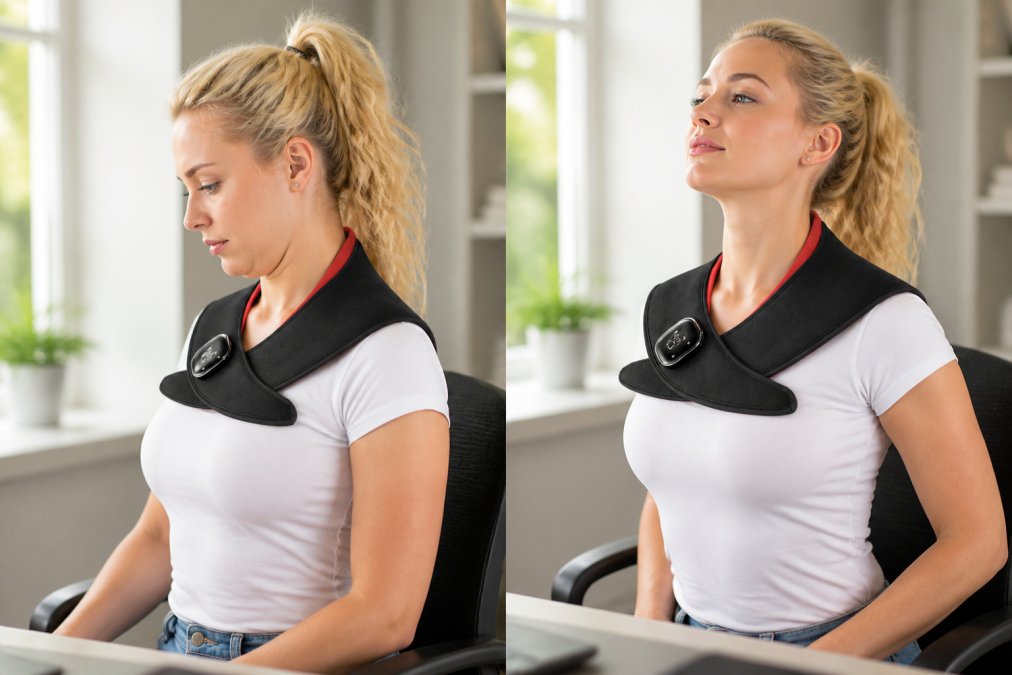
Chin tucks are among the most effective exercises for correcting forward head posture. They strengthen deep cervical flexors while stretching the upper trapezius and levator scapulae.
Sit upright with shoulders relaxed. Gently draw your chin straight back, as if making a double chin, without tilting your head up or down. Hold for two seconds, then release. Repeat 10-15 repetitions, two to three times daily. The movement should be small and controlled; only your chin moves backward while your gaze remains level.
Scapular Retraction and Upper Trapezius Release
Scapular retraction strengthens muscles that pull your shoulders back and down, counteracting the forward shoulder posture contributing to chronic desk neck pain.
Sit upright and squeeze your shoulder blades together as if holding a pencil between them. Hold for two seconds, then release. Repeat 15-20 times. For upper trapezius stretching, tilt your head toward one shoulder and gently press the top of your head toward your shoulder with light hand pressure. Hold for 20-30 seconds and repeat on the other side, three times per side.
Step 3: How Long to Hold Neck Stretches for Maximum Benefit
For static stretching, maintain each stretch for 20-30 seconds (acsm.org). This duration allows your muscle spindles to signal your nervous system that it's safe to relax, releasing tension more effectively than shorter holds.
Perform three repetitions of each stretch with brief rest between them, spending roughly 60-90 seconds per stretch. If a stretch causes sharp pain, reduce the duration or intensity immediately.
Frequency matters more than duration. Five 30-second stretches spread throughout your day outperform a single three-minute session. As your flexibility improves over weeks, you may hold stretches up to 45 seconds, but 20-30 seconds remains optimal for most people. Avoid bouncing or forcing stretches; gentle, sustained tension produces better results and reduces injury risk.
Step 4: How to Fix Muscle Knots Fast
Muscle knots, or trigger points, are areas of sustained muscle contraction that restrict blood flow and create localized pain. They often refer pain to other areas, such as a knot in your upper trapezius causing headaches or arm pain.
Self-Massage Techniques for Knot Release
Apply sustained pressure to muscle knots for 30-60 seconds using your fingers, thumbs, or a massage tool. The pressure should be firm enough to feel the knot but not so intense that you're wincing. Maintain steady pressure while taking slow, deep breaths; as the muscle relaxes, you may feel the knot soften.
Work on one knot at a time, spending no more than 90 seconds per knot. Avoid aggressive rubbing, which can irritate tissue and increase inflammation. Some knots dissolve within days; others may take weeks of consistent work.
The wood therapy massage stick is particularly effective for reaching knots in your upper back and neck. TheCoolVibeShop's Wood Therapy Handheld Massage Stick ($98.99) provides the mechanical advantage needed to release stubborn knots efficiently.

Using Red Light Therapy and Massage Devices
Red light therapy promotes cellular repair and reduces inflammation in muscle tissue. Wavelengths around 660nm penetrate shallow tissues like neck muscles, while 850nm wavelengths reach deeper structures (peer-reviewed research). Used consistently, red light therapy accelerates recovery from muscle tension and reduces inflammation perpetuating chronic desk neck pain.
The TheCoolVibeShop Cordless Red Light Therapy for Neck Shoulder Pain Relief ($299.99) combines both wavelengths in a device designed for neck and shoulder relief. Use it for 10-15 minutes daily on affected areas. Many users report reduced muscle stiffness and improved range of motion within the first week.
Electric massage devices using TENS (Transcutaneous Electrical Nerve Stimulation) technology send gentle electrical pulses through muscles, reducing pain signals and promoting relaxation. The TheCoolVibeShop Neck Massager with Heat and TENS Therapy ($97.50) offers 50 intensity levels for customized treatment.

Step 5: Take Frequent Movement Breaks Throughout Your Day
Prolonged sitting is the primary driver of chronic desk neck pain. Your muscles are designed for movement, not static positions. Break your workday into 60-90 minute blocks and stand up to move for at least five minutes every hour.
Set a timer to stand and move every 60 minutes, preventing the pattern of working for hours without standing. During movement breaks, perform shoulder rolls, neck rotations, gentle spinal twists, and arm circles to increase blood flow and signal your nervous system to relax.
Consider using a standing desk for portions of your day or an adjustable desk allowing you to alternate between sitting and standing. Many people find that standing for 30-60 minutes, then sitting for 60-90 minutes, reduces chronic desk neck pain significantly compared to sitting all day.
Step 6: Strengthen Your Neck and Upper Back Muscles
Weak neck and upper back muscles cannot support your cervical spine effectively, forcing you to rely on passive tension. Strengthening these muscles provides active support that reduces muscle fatigue driving chronic desk neck pain.
Resistance band rows are ideal for building neck and upper back strength. Anchor a resistance band at shoulder height and pull it toward your chest, squeezing your shoulder blades together. Perform three sets of 12-15 repetitions, three times weekly.
For cervical spine strengthening, use isometric exercises: place your hand against the side of your head and push your head against your hand without allowing movement. Hold for five seconds, then release. Repeat 10 times in each direction (forward, backward, left, right). Consistent strength training over 8-12 weeks produces noticeable improvements in posture, muscle endurance, and chronic desk neck pain reduction.
Step 7: When to See a Doctor for Chronic Neck Pain
Most cases of chronic desk neck pain respond well to self-management within 4-8 weeks. However, certain warning signs indicate professional evaluation is necessary.
Seek medical attention if you experience pain radiating down your arm with numbness or tingling, severe headaches accompanying neck pain, pain worsening despite consistent self-care over four weeks, weakness in your arms or hands, pain following injury or trauma, difficulty with balance or coordination, or fever accompanying neck pain and stiffness.
These symptoms may indicate conditions beyond simple muscle tension, such as cervical radiculopathy or herniated discs requiring professional diagnosis. A physical therapist will assess your posture, ergonomics, and movement patterns, then design a targeted rehabilitation program.
Chronic desk neck pain doesn't require living with constant discomfort or expensive interventions. By systematically addressing your ergonomic setup, building consistent stretching and strengthening habits, and using targeted recovery tools, you can eliminate the tension limiting your productivity and comfort.
TheCoolVibeShop provides modern recovery tools that accelerate this process. The combination of red light therapy devices and massage technology targets muscle tension at a deeper level than self-massage alone, helping you break free from chronic desk neck pain faster. Start with your ergonomic setup and stretching routine, then add targeted recovery tools like the Cordless Red Light Therapy or Neck Massager with Heat to amplify your results and maintain long-term relief. Get started today and reclaim the pain-free workdays you deserve.
Frequently Asked Questions
What causes chronic muscle tightness in the neck and shoulders from desk work?
Prolonged sitting with poor posture creates repetitive strain on the cervical spine and upper trapezius muscles. Your neck muscles work constantly to hold your head upright, especially when your monitor is too low or too far away. Combined with limited movement breaks, this leads to muscle fatigue, tension headaches, and eventually chronic discomfort. The key is addressing posture early and taking frequent breaks to prevent nerve compression and musculoskeletal health issues.
How long should I hold neck stretches for relief?
Hold static neck stretches for 20-30 seconds, repeating 2-3 times per side, 2-3 times daily. Avoid bouncing or forcing the stretch beyond mild tension. This duration allows your muscles to relax without triggering defensive muscle tightening. If you're dealing with muscle stiffness, consistent daily stretching for 2-3 weeks shows better results than occasional intense sessions. Combine stretching with active recovery and movement breaks for optimal musculoskeletal health.
When should I see a doctor for chronic neck pain?
Seek medical attention if you experience numbness or tingling in your arms, sharp shooting pain, weakness in your hands, pain that radiates down your spine, or symptoms lasting more than 6 weeks despite self-care efforts. Also see a doctor if your pain follows an injury, is accompanied by headaches or vision changes, or interferes with sleep. These may indicate nerve compression or other conditions requiring professional evaluation. A healthcare provider can rule out serious musculoskeletal issues and recommend physical therapy if needed.
Can red light therapy and massage devices really help chronic desk neck pain?
Red light therapy (660nm and 850nm wavelengths) improves blood circulation and supports muscle recovery, making it effective for reducing muscle stiffness and tension. Massage devices and hands-on techniques release muscle knots and improve range of motion. For desk-related neck pain, combining these tools with ergonomic adjustments and stretching delivers the best results. The Cordless Red Light Therapy for Neck Shoulder Pain Relief ($299.99) and Neck Massager with Heat and TENS Therapy ($97.50) are specifically designed for this type of chronic discomfort.
This article was written using GrandRanker