


Does Red Light Therapy Really Work? The Evidence
Table of Contents
- How Red Light Therapy Works: The Science Behind Photobiomodulation
- What Clinical Evidence Says Red Light Therapy Can Do
- Red Light Therapy Side Effects and Contraindications
- How Long Should You Use Red Light Therapy to See Results
- Best Red Light Therapy Devices for Home Use: What to Look For
- Setting Realistic Expectations: Objective vs. Subjective Outcomes
- Conclusion
Last Updated: August 10, 2026
How Red Light Therapy Works: The Science Behind Photobiomodulation
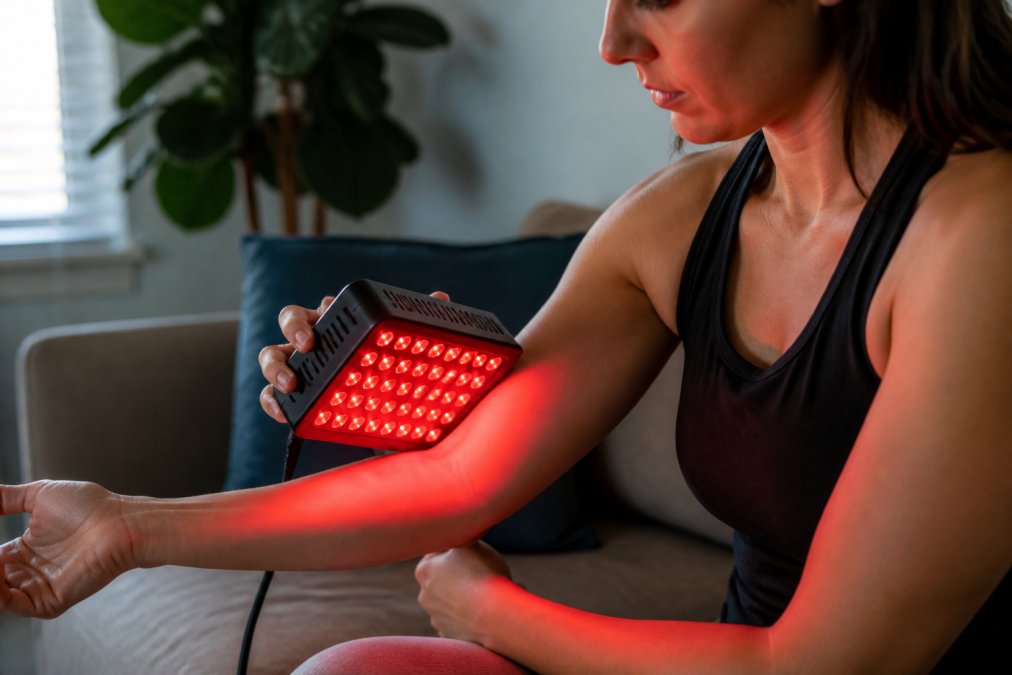
Red light therapy, also called photobiomodulation, is the therapeutic application of specific wavelengths of red and near-infrared light to stimulate biological processes in human tissue. Light photons penetrate the skin and interact with photoreceptors inside cells, triggering biochemical responses. What separates this from other light-based treatments is the precision of the wavelength range and the depth at which that light reaches living tissue.
Mitochondria, Cytochrome c Oxidase, and ATP Production
The core mechanism involves cytochrome c oxidase, an enzyme in the mitochondria that absorbs photons in the red and near-infrared spectrum with remarkable efficiency. When it absorbs photons, it accelerates the electron transport chain, driving adenosine triphosphate (ATP) production. ATP is the molecule cells use to power protein synthesis, tissue repair, immune signaling, and membrane function. More ATP means cells have more energy to do their jobs.
The photon absorption properties of cytochrome c oxidase are well-characterized in peer-reviewed literature, and the ATP production response is measurable in laboratory conditions. The debate isn't whether the mechanism exists, but how reliably it translates into clinical outcomes at doses achievable with consumer devices.
Wavelengths That Matter: Red vs. Near-Infrared Light
Therapeutic wavelengths fall within two primary windows: visible red light at roughly 630 to 700 nanometers and near-infrared light at approximately 800 to 1,100 nanometers.
Visible red light (around 630-670 nm) penetrates to the skin's surface layers, making it most relevant for dermatological applications like collagen production and skin barrier support. Near-infrared light (around 810-850 nm) penetrates deeper, reaching muscle tissue, joints, and bone, which is why it's used for muscle recovery and joint pain protocols.
A device that only emits red light is not the same as one that emits both red and near-infrared. For skin rejuvenation, red alone may be sufficient. For deeper tissue applications like muscle recovery or joint stiffness, near-infrared is essential.
What Clinical Evidence Says Red Light Therapy Can Do
Clinical trials exist across several application areas, with varying levels of evidence quality. Here's where the data is genuinely compelling.
Skin Rejuvenation and Collagen Production
Red light therapy has the most consistent clinical backing for skin health. Red light at 630-670 nm stimulates fibroblasts, the cells responsible for producing collagen and elastin in the dermis. According to peer-reviewed photobiomodulation research indexed by the National Library of Medicine, repeated red light exposure has shown measurable improvements in skin roughness, tone, and collagen density in multiple randomized controlled studies. Results typically require consistent treatment over four to twelve weeks.
Rosacea and acne management are also areas of active research, with red light's anti-inflammatory properties reducing skin redness and calming sebaceous activity.
Hair Follicle Stimulation and Regrowth
Red and near-infrared light appear to extend the anagen (growth) phase of the hair cycle and increase follicle activity in individuals experiencing androgenetic alopecia. Several FDA-cleared devices have been approved specifically for hair regrowth based on this mechanism. Most clinical data shows slowing of hair loss and some regrowth in compliant users, not dramatic restoration.
Inflammation, Oxidative Stress, and Muscle Recovery
Photobiomodulation appears to reduce markers of oxidative stress and accelerate tissue repair following intense exercise. As documented in research published by the American Physical Therapy Association, photobiomodulation therapy has been studied for reducing delayed-onset muscle soreness and improving recovery timelines. The evidence is promising, though optimal dosing protocols are still being refined.
Red Light Therapy Side Effects and Contraindications
Red light therapy has a strong safety profile. Unlike UV light, it doesn't damage DNA. Unlike laser treatments, it doesn't ablate tissue. Most people tolerate it well across hundreds of sessions.
Common side effects are mild and temporary: slight skin warmth, transient redness in sensitive individuals, and occasional eye strain if devices are used without appropriate eye protection.
Who Should Avoid or Consult a Doctor Before Using It
Certain populations should not use red light therapy without medical clearance:
- Photosensitizing medications: Drugs including certain antibiotics, antifungals, and psychiatric medications can increase photosensitivity and cause unexpected skin reactions.
- Active malignancy: Light therapy should not be applied over known or suspected tumor sites.
- Pregnancy: Insufficient safety data exists for pregnant women.
- Thyroid conditions: Direct application over the thyroid gland is generally discouraged.
- Epilepsy: Certain pulsed light settings can trigger photosensitive responses.
If you have sensitive skin or take daily medications, consult your physician before starting any red light therapy protocol.
How Long Should You Use Red Light Therapy to See Results
Results depend on what you're treating, the device's irradiance output, and how consistently you apply the protocol.
Treatment Frequency, Session Duration, and the Therapeutic Window
Red light therapy follows a dose-response curve with a ceiling. Too little light produces no effect. The right amount produces the desired response. Too much can inhibit the same pathways it's meant to stimulate, a phenomenon called biphasic dose response.
Practical guidelines based on clinical literature:
| Application | Session Duration | Recommended Frequency | Expected Timeline for Results |
|---|---|---|---|
| Skin rejuvenation | 10-20 minutes | 4-5x per week | 8-12 weeks |
| Hair follicle stimulation | 15-25 minutes | 3-4x per week | 12-24 weeks |
| Muscle recovery | 5-15 minutes | Daily or post-workout | 2-4 weeks |
| Joint stiffness | 10-20 minutes | Daily | 4-8 weeks |
| Inflammation reduction | 10-15 minutes | 4-5x per week | 4-6 weeks |
Device irradiance (power output per unit area, measured in milliwatts per square centimeter) affects session duration. A higher-irradiance device may achieve the same dose in half the time.
Long-Term Maintenance Protocols
The cellular benefits of red light therapy are not permanent. Collagen production returns to baseline rates if stimulation stops. Long-term results require long-term consistency, though the maintenance dose is typically lower than the initial protocol.
After an initial 8-12 week protocol, reduce frequency to two to three sessions per week while maintaining session duration. This sustains the biological signal without overexposure.
Best Red Light Therapy Devices for Home Use: What to Look For
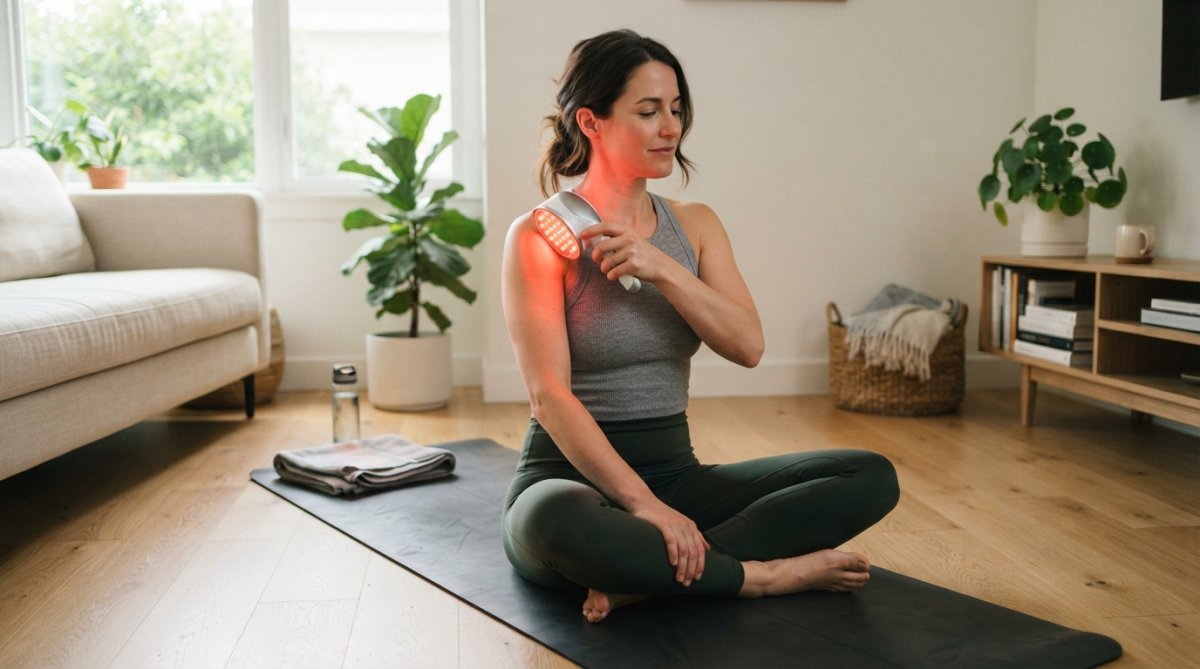
Quality varies enormously in the at-home device market. Choosing the wrong device is the most common reason people conclude red light therapy doesn't work.
Irradiance Standards and Device Calibration
Irradiance is the single most important specification. A device with beautiful LEDs that delivers insufficient irradiance at treatment distance will not produce clinical results.
What to look for:
- Irradiance at treatment distance: Manufacturers should publish irradiance measurements at the actual distance you'll use the device (typically 6-12 inches from skin).
- Wavelength accuracy: Look for 630-670 nm for red and 810-850 nm for near-infrared.
- Third-party testing: Some manufacturers publish independent lab verification of their irradiance claims.
- Coverage area: Panels treat larger surface areas per session than handheld wands.
LED output decreases with use over time. Quality devices use LEDs rated for long operational lifespans.
FDA Clearance and What It Actually Means
FDA clearance is not the same as FDA approval. FDA-cleared devices have gone through a 510(k) premarket notification process, demonstrating substantial equivalence to a legally marketed predicate device. It does not mean the FDA has independently validated every clinical claim the manufacturer makes. As outlined in FDA guidance on photobiomodulation devices, clearance covers safety and basic effectiveness for a stated intended use.
FDA clearance tells you the device meets basic safety and manufacturing standards. It's not a blanket endorsement of every benefit claim on the product page.
Setting Realistic Expectations: Objective vs. Subjective Outcomes
Subjective outcomes like "my skin feels better" or "my shoulder feels less stiff" can appear within the first two to four weeks. These are real but susceptible to placebo effect and natural variation.
Objective outcomes, measurable changes in skin collagen density, hair count, or inflammatory biomarkers, take longer and require clinical measurement or photographic documentation. Most home users never measure these, relying entirely on subjective perception.
Photograph the treatment area under consistent lighting conditions every two weeks. Compare at the eight-week mark. This converts subjective impression into objective record. According to clinical photobiomodulation research via the National Center for Biotechnology Information, the gap between subjective and objective improvement timelines is a common source of patient dropout. Consistency, more than any other variable, separates people who see results from those who don't.
Red light therapy works for specific applications, at adequate doses, with consistent protocols. It is not a miracle. It is not a scam. It's a legitimate therapeutic modality with a real mechanism, real evidence, and real limitations.
Red light therapy works when the device is right, the protocol is consistent, and expectations are calibrated to the evidence. TheCoolVibeShop's modern red light therapy devices are designed for exactly this: safe, everyday use with a non-invasive, drug-free approach to muscle recovery, skin health, and joint relief. Backed by a 60-day money-back guarantee and trusted by over 1,500 satisfied customers, it's a commitment-free way to find out what consistent red light therapy can do for you. Shop Now and start your first protocol today.
Frequently Asked Questions
Is red light therapy real or just a gimmick?
Red light therapy is backed by peer-reviewed clinical trials, not just marketing claims. The mechanism is well-documented: specific wavelengths of red and near-infrared light are absorbed by cytochrome c oxidase in mitochondria, boosting ATP production and reducing oxidative stress. That said, results vary by condition, device quality, and consistency of use. It is not a cure-all, but for skin rejuvenation, hair regrowth, and inflammation reduction, the evidence is credible enough that dermatological and sports medicine communities take it seriously.
What are the negative effects of red light therapy?
Red light therapy side effects are generally mild. The most common are temporary skin redness (erythema), eye strain if devices are used without proper eye protection, and mild warmth or tingling at the treatment site. Overuse can cause tissue irritation, which is why following recommended session durations matters. People with photosensitive conditions, those taking photosensitizing medications, or anyone with active skin cancer should consult a physician before starting any red light therapy protocol.
How long does it take to see results from red light therapy?
Most clinical trials report measurable changes after 4 to 12 weeks of consistent use, with session frequencies ranging from 3 to 5 times per week. Skin texture and tone improvements often become visible around weeks 4 to 8. Hair regrowth studies typically measure outcomes at the 16-week mark. Muscle recovery benefits can be felt more quickly, sometimes after just a few sessions. Consistency within the therapeutic window, not occasional use, is what drives results.
Is red light therapy FDA-cleared for home use?
Yes, certain at-home red light therapy devices have received FDA clearance for specific uses, including hair regrowth and dermatological applications like acne management. FDA clearance means the device has been reviewed and deemed substantially equivalent to a legally marketed predicate device. It does not mean FDA approval for all therapeutic claims. Always check whether a device carries a specific FDA clearance number relevant to your intended use before purchasing, and review the device's indicated uses carefully.
This article was written using GrandRanker