Best FitRx Alternatives for Massage

Table of Contents
- Top Massage Gun Alternatives to FitRx
- How to Use a Massage Gun for Muscle Recovery
- How Long to Use a Massage Gun on One Muscle Group
- Best Massage Guns for Athletes
- Key Features to Compare Across Massage Gun Alternatives
- Safety Considerations and Contraindications
- Conclusion
Last Updated: August 23, 2026
Top Massage Gun Alternatives to FitRx
The massage gun market has expanded dramatically beyond FitRx's offerings. Today's best alternatives span multiple categories: cupping systems with red light therapy, neck-specific TENS devices, manual massage tools, and advanced percussion devices with different power profiles. The choice isn't about finding a cheaper knockoff, it's about matching your specific pain point, budget, and recovery protocol to the right technology.
Red Light Therapy Cupping Systems
Cupping therapy combined with red light therapy represents a fundamentally different approach to muscle recovery than percussion alone. Where a massage gun delivers rapid vibration to break up muscle tension, cupping creates negative pressure that draws blood to the surface and stimulates healing. Red light therapy at 660nm and 850nm wavelengths addresses inflammation at the cellular level (peer-reviewed research).
The National Institutes of Health research on photobiomodulation shows that red light therapy enhances mitochondrial function and reduces inflammatory markers. TheCoolVibeShop's Cupping Kit for Massage Therapy with Red Light ($139.99) delivers this combination with 12 adjustable suction levels, three smart cups, remote control, and integrated heating. The auto-shutoff feature prevents over-cupping, which can cause bruising.

Cupping is gentler on the nervous system than percussion. If you've felt overstimulated by a massage gun, cupping's negative pressure approach, pulling rather than pounding, may be more restorative for deep tissue work.
Neck and Shoulder Focused Devices
Neck and shoulder tension is the primary complaint for desk workers and athletes alike. The Neck Massager with Heat and TENS Therapy ($97.50) uses low-frequency electrical pulses to stimulate muscle tissue, a completely different mechanism than percussion. TENS (Transcutaneous Electrical Nerve Stimulation) sends gentle electrical impulses through electrodes, activating muscles and blocking pain signals while maintaining constant heat at 100.4°F to 107.6°F to promote blood circulation.
This device offers 9 massage modes and 50 intensity levels with a U-shaped design that conforms to the cervical spine. The advantage is specificity: a cervical-focused device targets the delicate structures of the neck more effectively than a general percussion tool.
Manual Massage Tools
The Wood Therapy Handheld Massage Stick ($98.99) requires no batteries or learning curve. This 21-inch wooden tool works through applied pressure and controlled friction, giving you real-time feedback that powered devices can't match. You feel exactly where tension lives and can adjust pressure accordingly.
Manual tools are particularly effective for lymphatic drainage. The gentle, sustained pressure helps move fluid through the lymphatic system, reducing swelling and supporting recovery. Athletes recovering from intense training often use manual tools before bed because they don't overstimulate the nervous system. The trade-off is that manual tools require effort, but that's also their advantage, you can't over-treat a muscle group because you feel when tension is addressed.
How to Use a Massage Gun for Muscle Recovery
Percussion massage guns work best when applied strategically. The goal is to increase blood flow, reduce muscle tension, and accelerate recovery without causing additional inflammation.
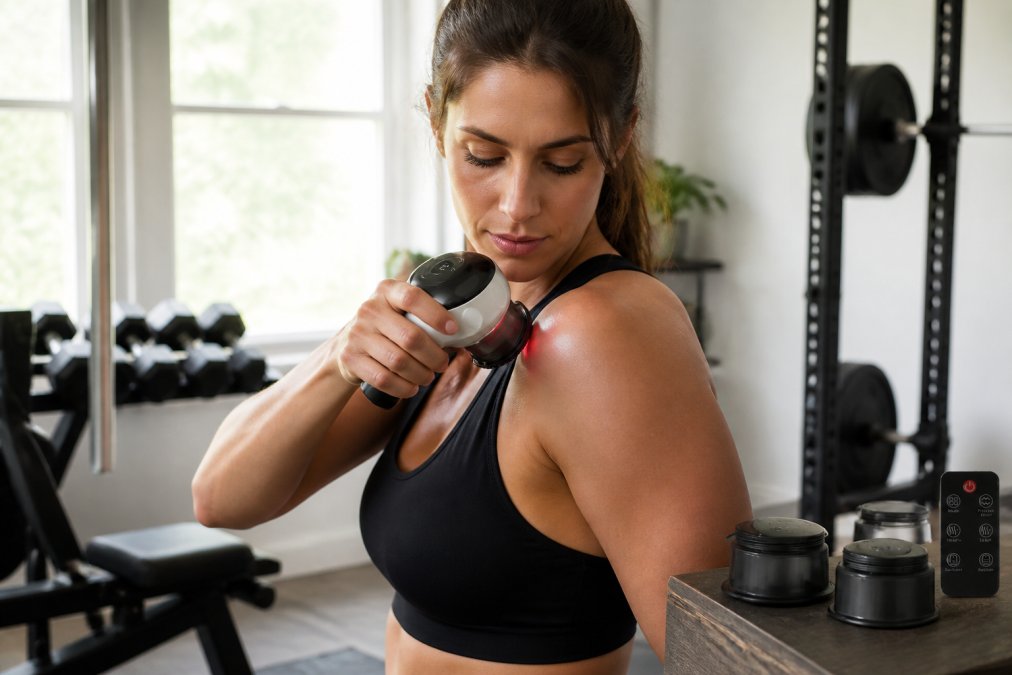
Pre-Workout Application
Using a massage gun before exercise primes your muscles for activity by increasing blood flow, warming tissue, and improving range of motion. Apply for 30-45 seconds per muscle group, moving slowly across the entire muscle belly. Don't hold it in one spot. Start at lower speed settings, lower speeds are more effective for pre-workout because they increase circulation without causing muscle fatigue.
Apply the massage gun 5-10 minutes before your workout to capitalize on increased blood flow without the effect wearing off during your session.
Post-Workout Recovery Protocol
Post-workout is where intensity matters more. Wait 10-15 minutes after your workout before using the massage gun to allow your heart rate to come down and rehydrate. Apply for 60-90 seconds per muscle group using medium to high intensity, moving slowly across the entire muscle belly.
The Cordless Red Light Therapy for Neck Shoulder Pain Relief ($299.99) combines percussion with red light therapy, which accelerates recovery beyond percussion alone. The 660nm red light and 850nm infrared penetrate tissue and stimulate cellular repair.

How Long to Use a Massage Gun on One Muscle Group
Optimal duration depends on muscle size and recovery goal. For small muscle groups (calves, forearms, neck), apply for 30-45 seconds. For medium muscle groups (biceps, triceps, shoulders, hamstrings), apply for 60-90 seconds. For large muscle groups (quads, glutes, back, chest), apply for 90-120 seconds.
Never apply a massage gun to the same spot for more than 10-15 seconds continuously. The key is movement, slow, deliberate passes across the muscle rather than stationary application. If you're sore after using a massage gun, you applied it too aggressively or too long. Reduce intensity and duration in your next session.
Best Massage Guns for Athletes
Athletes need devices that deliver consistent power, offer portability, and support extended use without overheating or battery drain.
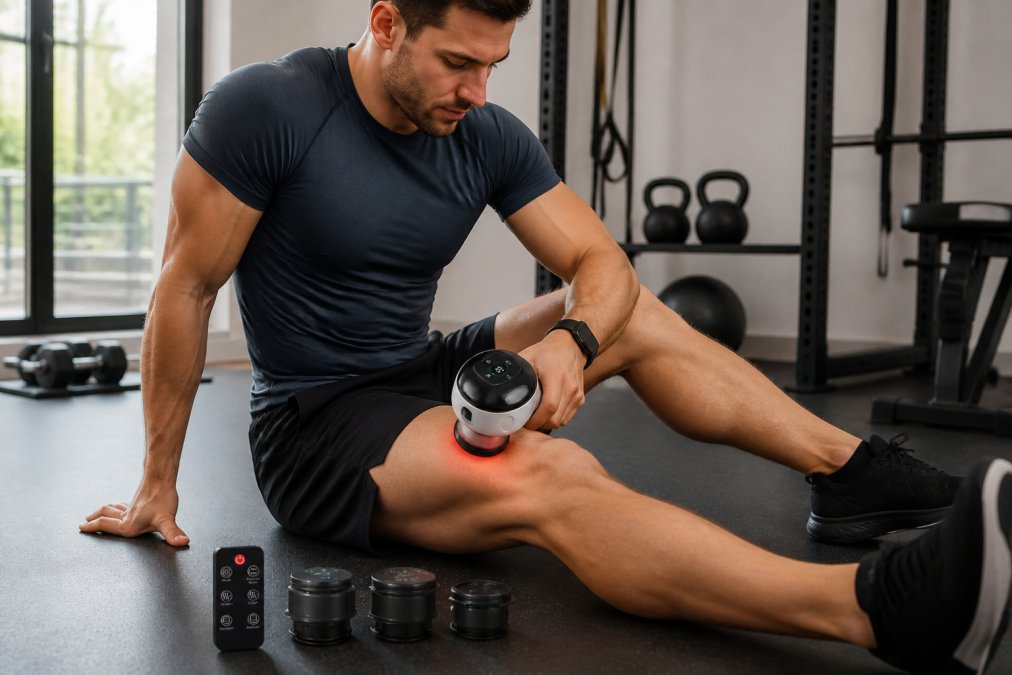
Stall Force and Amplitude for Deep Tissue Work
Stall force measures how much power a massage gun maintains when pressed firmly against muscle tissue. Amplitude measures the distance the head travels with each percussion stroke. Together, these specs determine whether the device reaches deep tissue or just vibrates the surface.
For deep tissue work, you need minimum 30 pounds of stall force. Athletes recovering from intense training should target 40-50 pounds. Amplitude typically ranges from 8mm to 16mm, for athletes, 12-16mm is optimal. Below 10mm, you're getting surface-level stimulation. Above 16mm, you risk bruising with too much pressure.
Portability and Battery Life for Training
An athlete's massage gun needs to go where they go. Look for devices under 2 pounds that fit in a gym bag with battery life supporting at least 3-4 full recovery sessions (30-40 minutes total) between charges.
The Cordless Red Light Therapy for Neck Shoulder Pain Relief ($299.99) weighs under 2 pounds and runs for 8+ hours on a single charge thanks to its 3000mAh battery. USB-C charging is standard and convenient. Avoid devices with proprietary charging cables. Quality lithium batteries maintain capacity for 2-3 years of daily use.
Key Features to Compare Across Massage Gun Alternatives
Vibration Frequency and Amplitude
Vibration frequency measures cycles per second (measured in Hz). Most massage guns operate between 1,200 and 3,200 Hz. Higher frequency creates a smoother sensation for pre-workout activation. Lower frequency creates more aggressive tissue penetration for post-workout recovery.
Pre-workout sessions benefit from 1,200-1,800 Hz. Post-workout recovery works better at 2,000-2,500 Hz. Deep tissue work requires 2,400-3,200 Hz. Amplitude (stroke length) determines how deep percussion penetrates, for athletes, 12-16mm is the minimum threshold for effective deep tissue work.
Interchangeable Heads and Ergonomic Design
Different muscle groups need different attachment heads. A flat head works for large muscle groups. A rounded head is better for smaller areas. A fork-shaped head targets muscle groups on either side of the spine without hitting bone.
Devices with 3-5 interchangeable heads are more versatile. TheCoolVibeShop's Cupping Kit ($139.99) includes three smart cups designed for different body areas. Ergonomic design matters for extended use, the device should fit comfortably in your hand with controls positioned where your thumb naturally rests.
Noise Levels and Battery Specifications
Most quality massage guns operate at 60-70 decibels. Anything above 75 decibels is disruptive in shared spaces. Look for devices with at least 2,000mAh battery capacity supporting 4-6 hours of use. Fast charging (under 2 hours) is a bonus. Lithium-ion batteries maintain capacity better than older lithium-polymer designs.
| Feature | Pre-Workout Need | Post-Workout Need | Deep Tissue Need |
|---|---|---|---|
| Vibration Frequency | 1,200-1,800 Hz | 2,000-2,500 Hz | 2,400-3,200 Hz |
| Amplitude | 8-12mm | 12-14mm | 14-16mm |
| Stall Force | 20-30 lbs | 30-40 lbs | 40-50+ lbs |
| Battery Life | 4+ hours | 4+ hours | 6+ hours |
| Weight | Under 2.5 lbs | Under 2.5 lbs | 2-3 lbs acceptable |
Safety Considerations and Contraindications
Massage gun therapy is non-invasive and generally safe, but certain conditions require caution or avoidance. Do not use a massage gun directly over bone, joints, or the spine. Instead, apply to the muscles surrounding these areas.
Avoid massage guns if you have active inflammation from injury, acute muscle strain, or recent surgery. Wait at least 48-72 hours after an acute injury before using percussion therapy. Certain medications increase bleeding risk or reduce pain sensation, if you're taking blood thinners or have neuropathy, consult your healthcare provider first.
During pregnancy, do not apply massage guns to the abdomen or lower back. Avoid use on open wounds, infections, or severe eczema. People with osteoporosis or severe bone density loss should avoid intense percussion, manual massage tools or gentle cupping therapy are safer alternatives.
The American Physical Therapy Association guidance on massage therapy recommends starting conservatively with any new recovery tool. Begin with lower intensity and shorter sessions, then gradually increase as your body adapts.
Red light therapy devices like TheCoolVibeShop's Cordless Red Light Therapy ($299.99) offer a safer alternative when contraindications exist, supporting recovery and circulation without direct tissue percussion.
Finding the best FitRx alternatives for massage means understanding your specific recovery needs. If you're dealing with chronic neck and shoulder tension from desk work, the Neck Massager with Heat ($97.50) targets that problem directly. If you want a comprehensive recovery tool combining multiple therapies, the Cupping Kit with Red Light ($139.99) delivers versatility at a reasonable price point. For athletes seeking the most advanced recovery technology, the Cordless Red Light Therapy for Neck Shoulder Pain Relief ($299.99) combines percussion capability with cellular-level healing through red light therapy. Shop Now with TheCoolVibeShop's 60-day money-back guarantee, and experience recovery tools designed for real results.

Frequently Asked Questions
Q: What makes a good massage gun alternative to FitRx?
A: A quality massage gun alternative should deliver stall force strong enough for deep tissue work, offer multiple speed settings for different muscle groups, and provide interchangeable heads for targeted trigger point release. Look for devices with solid build quality, reasonable battery life, and ergonomic handles that reduce fatigue during use. Red light therapy options add myofascial release benefits, while TENS-based devices provide electrical stimulation for muscle soreness relief without percussion.
Q: How long should you use a massage gun on one muscle group?
A: Apply a massage gun for 30 to 60 seconds per muscle group during recovery sessions. For larger areas like the back or thighs, divide the region into sections and treat each for 30 to 45 seconds. Avoid prolonged use on the same spot, as excessive vibration can cause tissue irritation. Start with shorter sessions and adjust based on comfort and recovery response.
Q: Are red light therapy devices as effective as percussion massage guns for muscle recovery?
A: Red light therapy and percussion massage work through different mechanisms. Percussion devices provide immediate percussive therapy and trigger point release, while red light therapy at 660nm and 850nm wavelengths stimulates cellular regeneration and blood flow stimulation over time. Many athletes use both: percussion for acute soreness and red light therapy for ongoing recovery and inflammation reduction. Combining them addresses both immediate relief and long-term tissue healing.
Q: What are the best massage guns for athletes who travel?
A: Portable massage gun alternatives include cordless, rechargeable models with compact designs and extended battery life. Devices with USB-C charging work anywhere with standard chargers. Lightweight options under 2 pounds are ideal for gym bags or travel. Red light therapy wraps for knees, shoulders, and elbows offer travel-friendly alternatives since they're lightweight and don't require multiple attachments. Consider battery capacity of at least 2000mAh for multi-session use between charges.
This article was written using GrandRanker