Best Recovery Tools for Athletes: 2026 Guide

Table of Contents
- How We Evaluated These Recovery Tools for Athletes
- Quick Comparison: Top Recovery Tools at a Glance
- 1. Red Light Therapy Devices: Photobiomodulation for Faster Tissue Repair
- 2. Cupping and Myofascial Release Tools for Muscle Soreness
- 3. TENS and Heat Therapy for Neuromuscular Recovery
- Benefits of Percussion Therapy and How It Compares
- How to Use Compression Boots and Other Compression Garments
- Building a Post-Workout Recovery Routine That Actually Sticks
Last Updated: August 13, 2026
Finding the right recovery tools separates athletes who train consistently from those nursing preventable soreness. At TheCoolVibeShop, we've tested and curated non-invasive, drug-free recovery devices designed to get you back to peak performance faster. This guide breaks down the best options by category, explains how and when to use them, and flags safety considerations most reviews skip.
Quick Picks:
- Best Overall: Full Body Red Light Therapy Mat, comprehensive photobiomodulation for full-body tissue repair
- Best for Targeted Joint Recovery: Topcupro 4-in-1 Red Light Therapy Wrap, portable, multi-joint coverage at an accessible price
- Best Budget Entry Point: YZYOE Infrared Wand at $72.99, effective spot treatment without the full-system commitment
How We Evaluated These Recovery Tools for Athletes
Our evaluation focused on four criteria that matter for consistent, safe home use: mechanism of action (does it address real physiology?), usability for daily recovery (simple controls, portable, under 30 minutes), safety profile (contraindications matter), and value across price tiers ($72.99 to $399.99).

Quick Comparison: Top Recovery Tools at a Glance
| Device | Price | Best For | Key Modality |
|---|---|---|---|
| Full Body Red Light Therapy Mat | $399.99 | Full-body post-workout recovery | Photobiomodulation |
| Cordless Neck & Shoulder Device | $299.99 | Desk workers, upper-body athletes | Red + near-infrared light |
| Topcupro 4-in-1 Wrap | $154.99 | Knee, elbow, shoulder, ankle joints | Infrared light therapy |
| Electric Cupping Kit with Red Light | $139.99 | Myofascial release, cellulite, soreness | Cupping + heat + red light |
| Wood Therapy Massage Stick | $98.99 | Lymphatic drainage, fascia release | Manual massage |
| Neck TENS Massager with Heat | $97.50 | Neuromuscular cervical recovery | TENS + heat |
| Wavelength Belt | $79.99 | Core and lower back recovery | Infrared light |
| YZYOE Infrared Wand | $72.99 | Spot treatment, face and joints | Multi-wavelength infrared |
1. Red Light Therapy Devices: Photobiomodulation for Faster Tissue Repair
Photobiomodulation uses specific wavelengths of red and near-infrared light to stimulate cellular energy production, reduce inflammation, and accelerate tissue healing. It's one of the most well-researched non-invasive recovery modalities, with applications ranging from delayed onset muscle soreness (DOMS) to joint stiffness and post-surgical rehabilitation.
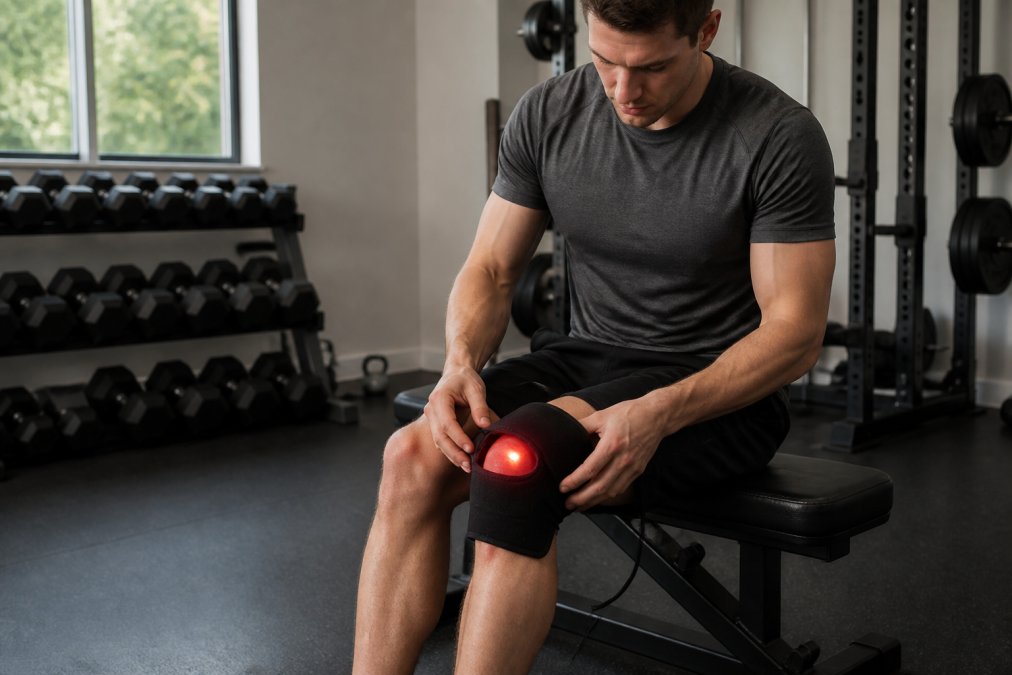
Red light at 660nm absorbs primarily at the skin surface, stimulating circulation and cellular regeneration. Near-infrared at 850nm penetrates deeper into muscle tissue and joints, making it more effective for deep muscle tension. Devices combining both wavelengths cover a broader therapeutic range.
According to National Institutes of Health research on photobiomodulation, low-level light therapy shows consistent results for reducing inflammation and improving tissue repair in musculoskeletal conditions.
Full Body Red Light Therapy Mat ($399.99)
The Full Body Red Light Therapy Mat delivers simultaneous photobiomodulation across the entire posterior chain, back, glutes, hamstrings, calves, making it ideal after high-volume training sessions affecting multiple muscle groups. At $399.99, it's an investment best suited for serious athletes or those with chronic, widespread muscle fatigue.
Best for: Endurance athletes, CrossFit athletes, and anyone experiencing full-body DOMS after heavy training blocks.
Cordless Neck and Shoulder Red Light Therapy Device ($299.99)
The Cordless Neck and Shoulder Device delivers both 660nm and 850nm wavelengths to the cervical spine and upper trapezius with five lighting modes and a 10/20-minute timer. The 3000mAh rechargeable battery eliminates cord management during sessions.
Best for: Swimmers, cyclists, and office workers with chronic upper-back stiffness.
Topcupro 4-in-1 Red Light Therapy Wrap ($154.99)
The Topcupro 4-in-1 Wrap wraps around knees, elbows, shoulders, and ankles with 96 dual-chip LED beads. USB-C charging works with any power bank, making it ideal for travel or competition.

Best for: Runners, basketball players, and anyone managing recurring joint soreness who needs a portable device.
Wavelength Belt ($79.99) and YZYOE Infrared Wand ($72.99)
The Wavelength Belt wraps around the lower back and core, offering hands-free recovery during cooldown stretching. The YZYOE Infrared Wand provides three wavelengths for spot treatment at the lowest entry price.
Safety note: Individuals on photosensitizing medications, those with active skin conditions, or anyone who is pregnant should consult a physician before using red light therapy devices.
2. Cupping and Myofascial Release Tools for Muscle Soreness
Myofascial release applies sustained pressure to fascia, the connective tissue surrounding muscles, to release tension, restore range of motion, and reduce soreness. It's highly effective for tightness that stretching alone doesn't resolve.
Electric Cupping Kit with Red Light ($139.99)
The Electric Cupping Kit combines cupping, scraping, massage, heat, and red light therapy with 12 adjustable suction levels and auto-shutoff. The suction creates negative pressure that pulls fascia away from underlying tissue, promoting lymphatic drainage and metabolic waste clearance, fundamentally different from compression-based massage.

Contraindication: Do not apply over broken skin, varicose veins, or active inflammation. Bruising is normal but should resolve within days. Reduce suction if bruising is severe or persistent.
Wood Therapy Massage Stick ($98.99)
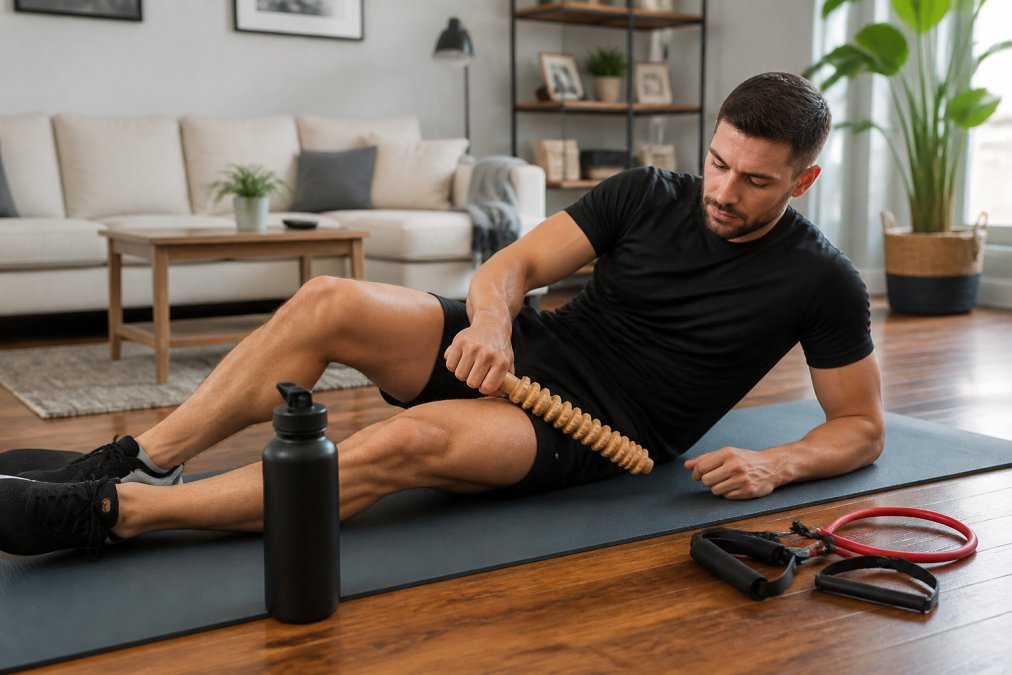
The Wood Therapy Massage Stick is a 21-inch handheld roller providing firm, targeted pressure to large muscle groups. Wood therapy supports manual lymphatic drainage with more consistent pressure than foam alternatives. It's a zero-battery, travel-friendly option requiring no charging.
According to American College of Sports Medicine guidelines on recovery, myofascial release applied post-exercise supports flexibility and reduces perceived muscle soreness when used consistently.
3. TENS and Heat Therapy for Neuromuscular Recovery
TENS (transcutaneous electrical nerve stimulation) uses low-frequency electrical pulses to interrupt pain signals and stimulate muscle contractions, supporting neuromuscular recovery. Combined with heat, it addresses both neurological and circulatory components of muscle tension.
The Neck TENS Massager with Heat at $97.50 features nine massage modes and 50 intensity levels, plus heat maintaining 100.4°F to 107.6°F. Heat promotes vasodilation and deeper muscle relaxation in the cervical region, while TENS drives neuromuscular stimulation, particularly effective for chronic neck stiffness or upper-body training recovery.
HSA/FSA eligible: This device qualifies for Health Savings Account and Flexible Spending Account purchases, reducing out-of-pocket cost.
Benefits of Percussion Therapy and How It Compares
Percussion therapy delivers rapid, repetitive pressure deep into muscle tissue, breaking up adhesions, reducing DOMS, and improving range of motion faster than static stretching. Compared to foam rolling, it's more targeted and requires less physical effort. Compared to stretching, it addresses tissue itself rather than surrounding structures. Most athletes use percussion as a pre-workout activation or immediate post-workout tool, not a replacement for longer-duration modalities like red light therapy.
Percussion reaches deeper tissue faster than manual tools like the Wood Therapy Stick, which allow more nuanced pressure control. Many athletes use both within the same recovery session.
How to Use Compression Boots and Other Compression Garments
Compression garments apply graduated pressure to limbs, supporting venous return and reducing metabolic waste accumulation in fatigued muscle. This accelerates lactic acid clearance and post-workout soreness.
How to use compression garments effectively:
- Apply immediately post-workout while circulation is elevated
- Use graduated compression, tightest at the extremity, lighter toward the core
- Sessions of 20-30 minutes are sufficient
- Avoid compression over active swelling or suspected deep vein thrombosis
- Hydrate adequately before and during sessions
According to clinical guidance from the National Athletic Trainers' Association, compression therapy is most effective combined with elevation and adequate hydration as part of a structured post-workout recovery protocol.
Building a Post-Workout Recovery Routine That Actually Sticks
A recovery routine works when it's short enough to complete, specific to your training demands, and varied enough to avoid adaptation. The biggest mistake is treating recovery as optional. Every TheCoolVibeShop device is usable at home, requires no professional supervision, and fits into a 20-30 minute post-workout window. Over 1,500 satisfied customers have built daily routines around these tools.
Recovery Timing and Periodization
The physiological window for optimal recovery intervention is within the first 60 minutes post-exercise, when blood flow is elevated and tissue is most receptive. This is when red light therapy, TENS, and heat therapy deliver greatest benefit.
Periodization matters too. During high-volume training blocks, daily photobiomodulation and myofascial release is appropriate. During deload weeks, lighter modalities like the Wood Therapy Stick or compression garments suffice. Match recovery intensity to training intensity to prevent over-treatment and maintain sustainability.
Sample weekly recovery protocol:
| Training Day Type | Recommended Tools | Session Length |
|---|---|---|
| Heavy strength session | Red Light Mat + TENS Neck Massager | 25-30 min |
| Endurance/cardio day | Topcupro Wrap (joints) + Cupping Kit | 20 min |
| Active recovery day | Wood Therapy Stick + Wavelength Belt | 15 min |
| Rest day | YZYOE Infrared Wand (spot treatment) | 10 min |
| Pre-competition | Compression garments + light percussion | 15 min |
Budget-Friendly DIY Recovery Options
Not every effective recovery method requires a device. Cold water immersion (50-59°F for 10-15 minutes) achieves vasoconstriction and subsequent vasodilation, promoting circulation and accelerating metabolic waste clearance. Contrast therapy alternates cold and warm water, creating repeated vasodilation cycles many athletes find more effective than either modality alone. Self-myofascial release with a tennis ball against a wall or a rolling pin on calves offers zero-cost options complementing device-based recovery.
The Wood Therapy Massage Stick at $98.99 bridges fully DIY and device-assisted recovery as the lowest-tech powered option.
For deeper evidence-based recovery protocols, the sports medicine research library at the American Orthopaedic Society for Sports Medicine offers peer-reviewed guidance on injury prevention and performance optimization for athletes at all levels.
Frequently Asked Questions
What is the best recovery tool for athletes overall?
There is no single best recovery tool for athletes, the right choice depends on your sport, budget, and specific needs. Red light therapy devices work well for tissue repair and joint pain, cupping and myofascial release tools target muscle soreness and circulation, and TENS devices help with neuromuscular recovery. For most athletes, combining two or three tools across different recovery phases delivers better results than relying on one method alone.
Are percussion massage guns actually effective for muscle recovery?
Percussion therapy increases blood flow to targeted muscles, helps flush metabolic waste, and reduces delayed onset muscle soreness (DOMS) by stimulating the fascia and surrounding tissue. Most users notice reduced muscle tension and improved range of motion within 10 to 15 minutes of use. Percussion devices are most effective when used within 30 to 60 minutes after training, or as part of a morning mobility routine on rest days.
How often should athletes use recovery tools for optimal results?
Most recovery tools are safe to use daily, but frequency depends on the tool and intensity of training. Red light therapy sessions of 10 to 20 minutes per area can be done once or twice daily. Cupping and myofascial release work best every 48 hours on the same muscle group to allow tissue healing. TENS and heat therapy can be used daily for chronic stiffness. Avoid applying any tool directly to acutely inflamed or injured tissue without medical clearance.
What is the difference between active and passive recovery tools?
Passive recovery tools, such as red light therapy mats, cupping sets, and compression garments, work while you rest, they support circulation, reduce inflammation, and accelerate tissue repair without requiring physical effort. Active recovery tools, like foam rollers and massage sticks, require you to apply manual pressure and movement. Both categories improve recovery time and injury prevention; the best post-workout recovery routine typically includes at least one from each group.
Is red light therapy safe to use every day for muscle soreness?
Red light therapy at 660nm and 850nm wavelengths is generally considered safe for daily use on healthy tissue. The 660nm wavelength targets surface-level skin and circulation, while 850nm near-infrared light penetrates deeper into joints and muscle. People with photosensitive conditions, those taking medications that increase light sensitivity, or individuals with active skin conditions should consult a healthcare provider before starting daily sessions. Always follow the device manufacturer's recommended session times.
The challenge most athletes face isn't finding recovery tools, it's finding ones they'll actually use consistently. TheCoolVibeShop's lineup addresses this directly: every device is designed for safe, everyday home use with simple controls, drug-free mechanisms, and a 60-day money-back guarantee that removes the risk from trying something new. Shop the full recovery collection at TheCoolVibeShop and find the right tools for your training demands.
This article was written using GrandRanker