How to Use a Massage Device Step by Step

Table of Contents
- What You'll Need Before Starting
- How to Use a Massage Device: Step-by-Step Process
- How Long to Use Massage Gun Per Muscle Group
- Targeting Specific Muscle Groups Effectively
- Massage Gun Safety Tips and Best Practices
- Massage Device Contraindications: When to Avoid Use
- Common Mistakes to Avoid
- Maintaining Your Massage Device
- Frequently Asked Questions
Last Updated: September 18, 2026
What You'll Need Before Starting
Before starting, ensure your device is fully charged, attachment heads are clean and secure, and keep a towel nearby.
Wear comfortable clothing for easy access, remove jewelry, and apply lotion or oil first for smooth gliding.
Read your device manual to understand power levels, timer settings, and safety features.
How to Use a Massage Device: Step-by-Step Process
Learning how to use a massage device step by step correctly makes all the difference between relief and frustration. Follow these steps to get the most from your device and avoid common mistakes.
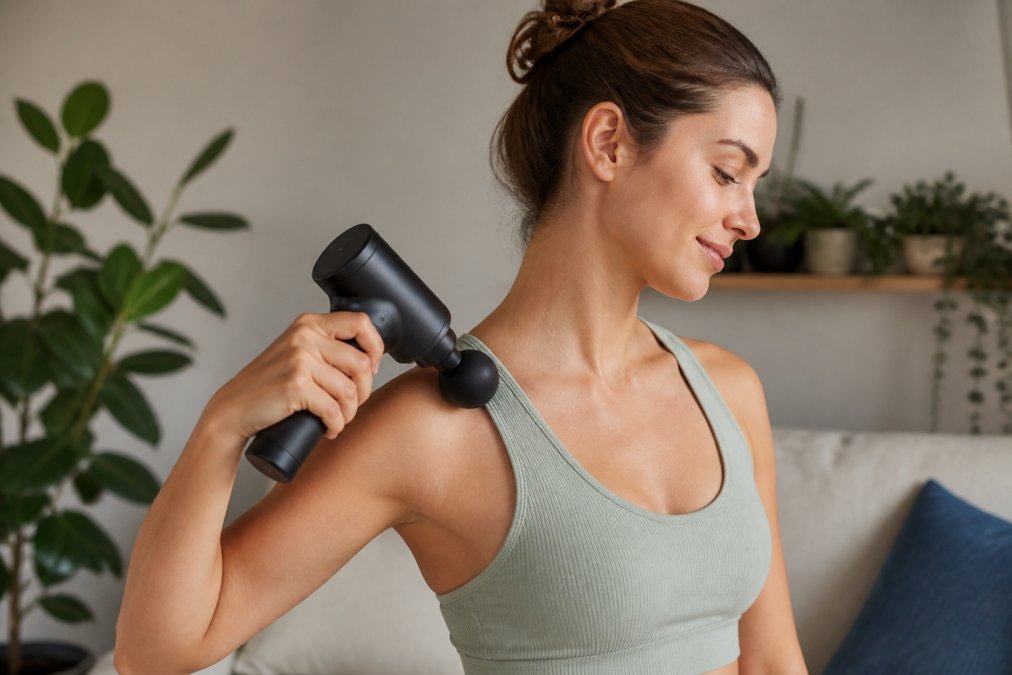
Step 1: Warm Up the Target Area
Spend 2-3 minutes warming up the target area: roll shoulders slowly, walk, or do light stretching.
Warm muscles respond better to massage therapy and absorb benefits more effectively, while cold muscles can feel more sore afterward.
Optionally apply a warm compress for 5 minutes to improve results.
Step 2: Choose the Right Attachment Head
Most massage devices include multiple attachment heads for different purposes.
Ball heads work for broad muscle groups; flat heads target trigger points; finger heads suit detailed neck and forearm work; fork heads fit around bones and tendons.
Start with a softer attachment if your skin is sensitive. You can always switch to a firmer head once your body adapts to the sensation.
Step 3: Start at Low Intensity
Never begin with maximum power. Set your device to its lowest intensity level (usually level 1 or 2).
Place the attachment head gently against your skin, turn on the device, and hold it still for a few seconds to notice how your body responds.
Low intensity allows your neuromuscular system to recognize the stimulus without triggering defensive muscle tension.
Step 4: Apply Pressure Gradually
Gradually increase pressure as the device runs; let the vibration do most of the work while you guide it gently.
Think of your hand as a guide, not a force. The device provides therapeutic action through percussive therapy, rapid, repetitive impacts that stimulate muscle fibers.
Increase pressure only after 30-60 seconds at the current level. If something feels sharp or painful, reduce pressure immediately.
Step 5: Use Gliding Motions
Move the device slowly across the muscle using smooth, gliding motions. Don't hold it in one spot for more than 5-10 seconds unless targeting a specific trigger point.
Gliding motions distribute the therapeutic effect across the entire muscle and prevent irritation of any single spot.
For larger muscle groups, use long, flowing movements; for smaller areas, use shorter, controlled strokes. Always move with the muscle fibers.
Step 6: Cool Down
After finishing, gently massage the area with your hands for 30 seconds to help your body process the therapeutic stimulus.
Drink water afterward to support your body's natural recovery processes. Real benefits develop over the next 24-48 hours as your muscles repair and adapt.
Give yourself at least 30 minutes of light activity or rest before exercising hard.
How Long to Use Massage Gun Per Muscle Group
Duration depends on the muscle group, recovery needs, and intensity level. Too long causes soreness or bruising; too little won't deliver benefits.
General guideline: 1-2 minutes per muscle group is optimal for most users. Extend to 2-3 minutes at lower intensity; keep to 1 minute or less at higher intensity.
Use your massage device 3-5 times per week, not daily. Daily use leads to overstimulation and diminishing returns.
Track how you feel after each session. If you feel looser and less sore the next day, your duration and frequency are working.
Targeting Specific Muscle Groups Effectively
Different muscles need different approaches. Knowing how to target each area correctly prevents wasted time and maximizes therapeutic benefits.
Neck and Shoulders
The neck and shoulders are sensitive areas where most people hold tension, so use a lighter touch than for larger muscle groups.
Start with the lowest intensity setting on the upper trapezius muscle. Use gentle gliding motions, moving downward from the base of your skull toward your shoulder joint.
Avoid the spine and sides of your neck where blood vessels run. Stick to the muscle belly itself for 60-90 seconds per side.
Cupping Kit for Massage Therapy with →
For shoulder tension, angle the device toward the back of your shoulder using smooth, controlled motions rather than aggressive pressure.
Lower Back and Legs
Your lower back and legs have larger, thicker muscles that tolerate more intensity and often hold tension from sitting or standing.
For your lower back, target the erector spinae muscles on either side of the spine using long, gliding strokes from lower back toward mid-back. Never use the device directly on your spine.
For your legs, use broad, sweeping motions from knee to hip on quadriceps and hamstrings. Calves respond well to slightly higher intensity due to dense muscle tissue.
Spend 90-120 seconds on each major leg muscle group. Legs recover quickly, so you can use slightly higher intensity here.
Arms and Forearms
Arms and forearms have smaller muscles that fatigue quickly. Use moderate intensity and shorter durations here.
Target your biceps with gentle pressure along the front of your upper arm using small, controlled motions. The triceps also benefit from this approach.
For forearms, use lower intensity since muscles are close to the surface and contain many nerves. Spend 45-60 seconds per arm on tight or sore areas.
Massage Gun Safety Tips and Best Practices
Never use your device on broken skin, wounds, or areas with active inflammation. Wait until the area heals; using the device on compromised skin can slow healing and increase infection risk.
Avoid using the device on varicose veins or areas with blood clots. Increased blood flow can complicate these conditions. Check with your healthcare provider if you have circulatory concerns.
Don't use your device while taking blood thinners without medical approval, as these medications increase bruising risk.
Keep the device away from your head, face, and sensitive areas. Avoid your temples, eyes, and throat.
Never leave the device running unattended. Always hold it and stay aware of its position.
Check your device regularly for damage. Stop using it if you notice cracks, loose parts, or fraying cords, and contact the manufacturer.
Massage Device Contraindications: When to Avoid Use
Do not use a massage device if you have acute inflammation or recent injury. Wait at least 48 hours; increased blood flow can worsen swelling and delay healing.
Avoid using the device on areas with nerve damage or neuropathy. Damaged nerves don't respond normally to vibration and may not signal pain.
Do not use a massage device if you have osteoporosis or brittle bone conditions. Vibration and pressure can increase fracture risk.
Avoid the device if you have cancer or are undergoing cancer treatment. Always get medical clearance first.
Do not use a massage device on areas with metal implants, pacemakers, or other electronic medical devices. Vibration and electromagnetic fields can interfere with them.
Avoid using the device if you're pregnant without medical approval. Percussive therapy is more intense and less studied in pregnancy. Check with your healthcare provider first.
Do not use the device on areas with active infections, skin conditions, or open wounds. Wait until the area is completely healed.
Common Mistakes to Avoid
Using too much intensity too fast. Your muscles need time to adapt. Starting high creates soreness instead of relief. Always start low and increase gradually.
Holding the device in one spot too long. Staying more than 10 seconds can cause bruising. Keep the device moving with smooth, gliding motions.
Using the wrong attachment head for the area. Match the attachment to your target area.
Maintaining Your Massage Device
Clean your device after each use. Wipe down attachment heads and main body with a damp cloth, removing skin cells and sweat. Let everything dry completely before storing.
Frequently Asked Questions
How long should you use a massage device on one muscle group?
Most muscle groups benefit from 1-2 minutes of massage device application. For larger areas like the back or thighs, you can extend to 2-3 minutes. Avoid spending more than 3 minutes on any single spot, as excessive use can cause tissue irritation or soreness. Start with shorter sessions and gradually increase duration as your body adapts to the percussive therapy.
What are the main safety precautions when using a massage device?
Always start at low intensity levels and increase gradually. Never apply the device directly to bone, joints, or the spine. Avoid using it on injured, inflamed, or broken skin. Do not hold the device in one spot for extended periods. If you experience pain or discomfort beyond mild muscle soreness, stop immediately. Always consult a healthcare provider if you have medical conditions before using a massage device regularly.
What medical conditions make a massage device unsafe?
Avoid massage devices if you have blood clots, active infections, open wounds, or severe inflammation. Do not use on areas with recent surgery, fractures, or severe bruising. If you take blood thinners, have neuropathy, or have cancer, consult your doctor first. Pregnant women should seek medical guidance before using massage devices. People with neuromuscular conditions or compromised skin integrity should also avoid use without professional clearance.
Can a massage device help with muscle soreness and DOMS?
Yes, massage devices support recovery by improving blood flow and reducing muscle tension associated with DOMS (delayed onset muscle soreness). Percussive therapy stimulates soft tissue and promotes lymphatic drainage, which can accelerate recovery. Use the device 24-48 hours after intense exercise for best results. Combine with proper warm-up and cool-down routines to maximize muscle recovery and reduce soreness intensity.